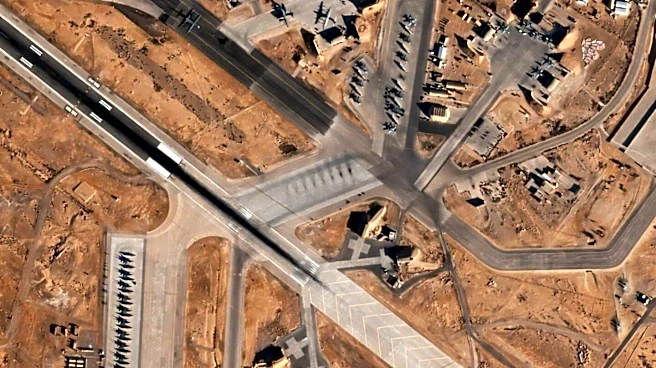


US-Iran War: Amid escalating tensions between Iran and the United States, a new report has raised fresh questions over Iran’s nuclear activities as construction activity at a suspected Iranian nuclear site buried beneath a granite mountain has surged sharply this year.
According to CNN, citing satellite imagery analysed by the Center for Strategic and International Studies (CSIS), Iran’s Pickaxe Mountain nuclear site has witnessed a sharp increase in construction activity this year.
The deeply buried facility, located beneath a granite mountain near Iran’s Natanz nuclear complex and around 140 miles south of Tehran, has attracted growing attention from intelligence agencies amid escalating tensions between Washington and Tehran.
A CSIS analysis
of six years of satellite imagery found a “clear surge in construction activity” at Pickaxe in 2026. The activity included the reinforcement and hardening of tunnel entrances, paving of internal roads, work around access points and the removal of excavation debris, as per the report.
Construction activity has surged this year at Pickaxe Mountain, a suspected Iranian nuclear site near Natanz, 140 miles south of Tehran, per new CSIS satellite analysis shared with CNN. https://t.co/GGMCVdHvui pic.twitter.com/AK8zhly9ft
— Open Source Intel (@Osint613) September 9, 2026
The think tank said that there was more road activity at the site in 2026 than at any previous point in its history. The changes suggest that construction has moved from the excavation phase towards probable internal construction and continued reinforcement of the facility.
However, the analysis could not confirm reports that Iran has moved centrifuges into the underground complex. CSIS said that the continued construction activity suggested that the facility is not yet capable of uranium enrichment, if enrichment is ultimately its intended purpose.
According to the analysis, Pickaxe could eventually serve one of several roles linked to Iran’s nuclear programme, including as a centrifuge assembly facility, an enrichment site or a protected location for other nuclear-related activities.
Israel Suspects Iran Could Move Centrifuges
Israeli intelligence has previously suggested that Iran could move centrifuges to the facility as part of efforts to protect its uranium-enrichment capabilities.
Pickaxe is believed to have been developed as a heavily protected underground facility following damage to Iran’s advanced centrifuge assembly infrastructure at Natanz in 2020.
Its location beneath a granite mountain would offer significant protection against aerial attacks.
Trump’s Threat To Strike Pickaxe
The site has also emerged as a potential target for the United States.
US President Donald Trump has repeatedly warned that Washington could strike Pickaxe Mountain if it findssignificant activity there.
“We may hit Pickaxe very soon,” Trump has said last week, claiming that US intelligence was closely monitoring movements at the facility.
US military planners have reportedly considered options for striking the site. However, it remains unclear whether even the largest conventional bombs in the US arsenal could penetrate deeply enough to destroy facilities located beneath the mountain.
US Explores Ways To Hit Underground Sites
The challenge posed by deeply buried Iranian facilities has also prompted the US to explore ways to improve its ability to strike underground targets.
According to CNN, a US defence agency approved an emergency contract to repair a subterranean test facility at White Sands Missile Range in New Mexico shortly before the conflict began.
The work was linked by sources familiar with the matter to efforts to develop capabilities against deeply buried Iranian facilities.
The US military is also developing a next-generation penetrator weapon intended to reach targets buried deeper underground than those accessible to existing bunker-busting bombs.
Iran Denies Pursuing Nuclear Weapons
The renewed focus on Pickaxe comes amid a wider escalation in the US-Iran conflict and continuing international concerns over Tehran’s nuclear programme.
The International Atomic Energy Agency has criticised Iran’s lack of cooperation with nuclear inspectors and raised concerns over its failure to fully clarify aspects of its nuclear activities.
Iran, however, has repeatedly denied pursuing nuclear weapons and maintains that its nuclear programme is entirely peaceful.