
/images/ppid_a911dc6a-image-177697453169991607.webp)
/images/ppid_a911dc6a-image-177697452120820389.webp)

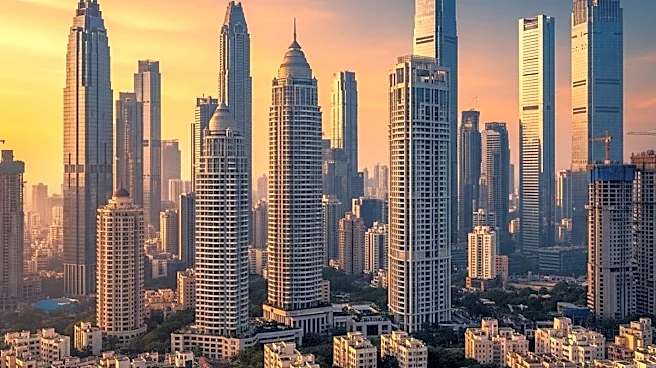
India’s skyline has changed faster in the last five years than it did in the previous two decades. Since 2020, a wave of ultra-tall residential and commercial towers has reshaped major cities, pushing heights past 250 and even 300 metres. Most of this growth has been concentrated in Mumbai, but newer cities are now entering the race.
Here’s a look at the top 10 tallest buildings in India completed after 2020, based on the latest available data as of April 2026:
Lokhandwala Minerva (Mumbai, ~301 m, completed 2023-24)
Currently India’s tallest completed building, this 78-floor residential tower set a new benchmark for height and luxury living. Arav Tower, Piramal Aranya (Mumbai, ~282 m, completed 2023)
One of the tallest residential towers in the country,
part of a premium cluster in Byculla that pushed heights well beyond 250 metres.
World One (Mumbai, ~280 m, completed 2020)
World One really kicked off the era of modern skyscrapers in India. It was supposed to be even taller. Still, it stands out as one of the tallest towers in the country and set the stage for everything that followed.
World View (Mumbai, ~277 m, completed 2020)
This one rose right next to World One. Seeing them together, you can tell Mumbai isn’t slowing down with high-rise homes anytime soon.
Lodha Park Towers (Mumbai, ~264–268 m, completed post-2020 phases)
Here you’ve got a cluster—Marquise, Kiara, Allura—all built as part of one big “vertical neighbourhood.” The days of stand-alone skyscrapers are out; now, it’s about creating entire communities in the sky.
Trump Tower Mumbai (Mumbai, ~268 m, completed 2021)
Luxury and branding meet here. Trump Tower tapped into the growing appetite in India for high-end, branded living spaces that feel more like a statement than just a place to live.
Three Sixty West Tower B (Mumbai, ~260 m, completed 2020)
This tower packs in both hotel and residential spaces. It’s one of the tallest mixed-use buildings in the country and highlights that these projects don’t just pick one function—they do it all.
Rustomjee Crown Towers (Mumbai, ~259 m, completed 2023)
You get two towers here, both part of the wave of fancy, high-rise homes that are changing how Mumbai’s skyline looks. The ultra-luxury vibe is clear.
Oberoi Commerz (Mumbai, ~225 m, completed 2023)
Not everything tall is residential. Oberoi Commerz proves even office towers are heading skyward these days. It’s one of the biggest commercial towers built recently and keeps the business game strong.
SAS Crown (Hyderabad, ~235 m, completed 2025)
Finally, a break from Mumbai. SAS Crown in Hyderabad joins the 200-meter club and shows skyscraper fever isn’t just stuck in one city. This project signals the rise of new skylines all across India.
What’s changed in just five years
The biggest shift is scale. Before 2020, buildings above 250 metres were rare in India. Today, multiple towers cross that mark, and several more are under construction.
Another clear trend is that most of these skyscrapers are residential, not office buildings. Developers are focusing on premium housing, driven by demand in dense urban areas.
The bottom line
India’s skyline is no longer just growing, it’s accelerating. Mumbai still dominates the list, but projects like SAS Crown in Hyderabad show that other cities are beginning to catch up. And with even taller towers under construction, the next five years could change the picture all over again.