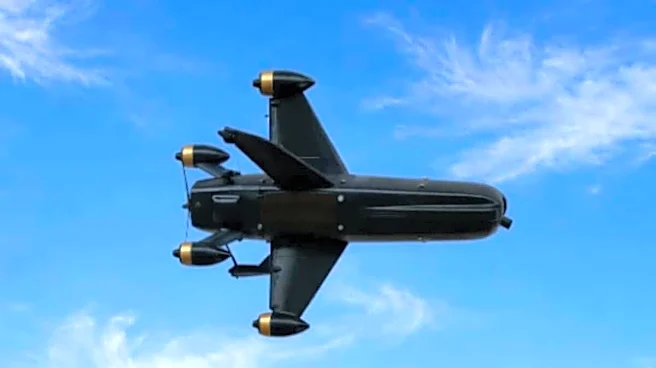



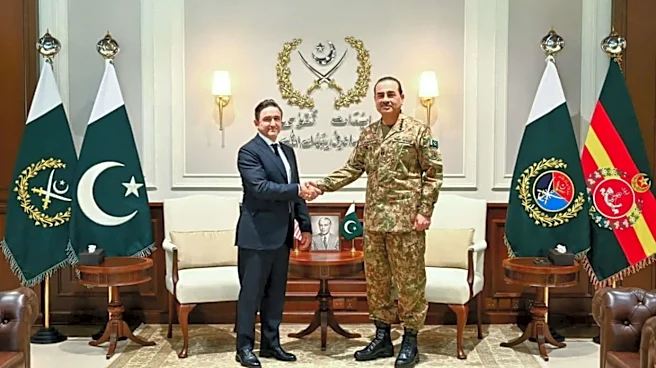
In a significant strategic development following Operation Sindoor, Rawalpindi has signed a Memorandum of Understanding (MoU) with American drone maker Powerus, signalling a major shift in Pakistan’s military procurement strategy. According to top Indian intelligence sources, the deal goes well beyond acquiring finished unmanned platforms; it provides a framework for local production, technology transfer, and joint development aimed at scaling Pakistan’s domestic drone industry.
For Washington, the engagement serves as a geopolitical counterweight to Beijing’s growing dominance in Pakistan’s defence ecosystem. While Chinese and Turkish platforms have dominated recent deployments, Powerus offers modular, heavy-lift autonomous air and maritime
systems that share a unified software architecture, common guidance protocols, and standardized ground control interfaces. By introducing American technology into its defence mix, Rawalpindi seeks to hedge its foreign supply risks, ensuring its fleet remains resilient against potential export restrictions or technological leverage from Beijing or Ankara.
Indian intelligence assessments indicate that this strategic pivot is directly linked to lessons learnt during Operation Sindoor, which exposed critical vulnerabilities in Pakistan’s air defence architecture after Indian precision strikes targeted key airfields in Nur Khan, Muridke, and Bahawalpur. Following those strikes, Pakistan shifted its operational doctrine toward asymmetric “grey zone” warfare, increasingly replacing traditional human infiltrators with high-volume aerial drone incursions along the western border in Punjab, Rajasthan, and Jammu & Kashmir.
Security forces recorded 863 unauthorised aerial intrusions in 2025 alone. These flights have been routinely utilised to drop payloads of weapons, cash, sticky bombs, and narcotics to sustain terror modules operated by Lashkar-e-Taiba, Jaish-e-Mohammed, and The Resistance Front (TRF), as well as organised criminal syndicates. Intelligence officials note that this self-financing aerial campaign allows Pakistan to maintain continuous pressure and inflict tactical damage on Indian security networks while attempting to preserve plausible deniability to avoid triggering a full-scale conventional response. By mastering scalable, low-cost drone manufacturing through foreign partnerships, Rawalpindi aims to expand its hybrid operational footprint across the border.