

AR Rahman’s indirect remarks about alleged communal bias in Bollywood have sparked a debate in the industry. The Oscar and Grammy-winning music composer suggested that rising communal sentiments may have affected the work he has received over the past eight years. His comment triggered sharp reactions and polarising opinions across the industry and on social media.
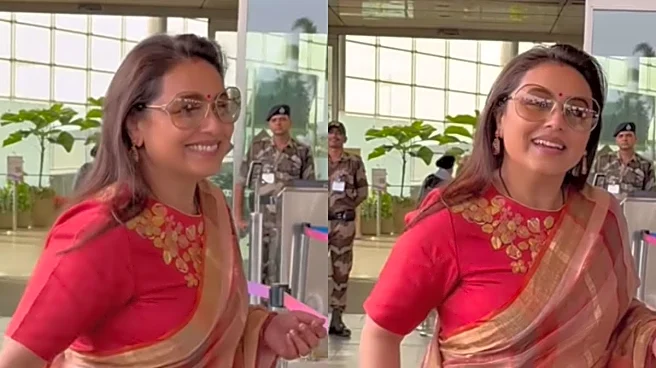
Even after the music maestro issued a clarification and apology, the conversation around his comments on ‘communal bias’ has become a major topic of discussion in the industry. While celebrities like Kangana Ranaut and Rani Mukerji criticised his comments, others such as Javed Akhtar said they hadn’t witnessed such bias but refrained from directly targeting Rahman.
Amid the discussion,
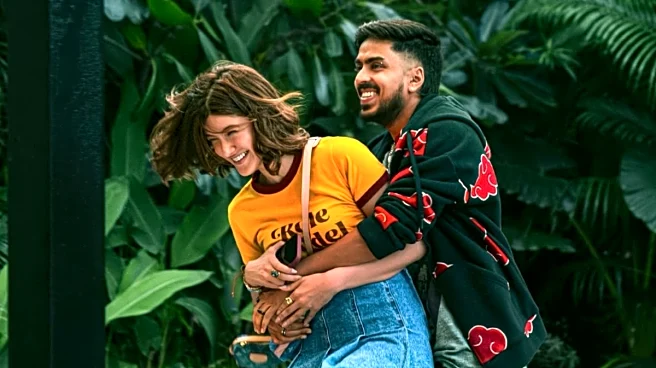
actress Zoya Afroz, who was recently seen in Taskaree with Emraan Hashmi, expressed disagreement with Oscar and Grammy-winning composer AR Rahman’s recent remarks.
Zoya Afroz Disagrees With AR Rahman’s Communal Bias Remark
Zoya attended the special screening of Gandhi Talks, which features music composed by AR Rahman. Speaking to IANS, she shared her personal experience, noting that she has never faced discrimination in the industry despite sharing the same faith as the acclaimed composer.
She told IANS, “My personal experience has not been like this till now, and I hope it will not be like this. Because in our country, we celebrate unity and diversity and I think that is the spirit that we should keep.”
The actress also spoke about cinema’s role in society, highlighting the need for responsible storytelling. She said, “I think movies are a mirror of society, they depict life. Of course, if there is no movie for kids, they should not be shown and that is why the certification is done. So I think we should keep it like that.”
What Did AR Rahman Say?
In an interview with BBC Asian Network, AR Rahman spoke about receiving fewer work offers in Bollywood and suggested that shifting power structures over the past eight years, along with “communal” factors, such as religion, regional identity, and industry politics, may have impacted the opportunities he received.
His remarks sparked widespread debate and media backlash, with many interpreting his words as a reference to discrimination within the film industry.
Amid the controversy, Rahman released a video clarification, saying his comments had been misunderstood and that he “never meant to hurt anyone”. He reiterated that India remains his greatest inspiration and emphasised that his music has always stood for unity and cultural harmony.

/images/ppid_a911dc6a-image-177098604430638966.webp)

/images/ppid_a911dc6a-image-177104210287325129.webp)
/images/ppid_a911dc6a-image-177095176389429444.webp)