
/images/ppid_59c68470-image-178279752644721677.webp)


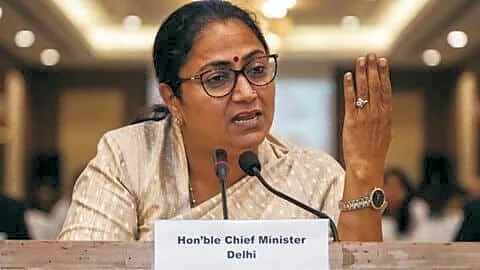
New Delhi, Jun 30 (PTI) The new EV policy not only offers incentives on buying an electric vehicle, but it also provides a roadmap for structural reforms in the transport sector, Chief Minister Rekha Gupta said on Tuesday.
According to officials, the EV Policy 2026 was approved by the LG Taranjit Singh Sandhu on Tuesday, after which the transport department will notify the policy and launch a separate portal.
“EV policy 2026 goes beyond offering incentives for purchasing electric vehicles and lays out a clear roadmap up to March 2030 for structural reforms in the transport sector, expansion of charging infrastructure, a stronger institutional framework and the phased electrification of different vehicle categories,” Gupta said.
The chief minister
said the previous policy was largely incentive-driven, with the adoption of electric vehicles remaining entirely voluntary.
“Building on that framework, the new government has introduced a clear programme of phased mandatory electrification across different vehicle categories, along with incentives, to accelerate the transition to electric mobility,” she added.
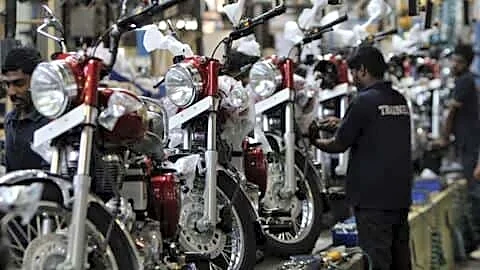
Gupta said the new policy continues to provide a purchase incentive of up to Rs 30,000 for electric two-wheelers.
“For the first time, it also offers an additional incentive of Rs 10,000 for scrapping an old vehicle. Also, from April 1, 2028, registration of all new two-wheelers in Delhi will be permitted only as electric vehicles,” Gupta said in a statement.
In addition, from January 1 next year, all new auto-rickshaws will be registered only as electric vehicles, ensuring a complete transition of this segment to electric mobility, Gupta further said.
The chief minister said the institutional framework under the new policy has also been strengthened.
While the earlier policy had only an EV Cell and the State EV Board, the new framework includes the Delhi EV Apex Committee, a High-Powered Committee and a dedicated EV Cell, Gupta further said.
Keeping in mind the environmental aspects, the new policy also introduces battery traceability, from manufacturing to recycling through digital tracking, collection centres and a public- private-partnership (PPP) based recycling system, officials said.
Under the new policy, N-1 category electric trucks will be eligible for a purchase incentive of up to Rs 1 lakh, along with an additional benefit of up to Rs 50,000 for scrapping an old vehicle. N1 vehicles are light-weight commercial goods carriers with a gross vehicle weight (GVW) of up to 3.5 tonnes.
“The first 1,000 N-2 electric trucks will receive special exemptions from no-entry restrictions,” Gupta further said.
The chief minister said another important feature of the new policy is that it brings school transport within its ambit for the first time, setting a target of making 30 per cent of the school bus fleet electric by 2030.
“While the previous policy focused on developing charging infrastructure, the new government has expanded that approach by appointing Delhi Transco Limited as the nodal agency,” Gupta added.
She also said the government has strengthened the financial framework of the EV policy, with expanded funding sources such as PM E-DRIVE, the state government’s budget and the pollution cess. PTI SSM SSM AMJ AMJ
/images/ppid_59c68470-image-178282762278469288.webp)