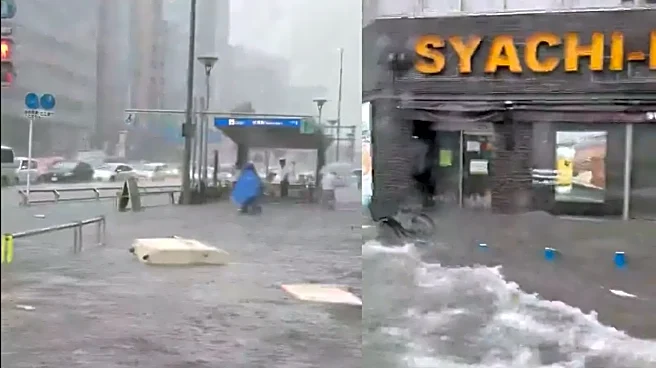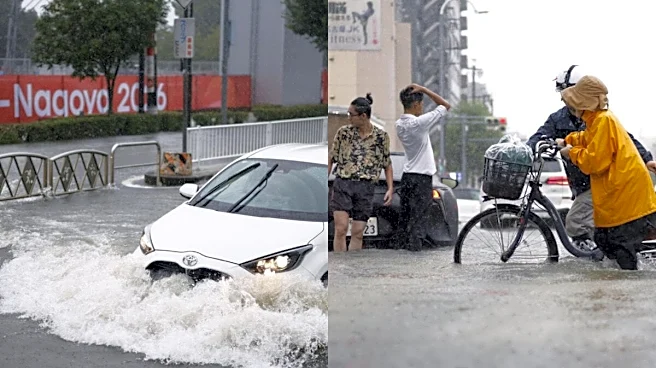




Hundreds of Asian Games athletes were temporarily evacuated from their accommodation in Nagoya after record-breaking rainfall hit the Japanese host city just days before competition begins. Around 104mm (four inches) of rain fell in Nagoya within an hour on Tuesday, leading municipal authorities to issue an evacuation order covering parts of the city.
The heavy downpour also caused rainwater to enter several competition venues, according to reports. The extent of any damage was not immediately confirmed by city officials or Games organisers, while further wet weather is expected in the coming days.
An official with the Nagoya Port Authority told news agency AFP that “hundreds” of athletes staying in the Garden Pier area were instructed to move
to safety. The area is home to temporary wooden container huts being used to accommodate athletes.
The athletes were able to return after the evacuation order was lifted roughly two hours later, the official said.
The Asian Games are scheduled to officially open with a ceremony on September 19, although some sporting events will begin earlier. The basketball competition is due to start on Thursday.
Unlike previous editions, this year’s Games do not have a dedicated athletes’ village. Organisers are instead using a combination of a cruise ship, temporary wooden containers and hotels to house participants.
The extreme rainfall also disrupted transport across Nagoya, with subway and bus services temporarily suspended on Tuesday. The Japan Meteorological Agency issued its highest flood warning for a major river in the area.
“Due to sudden heavy rainfall, the risk of serious rain-related disasters is increasing,” Nagoya City said on its website. “Please exercise extreme caution regarding flooding in low-lying areas, rising river levels, and water accumulation in underpasses.”
More than 17,000 athletes and officials are expected to attend the Games, a figure that exceeds the number of participants at the Olympics.
Scientists have warned that human-induced climate change is contributing to more frequent and intense extreme weather events in Japan and around the world.
With AFP Inputs