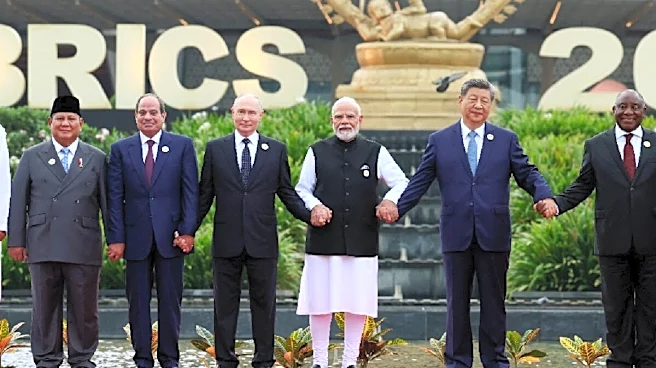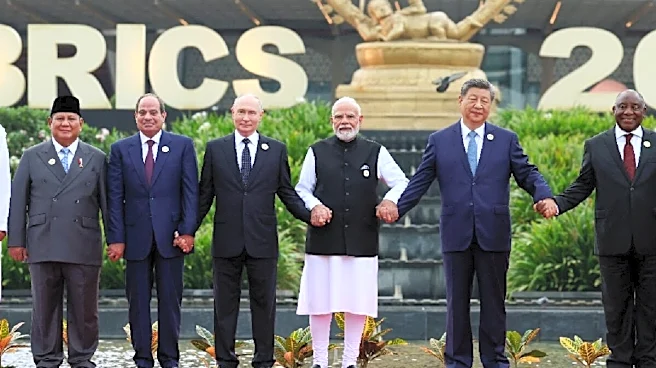



Prime Minister Narendra Modi’s handling of a sharply divided BRICS grouping, the India-China thaw and the bloc’s attempt to project itself as a stronger voice of the Global South emerged as the dominant themes in international media coverage of the first day of the BRICS Summit in New Delhi.
From the US and Japan to the Middle East, Russia and South Africa, coverage largely focused on the diplomatic balancing act India faced as host and on whether New Delhi could hold together an expanded grouping whose members have increasingly divergent geopolitical interests.
‘Diplomatic Coup’
The strongest endorsement of India’s diplomacy came from international coverage of the New Delhi Declaration, which was adopted unanimously despite deep differences among members over the Iran
war and the Middle East.
ALSO READ | 4 AM Breakthrough: How India Brought Iran, UAE, Russia, China On The Same Page For BRICS Declaration
Japan’s The Japan Times described PM Modi’s steering of the joint statement as an “apparent diplomatic coup”, highlighting the difficulty of producing consensus when BRICS members themselves have conflicting positions on the Iran-Israel conflict.
Bloomberg similarly led with “Modi Forges BRICS Consensus in Shadow of Worsening Iran War”, putting the prime minister’s diplomatic role at the centre of its assessment of the summit.
That consensus was particularly significant because BRICS had struggled to issue a common position on the Iran conflict earlier this year. The bloc’s May foreign ministers’ meeting ended without a joint statement, while Iran and the UAE, both BRICS members, now find themselves on opposing sides of the wider conflict.
The New Delhi Declaration nevertheless called for “maximum restraint” over the escalating Middle East tensions and expressed concern over attacks on civilian infrastructure and nuclear facilities. It also stressed the need to protect global trade, energy flows and supply chains.
India also managed a diplomatic coup of sorts on Saturday as UAE Crown Prince Sheikh Khaled bin Mohamed bin Zayed Al Nahyan met Iranian President Masoud Pezeshkian on the sidelines of the BRICS Summit, with the two sides discussing regional and international issues, de-escalation, stability and efforts towards regional peace and development.
ALSO READ | A New Diplomatic Bridge? Inside India’s Quiet West Asia Peace Push At BRICS As Iran, UAE Meet
For India, this allowed the summit to demonstrate that BRICS could still produce a common position despite its expanding membership and internal contradictions.
Modi-Xi Meeting
The other major international-media storyline was the meeting between PM Modi and Chinese President Xi Jinping on Xi’s first visit to India since 2019.
The Associated Press framed the meeting as an attempt by the two Asian powers to “reset” ties after the 2020 Galwan clash. Xi spoke of approaching relations with India from a “strategic and long-term perspective” and called for greater cooperation, while PM Modi stressed peace and stability along the border and adherence to existing agreements.
The meeting was also viewed through the larger contest for influence in the Global South.
The New York Times, as cited by Telangana Today, posed the question of whether Modi or Xi would emerge as the more influential voice of the developing world. Its assessment was that China sees BRICS as a vehicle for challenging American power, while India wants to keep the grouping broad enough to ensure that members do not have to choose between competing geopolitical camps.
ALSO READ | Is BRICS Really Anti-West? Why Its Members Sit On A Much Wider Spectrum
The Wall Street Journal, meanwhile, interpreted the India-China thaw against the changing relationship both countries have with Washington. Its assessment was that India was “trying to readjust”, while analysts cited by the paper cautioned that the thaw remained constrained by the border dispute, China’s ties with Pakistan and strategic competition in the Indian Ocean.
That caution is important: international coverage has generally treated the Modi-Xi rapprochement as a reset attempt rather than a complete strategic reconciliation.
A Difficult Balancing Act That India Managed
Al Jazeera focused more directly on the contradictions facing India as BRICS chair.
Its coverage described New Delhi’s task as a “delicate balancing act”, with wars in West Asia and Ukraine, US tariffs, energy disruptions and supply-chain concerns all putting pressure on an already diverse grouping.
The challenge was particularly visible in the Middle East. BRICS had to accommodate Iran, which is directly affected by the conflict, as well as the UAE and other members with different strategic interests. At the same time, India has sought to maintain strong relations with the US and its Western partners while retaining longstanding relationships with Russia and Iran.
ALSO READ | Tariff Trap Backfires: How Donald Trump Has Emerged As An Unlikely Glue For BRICS
The declaration’s focus on trade, energy security, supply chains, cross-border payments, AI and opposition to unilateral sanctions therefore gave India space to push a broader economic agenda without turning the summit into an explicitly anti-Western platform.
Russia Sees India Driving BRICS’ Next Phase
Russian state media took a more straightforwardly positive view of India’s chairship.
TASS highlighted PM Modi’s announcement that the New Delhi Declaration had been adopted unanimously, while separately reporting his call for an ambitious BRICS agenda for the next 20 years and for mechanisms to monitor implementation of decisions.
The emphasis is significant because India’s stated objective has been to move BRICS beyond annual summit declarations towards more practical cooperation and institutional follow-through.
Global South Coverage
The summit was not viewed only through geopolitics.
South African President Cyril Ramaphosa used the BRICS Business Forum to argue that the expanded bloc should reshape how value is created in developing economies. He warned against Africa remaining merely a supplier of raw materials while manufacturing and higher-value production happen elsewhere.
His call for greater investment in manufacturing, beneficiation, industrial technology, energy, infrastructure and logistics fits into India’s broader effort to position BRICS as an economic platform for the Global South rather than simply a political counterweight to the West.
South African journalists covering the summit also praised India’s diplomacy and called for greater pooling of resources among Global South countries, reinforcing the perception in parts of the developing world that New Delhi was attempting to make the expanded grouping more functional and self-reliant.
The Day 1 Coverage
Taken together, the international coverage presents a picture that is more nuanced than simply calling the summit a diplomatic success.
The broad takeaway is that India managed to keep the 11-member grouping together on Day 1, but the very diversity that gives BRICS its global weight also makes consensus fragile.
For PM Modi, the immediate achievement was therefore less about resolving the bloc’s disagreements and more about preventing those disagreements from derailing the summit.
The international media’s focus on Modi’s balancing act, the Modi-Xi meeting and India’s ability to bring the members behind a common declaration suggests that New Delhi’s BRICS presidency is being watched as a test of India’s ability to operate simultaneously with China, Russia, Iran, the Gulf states and the Western world.
/images/ppid_59c68470-image-178921503938884627.webp)