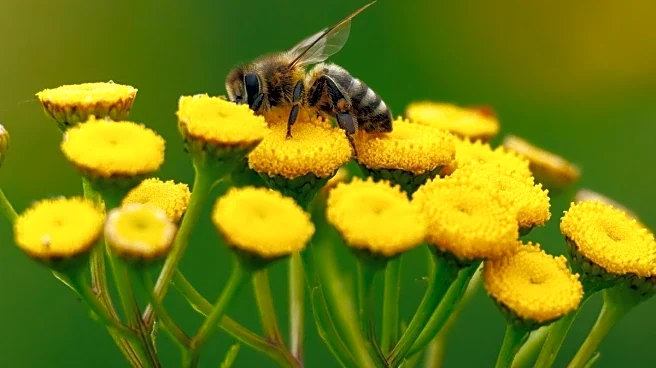

High in the quiet folds of Chamarajanagar’s forests, where mornings smell of wet leaves and evenings soften into blue shadows, a new kind of village is being built. Not with concrete or roads, but with tiny
wings and sweeter futures.
Here, the hum is soft, the work is steady, and the promise is unexpected. This is Karnataka’s first Stingless Bee Village, a project that is giving tribal families something rare in a world that often forgets them: income without danger, confidence without fear.
It began not with big speeches but with a simple observation by scientists from the National Bureau of Agricultural Insect Resources. Tribal communities had always been honey collectors, climbing trees, cutting wild hives, braving angry swarms.
The honey was precious but the stings were brutal. Many returned home with swollen faces, deep welts, some even struggling to breathe. The work was heroic but risky, and the earnings were never enough to justify the danger.
So the scientists asked a different question: what if the bees themselves could be different?
The Arrival Of Tiny Workers Who Never Sting
In the green corners of these forests live native bees so small you might mistake them for drifting seeds. They belong to the Tetragonula species, known for their gentle nature and complete lack of stingers.
They nest quietly in tree hollows, old walls, and termite mounds. They do not chase, do not attack, do not flee. They stay loyal to their colonies, and they gift honey so rare and medicinal that it sells for four to five times the price of regular honey.
This was the turning point. If these bees could be trained, multiplied and cared for, the risk of honey collection would vanish. And the income would rise. What began as an experiment soon grew into a prototype for livelihood.
Women Step Forward, With Curiosity First And Courage Next
In the first phase alone, around sixty women from five tribal hamlets — Kombudikki, Mendare, Indiganatta, Gorasane and Keeranahola gathered in makeshift training sheds to learn the art of stingless beekeeping. Many of them had never handled scientific tools before. Some were frightened of even the tiniest insects. But the bees, quiet and gentle, made the fear melt away.
Scientists taught them how to identify queens, how to observe worker behaviour, how to split colonies without harming them, and how to draw honey using clean, careful methods. There were giggles, pauses, mistakes, and then confidence. For many women, it was the first time they had controlled a process that brought money directly into their homes.
Once the training ended, each woman was handed a small hive box of her own. One home, one colony – a seed of income, a seed of pride.
Honey That Sells Like Gold, But Flows Like A Drop
Unlike farmed honey, stingless bee honey does not flow in litres. It gathers in tiny pots inside the hive, like pearls. A good colony gives perhaps a few hundred millilitres at a time. But those drops carry value.
Ayurvedic practitioners prize it for its medicinal uses. Buyers know its rarity. Prices shoot up to four or five thousand rupees per kilogram. For a tribal family that once sold forest honey at a few hundred rupees, this small hive becomes a quiet revolution.
It is steady income without climbing trees, without smoke torches, without fear of injuries or hospital visits. Children watch their mothers tend to the colonies the way one tends to kitchen gardens. It becomes a part of the rhythm of the home.
The Forest Also Breathes Easier
There is another sweetness in this story. Stingless bees are powerful pollinators. Coconut palms, gourds, sunflower fields, and vegetable patches all thrive when these bees visit their flowers. So a livelihood project accidentally becomes an environmental blessing. More bees mean better crop yields, healthier forests, and richer biodiversity.
In the long run, these tiny workers may stitch together a more balanced relationship between the community and the forest they depend on.
A Model Ready To Travel Beyond These Villages
What began quietly in a handful of hamlets is now drawing attention from unexpected places. Even the Indo Tibetan Border Police and Army Service Corps have been trained in handling stingless bees. Scientists see potential not just in tribal settlements but in farms, greenhouses, and urban rooftops.
If this model spreads, income can become more predictable, forests can regain balance, and women’s roles in ecological livelihoods can strengthen across the state.
A Future Built One Drop At A Time
In these villages, when the sun slides down and the forest cools, the tiny bees retreat into their hive pots, carrying the day’s pollen, unaware that they are building stories bigger than themselves. The women check the boxes one last time, close the lids gently, and return home with the quiet confidence of someone who knows tomorrow will not sting.
/images/ppid_a911dc6a-image-177103504309993710.webp)

/images/ppid_a911dc6a-image-177103508492594205.webp)




/images/ppid_59c68470-image-177102753183257032.webp)


/images/ppid_a911dc6a-image-17710264327998831.webp)
/images/ppid_a911dc6a-image-177102646607765106.webp)