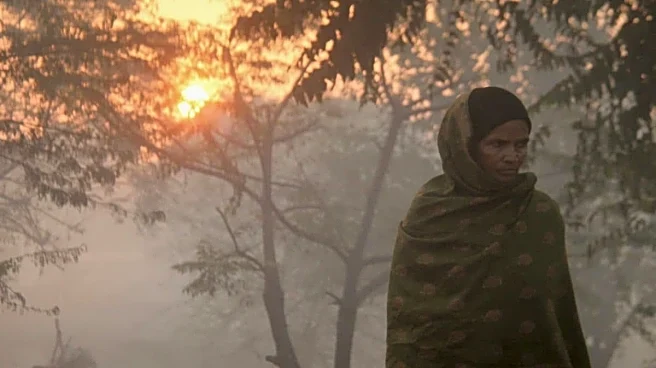

Bengaluru is gearing up for a noticeably colder December, with temperatures slipping into the 12–14°C range, sharply below the city’s seasonal norm. For many residents, this feels cold enough to warrant
winter wear weeks earlier than usual. But despite the dip, Bengaluru is not technically experiencing a “cold wave,” at least not by the standards defined by the India Meteorological Department (IMD).
Unlike countries with uniformly cold winters, India’s vast geography means that cold wave criteria vary significantly by state, terrain, and climatology. What is a cold wave in Punjab may only count as a mild cool spell in Tamil Nadu, and what feels freezing in Bengaluru may not qualify at all under the IMD rulebook.
Let’s understand those rules, the science behind Bengaluru’s recent chill, and why southern states rarely see an official cold wave declaration, even when residents feel the mercury has dipped dramatically.
Why Bengaluru Feels So Cold, And Why It’s Still Not A Cold Wave
December is a transition month for Bengaluru. The post-monsoon retreat leaves the atmosphere dry, and clear skies at night accelerate heat loss from the ground. With the persistent north-easterly winds sweeping in dry continental air, minimum temperatures can fall quickly.
The long-term normal minimum temperature for Bengaluru in December is around 16.4°C. Recent nights dipping to about 12-14°C mark a 2-4°C departure from normal, which is a noticeable drop for a city accustomed to milder winter behaviour. It produces the sensation of winter arriving early — colder mornings, chilly winds at dawn, and a perceptible shift in the air.
However, this departure is not sufficient to qualify as a “cold wave” under IMD criteria for South Interior Karnataka. Southern stations, especially those closer to the coast or situated in tropical latitudes, need a more substantial temperature deviation or a lower absolute minimum temperature to meet the definition. For such stations, a cold wave generally requires the minimum temperature to be 15°C or below and a departure of 4.5°C or more from normal.
Bengaluru’s temperatures have fallen below normal, but not enough. The city is experiencing a cold spell, not a cold wave, a distinction that often causes confusion but has clear meteorological meaning.
What Exactly Is A Cold Wave In India?
IMD defines cold waves through two parameters:
(1) how much the minimum temperature deviates from the normal for that region and
(2) whether the minimum temperature crosses certain absolute thresholds.
The reasoning behind this dual metric is simple. A temperature of 12°C may feel pleasant in Himachal Pradesh, but it can feel harsh in Chennai. Likewise, a 6°C minimum may be alarming for West Bengal but routine for Uttarakhand. Therefore, IMD blends climatology with absolute thresholds to determine when cold becomes “cold enough” relative to the region’s baseline.
A cold wave is declared when either the temperature deviation or the absolute threshold criteria are met. When the criteria line up, conditions turn into a severe cold wave.
Why Cold Wave Criteria Differ Across India’s Regions
India’s diversity of landscapes, from the Himalayas to coastal plains, from desert regions to lush interiors, forces meteorologists to treat each region differently.
Northern Plains and Northwest India
States such as Punjab, Haryana, Delhi, Rajasthan, and Uttar Pradesh experience pronounced winter drops. Minimum temperatures here often hover below 10°C, and cold winds from the north and northwest intensify the chill.
In these states, a cold wave is typically declared when the minimum temperature falls to 10°C or below, alongside a departure of 4.5°C or more from normal. A drop to 2-6°C with a similar departure may qualify as a severe cold wave.
Hills Of Northwest India
The Himalayan states naturally see lower temperatures. Cold wave criteria there rely more on departure from normal than absolute values because cities like Shimla or Manali frequently experience sub-zero temperatures.
Central India
Madhya Pradesh and Chhattisgarh often see sharp night-time cooling due to inland geography, clear skies, and dry winds. Here too, dropping below 10°C can qualify as cold wave territory, depending on the variation from normal.
East India
Jharkhand, Odisha, Bihar, and West Bengal encounter winter differently. The coastal influence keeps the temperature moderate, and the cold wave criteria therefore stress deviations rather than strict thresholds. Even temperatures in the 8-12°C range can qualify, depending on normal climatology.
Coastal And Southern States
Tamil Nadu, Kerala, coastal Andhra Pradesh, and Karnataka rarely see temperatures drop far enough. For these regions, IMD uses thresholds better suited to tropical climates. A minimum temperature of 15°C or below and a deviation of 4.5°C or more is typically required for cold wave declaration.
This is why Bengaluru, Chennai, Hyderabad, Kochi, or Thiruvananthapuram seldom fall under official cold wave alerts; the normal temperatures simply do not allow enough room for deviations.
Where Bengaluru Fits In The Cold Wave Map
Bengaluru belongs to the South Interior Karnataka, a region with a relatively stable winter profile. The plateau geography brings pleasant mornings and cool nights, but extreme drops are rare.
For IMD to declare a cold wave for Bengaluru, the minimum temperature must fall to 15°C or less, and it must be at least 4.5°C below normal, or the minimum temperature must fall to 10°C or lower, regardless of deviation.
In December, Bengaluru’s normal minimum is around 16.4°C. A cold wave would need the minimum to fall well below 12°C for the deviation metric to be satisfied. Even with recent lows of around 12–14°C, the departure remains around 2–4°C, not enough to meet the threshold.
Residents may find this cold, and understandably so, but meteorologically, it remains within a cold spell category.
Why South Rarely Sees Cold Wave: Understanding The Science
Southern India’s climate is shaped by several moderating factors that prevent extreme winter cooling. Geography, ocean proximity, and tropical airflow patterns all work together to stabilise temperatures. Understanding these factors helps explain why cold waves are far rarer here than in the north.
Oceanic Influence
The Arabian Sea and Bay of Bengal exert a strong moisture and temperature-balancing effect. Even interior regions like Bengaluru feel moderated by maritime air that prevents drastic drops.
Latitude
South India lies closer to the equator, where solar heating is more consistent year-round. This limits the amplitude of seasonal variation.
Absence Of Persistent Cold Winds
Northern India experiences prolonged cold advection from Central Asia. These winds sweep into Punjab, Haryana, Rajasthan, and Uttar Pradesh before moving eastward. Such cold-dense air masses rarely penetrate south of the Deccan plateau.
Topographic Barriers
The Western Ghats block much of the cold continental airflow, reducing night-time cooling in the western and central peninsular regions.
Urban Heat Influence
Cities like Bengaluru have dense built environments that absorb and re-radiate heat at night, preventing the kind of dramatic temperature drops seen in rural north Indian regions.
Together, these factors create a winter pattern characterised more by cool spells than by true cold waves.
How IMD Classifies Cold Days vs Cold Waves
While cold waves focus on minimum temperatures, IMD also has a separate category for “cold day” conditions, based on maximum temperatures. This explains why a region can feel chilly during the day even without a nighttime cold wave.
Cold Day
A cold day occurs when the daytime maximum temperature is significantly lower than normal, typically 4.5°C or more below the seasonal average.
Cold Wave
A cold wave focuses on nighttime minimums and requires deviations or thresholds to be met. Bengaluru’s current conditions do not satisfy either parameter for an official alert, but they do contribute to a perceptible cold spell for residents unaccustomed to sustained low temperatures.
Cold Waves And Health Impacts Across India
Cold waves have serious public health implications. Prolonged exposure to cold can lead to hypothermia, respiratory illnesses, cardiovascular strain, and increased vulnerability among the elderly, children, and outdoor workers.
Northern India sees seasonal spikes in cold-related morbidity due to fog, low visibility, and the combined stress of pollution and low temperatures. Southern India generally avoids such extremes, but cold spells can still affect those with chronic illnesses or limited heating access.
Why Understanding IMD’s Criteria Matters For Bengaluru
The rising interest in Bengaluru’s winter forecasts highlights how sensitive the city has become to even moderate temperature swings. Climate variability, rapid urbanisation, and lifestyle changes have made residents more aware of unusual weather patterns.
Understanding cold wave criteria helps clarify three things:
Cold Isn’t Always A Cold Wave: Not every cold morning qualifies for an IMD alert. Criteria are tied to regional climate norms.
Bengaluru Can Be Cold Without Being Extreme: The city’s recent chill reflects weather variability, not an anomaly severe enough to trigger official warnings.
Public Perception & Meteorological Definition Can Differ: What feels cold to the public does not always match IMD’s technical thresholds, especially in tropical regions.
What To Expect In Bengaluru Over The Coming Weeks
As December progresses, Bengaluru could continue to see cooler mornings due to dry north-easterly winds, clear skies facilitating radiational cooling, and reduced moisture post-monsoon.
Nighttime temperatures may dip further, especially in peri-urban areas (outskirts). However, unless temperatures fall substantially below current levels, a cold wave declaration remains unlikely.
Residents can anticipate crisp mornings, warmer afternoons, and a generally pleasant winter, punctuated by occasional cold spells rather than extreme cold events.
India’s Cold Wave Criteria Show Its Weather Diversity
A single definition cannot apply uniformly across a country as meteorologically diverse as India. The IMD’s cold wave framework reflects that complexity, tailoring thresholds to regional norms and climatic behaviour.
Bengaluru’s colder nights may feel unusual, but remain moderate by national standards. While northern states prepare for intense cold waves, the southern peninsula continues to experience a milder winter rhythm.
As the city braces for more chilly mornings, understanding this distinction provides clarity, and perhaps reassurance, that Bengaluru’s cold spell is a seasonal feature, not an extreme event.
/images/ppid_a911dc6a-image-177079842407186179.webp)






/images/ppid_a911dc6a-image-177079802683499657.webp)
/images/ppid_59c68470-image-177079756041760388.webp)

/images/ppid_59c68470-image-177079752900923983.webp)
/images/ppid_59c68470-image-177079752787481340.webp)