
The past eighteen months have tested India’s diplomatic acuity as few periods have in recent memory. From navigating Russia’s invasion of Ukraine to managing a humanitarian catastrophe in Gaza, and these
crises unfolding alongside political shifts in key partners, notably the United States under President Donald Trump’s second term, which introduced unpredictability, Prime Minister Narendra Modi’s government has shown an unusual capacity for crisis management.
It has protected India’s economic interests whilst maintaining its independence from great-power rivalries that demand ideological commitment rather than pragmatic self-interest.
In sum, India’s foreign policy has repeatedly been subjected to simultaneous, overlapping shocks, each testing its ability to safeguard economic and security interests while maintaining flexibility. New Delhi’s responses have emphasised strategic autonomy, diplomatic balance, and risk mitigation.
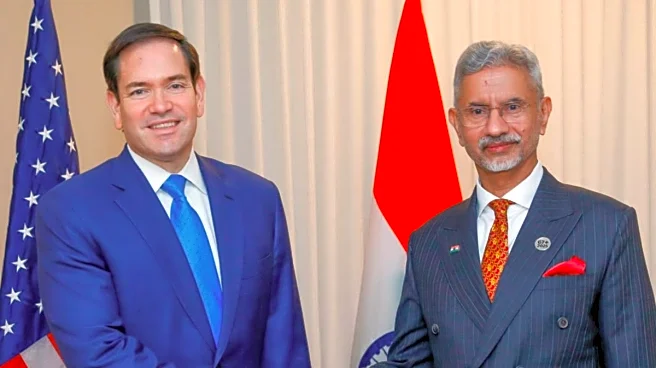
The forthcoming critical minerals ministerial in Washington, where External Affairs Minister S Jaishankar meets Secretary of State Marco Rubio, represents the next stage of this test. The question is whether Team Modi can convert this crisis management credibility into durable gains in a new world order that is being shaped every passing day.
The Minerals Test
The critical minerals ministerial convened by Secretary Rubio on February 4 emerges from the context of demonstrated Indian diplomatic maturity. The ministerial itself represents a significant shift in American strategic thinking. That Washington has elevated critical minerals from a sectoral concern to a matter of state-level engagement signals recognition that semiconductor supply chains, rare earth elements, and allied resources are now vectors of strategic competition comparable to military power.
India’s position within this emerging architecture is fraught with both opportunity and constraint. India was notably delayed in receiving an invitation to Pax Silica, announced by the incoming US Ambassador to India on January 12, 2026, a month after the founding summit. Other nations critical to global semiconductor production, including Taiwan, have not yet joined formally, whilst others, including France and Germany, maintain observer status or have declined participation. The delayed invite suggested India was not an automatic member of Washington’s preferred circle, but rather a nation whose inclusion had to be negotiated.
Yet India’s strategic minerals situation makes its participation valuable. India has identified 30 minerals as critical to its energy transition and manufacturing ambitions. These include cobalt and rare earth elements that India possesses in significant quantities but has historically underexploited.
Domestic policy reforms, including amendments to the Mines and Minerals Development and Regulation (MMDR) Act, have begun liberalising exploration. India’s government has committed $10 billion to semiconductor capability building, with major investments underway: Tata Group’s fabrication facility in Gujarat, multiple assembly and testing plants, and targeted research facilities in space and defence applications.
The critical vulnerability is import dependence. India currently imports roughly 90 per cent of the semiconductors and advanced components it consumes. Lithium, graphite, and other energy transition minerals remain heavily imported. Roughly 30 per cent of India’s chip imports originate from China, creating systemic vulnerability at precisely the moment when decoupling from Beijing has become a geopolitical priority for the US-led camp.
For Modi’s government, joining Pax Silica presents a genuine strategic dilemma. The framework offers tangible benefits: access to diversified mineral supplies, technology sharing arrangements, investment flows, and coordination on standards.
These benefits align directly with India’s domestic semiconductor mission and critical minerals strategy. At the same time, Pax Silica embodies implicit commitments that trouble Delhi’s leadership. The initiative, in Jaishankar’s formulation of India’s foreign policy, requires navigating the tension between “multi-alignment” and alliance discipline.
India’s External Affairs Minister has articulated this principle clearly: in a volatile multipolar world, India’s interests are “best secured by maximising options and freedom of choice.” Pax Silica, by design, constrains some options. The framework includes provisions for joint protection of “sensitive technologies and critical infrastructure from undue access or control by certain countries of concern”, language widely understood as referring to China.
Jaishankar’s language, articulated repeatedly in 2025, makes this tension explicit. “Globalisation has entered a phase where interdependence is no longer benign,” he has stated, “and supply chains, trade regimes and technological competence are now new levers of power.” Yet India’s response has been not to surrender autonomy but to “multi-align,” that is, to engage multiple partners across different issues rather than adopt bloc-oriented commitments. This approach has allowed India to reduce exposure to supply chain distortions whilst remaining embedded within global markets.
The bilateral meeting between Jaishankar and Rubio on February 3 will determine whether Pax Silica membership is negotiable on terms acceptable to Delhi. Three issues will be central. First is the status of Pax Silica membership itself. Will India’s participation be as a full member or as an observer? What obligations does membership entail regarding technology access, investment coordination, and joint positions on China-related measures?
Second is the minerals, the concrete agenda for the meeting. Will the gathering yield binding commitments on supply chain diversification, investment guarantees, or technology transfer? Third is the integration of minerals cooperation with the broader bilateral trade framework. The tariff reduction negotiated just days earlier signals the Trump administration’s flexibility, but only on transactional issues.
The EAM has repeatedly emphasised India’s red lines: protection of national interest, safeguarding of domestic sectors (particularly agriculture and small enterprises), and preservation of policy autonomy. In 2025, when Trump imposed escalating tariffs, India resisted capitulation whilst signalling willingness to negotiate. The result was not a US victory but a settlement that both sides could claim vindication for.
The Tariff Negotiation
The tariff imbroglio with the Trump administration illustrated Modi’s capacity for tactical negotiation under pressure. When Washington imposed escalating tariffs, beginning at 25 per cent and reaching an effective rate of 50 per cent, the situation threatened serious economic damage. Indian exports faced disruption, manufacturing confidence eroded, and the bilateral relationship chilled.
Rather than capitulate or escalate, Modi engineered a reset, and at the same time diversified its export market with FTAs with the UK, New Zealand, and the EU. On February 2, 2026, President Trump announced a reduction of reciprocal tariffs from the punitive 50 per cent effective rate to 18 per cent. Critically, the additional 25 per cent penalty tariff, imposed to penalise India’s Russian oil purchases, was waived.
The deal was negotiated at a moment when India’s leverage appeared minimal. Yet Delhi secured not merely a rate reduction but the removal of a politically weaponised tariff applied uniquely to India. The agreement also signalled alignment with Trump’s broader agenda of reordering global economic relationships.
Navigating Ukraine
When Russia invaded Ukraine in February 2022, India faced immediate pressure: stand with Western democracies or risk diplomatic isolation. Modi’s government chose a third path, neither unambiguous condemnation nor alignment with Russia, but a consistent call for dialogue and diplomatic resolution, done only to protect India’s interests.
India’s security dilemma was real: the country depends on Russian weapons, maintains historic defence ties with Moscow, and cannot afford to aggravate a nation upon which it still relies for critical military hardware.
The Indian response evolved beyond mere abstention from UN votes. Modi himself has maintained direct contact with both Volodymyr Zelenskyy and Vladimir Putin, positioning India as a potential mediator rather than a bystander.
More critically, Russian oil imports became cheaper as sanctions on Russia meant that they could not sell their oil directly to any other Western nation, and India became the world’s refinery. Providing refined petroleum and petroleum products to Europe and even the United States, while at the same time keeping global oil prices in check.
In January 2026, Modi reiterated this message: India “firmly supports peaceful resolution of all conflicts” and stands with efforts aimed at “restoring peace, stability and dialogue.”
Gaza and the Balancing Act
The Israel-Hamas conflict presented a different set of pressures. Here, India faced not a two-sided binary but a complex web of relationships across the Islamic world, with Israel, and with Western partners. Modi was among the first world leaders to condemn the October 7 Hamas attack as an “act of terror.” Yet as Israeli operations unfolded and civilian casualties mounted, India’s position shifted without surrendering its earlier statement. At the UN, India voted against Israeli settlement policies and supported a resolution demanding humanitarian ceasefire.
Delhi has termed it as its de-hyphenated foreign policy. It deals with bilateral relationships separately rather than through an ideological prism. India elevated its strategic partnership with the UAE while maintaining diplomatic channels with Iran. It deepened ties with Israel whilst simultaneously sending humanitarian assistance to Gaza. At the Voice of Global South summit, Modi called for “dialogue, diplomacy and restraint”. Modi also congratulated Trump on his Gaza peace plan.
The governing principle was transparent: India would not allow itself to be drawn into great-power competition over Palestine. Instead, it would engage each party based on its own bilateral interests whilst advocating for peace.
What distinguishes Modi’s approach across these crises is a conceptual shift from beneficiary to architect. On Ukraine, India did not inherit a position dictated by the non-alignment doctrine but instead constructed an independent assessment. On Gaza, India fashioned a response that did not track Cold War-era alignment patterns but reflected contemporary bilateral interests. On tariffs, India did not accept punitive rates but negotiated a reset.
The ministerial offers an opportunity to extend this pattern into a new domain. If Modi’s team can secure Pax Silica membership on terms that preserve autonomy, establish concrete mineral supply commitments, and integrate semiconductors into India’s industrial roadmap without subordinating research independence to bloc discipline, then the government will have confirmed what these eighteen months have suggested: that India’s diplomatic maturity is now matched by strategic economic thinking.
The test is whether India can remain within the US-led framework whilst refusing to become its subordinate, can India succeed where many others have failed? Whether India can secure minerals access without sacrificing the policy space to engage Russia, China, and non-aligned partners on other issues. The meeting of the ministers will reveal whether the Trump administration is prepared to accommodate this vision or whether it expects alignment to mean dependence.
The stakes are high. India’s semiconductor ambitions, its energy transition, and its industrial modernisation all depend on disruption-resistant supply chains for critical minerals. Failure to establish these supply chains will leave India vulnerable to exactly the kind of economic weaponisation that China has deployed through rare earth restrictions and that the West has deployed through tariffs.



/images/ppid_59c68470-image-177012256007374908.webp)

/images/ppid_59c68470-image-177012252617289779.webp)
/images/ppid_59c68470-image-177012253357226261.webp)
/images/ppid_59c68470-image-17701225696484365.webp)