



After nearly eight decades of relying on a fragmented intelligence system, Japan is set to launch a new centralised spy agency modelled on organisations such as the CIA in the United States and MI6 in the United Kingdom.
The National Intelligence Bureau (NIB) will formally begin operations on Friday, marking one of the most significant overhauls of Japan’s security architecture since the end of World War II.
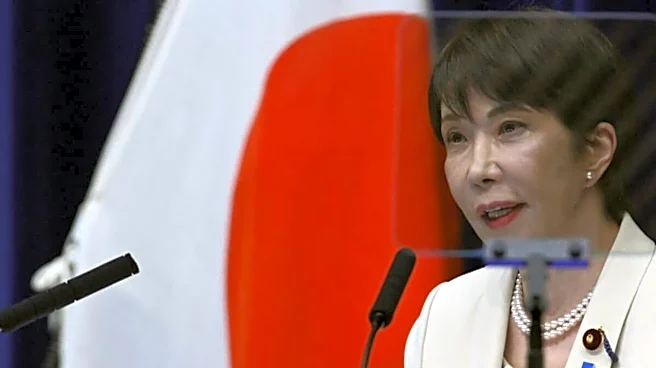
The move reflects a broader shift in Japan’s defence and security posture under Prime Minister Sanae Takaichi, who has advocated stronger national security measures and backed calls to revise Japan’s post-war pacifist framework amid rising geopolitical tensions in East Asia.
Why Japan Is Creating A New Intelligence Agency
For decades, Japan’s intelligence gathering remained spread across
multiple ministries and agencies, with limited coordination between them.
At the centre of the system was the Cabinet Intelligence and Research Office (CIRO), which had around 700 employees but relatively little authority. Intelligence units within the Ministry of Foreign Affairs, Ministry of Defence, Ministry of Justice, National Police Agency and other departments often collected information independently, with no formal mechanism ensuring strategic intelligence sharing.
This fragmented structure earned Japan a reputation among security experts as a “paradise for spies.”
James D.J. Brown, a political science professor at Temple University’s Japan campus and an expert on Russian espionage in Japan, told CNN that multiple agencies gathered intelligence but often failed to share information in a cohesive manner.
Prime Minister Takaichi has argued that Japan must adapt to emerging forms of warfare and security threats in an increasingly unstable global environment. According to reports, Tokyo also sought advice from the United States, Australia and Germany while designing reforms aimed at strengthening its intelligence capabilities.
What Is The National Intelligence Bureau?
The new National Intelligence Bureau will replace and expand the role of the CIRO.
Unlike its predecessor, the NIB will function as both an operational and administrative intelligence body tasked with collecting, analysing and coordinating intelligence gathered across the Japanese government.
A key change is that ministries and agencies will now be formally required to share intelligence with the bureau, addressing one of the biggest weaknesses in Japan’s previous system.
The agency will be overseen by the newly created National Intelligence Council, headed by Prime Minister Takaichi and comprising senior cabinet ministers.
Its responsibilities will include counterterrorism operations, national emergency response planning and efforts to counter foreign intelligence activities, including espionage and covert influence operations.
Why Japan Is Rethinking Its Security Approach
Japan once maintained a powerful intelligence and internal security apparatus before and during World War II. However, following its defeat in 1945, sweeping reforms were introduced to democratise the country and limit the powers of security agencies, amid concerns about their role in suppressing dissent.
While those reforms helped shape modern Japan’s pacifist identity, security experts say they also left the country with intelligence vulnerabilities despite its status as one of the world’s leading economies.
The growing security concerns stem largely from Japan’s strategic environment. Across the region, China, Russia and North Korea have significantly expanded their military and intelligence capabilities.
As a key US ally hosting around 55,000 American troops, Japan is considered a valuable intelligence target. Analysts say foreign powers could seek information on US military deployments, advanced weapons systems stationed in Japan, Tokyo’s foreign policy decisions and sensitive technological research conducted by Japanese companies, CNN reported.
Security analysts also point to increasing cooperation among China, Russia and North Korea. Recent joint military exercises, North Korea’s support for Russia’s war effort in Ukraine and high-profile displays of unity among the three countries have heightened concerns in Tokyo.
Against this backdrop, Japanese policymakers increasingly believe the country must strengthen its own intelligence capabilities and play a larger role in safeguarding national security, even while remaining under the protection of its alliance with the United States.
The launch of the National Intelligence Bureau marks Japan’s most ambitious attempt yet to modernise its intelligence network and respond to a rapidly changing security landscape in the Indo-Pacific region.









/images/ppid_59c68470-image-178567252428865086.webp)