
/images/ppid_59c68470-image-178877752997031985.webp)
/images/ppid_59c68470-image-178878510021514739.webp)

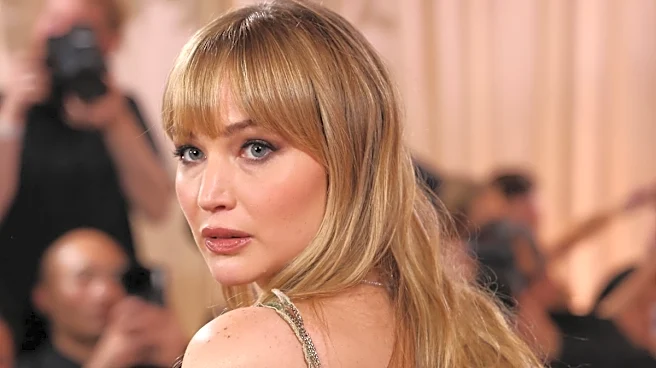
Jennifer Lawrence has never exactly been known for keeping a poker face. From red-carpet reactions to her famously animated interviews, the actor’s expressions are very much part of her charm and, as it turns out, something she wants to preserve.
That may explain her reported preference for what is popularly known as “baby Botox.”
Unlike the more dramatic image often associated with Botox, a completely smooth forehead and an expression that barely moves, baby Botox is designed around subtlety. The idea is to soften fine lines while retaining enough movement to ensure the face still looks, well, like a face.
But is baby Botox actually a different kind of Botox? Does it simply mean using less of it? And is “preventative Botox” something younger people
really need?
Experts say the answer is a little more nuanced.
So, what exactly is “baby Botox”?
First things first: baby Botox is not a different drug.
“‘Baby Botox’ is not a separate drug or a different type of Botox. It is a term commonly used for a more subtle approach to botulinum toxin treatment,” explains Dr. Sanjay Mahendru, Vice Chairman, Plastic, Aesthetic and Reconstructive Surgery, Medanta Gurugram.
The approach generally involves smaller amounts of botulinum toxin and carefully selected injection points, with the aim of softening dynamic lines without significantly restricting facial movement.
“Baby Botox is a term that refers to the administration of botulinum toxin in smaller quantities in order to achieve the desired softer and more natural result,” says Dr. Chandani Jain Gupta, MBBS & MD – Dermatologist & Aesthetic Physician, Elantis Healthcare New Delhi.
According to Dr. Jain Gupta, the key distinction is that baby Botox is about the methodology rather than a different product.
Baby Botox vs regular Botox: Is it really just less Botox?
Well, yes but not only less Botox.
“Generally, yes, baby Botox involves using fewer units of botulinum toxin than a conventional treatment. However, the difference is not simply about using less product,” says Dr. Mahendru.
The final result can also depend on the injection technique, depth, dilution, number of injection points and the particular muscles being targeted. In other words, two people could receive a similar number of units and still walk out with very different-looking results.
Dr. Jain Gupta similarly explains that baby Botox can involve fewer injections, more precise points and treatment of smaller muscles or limited areas rather than simply reducing the quantity.
“The dosage is determined based on the person’s facial features, muscle strength, age, and expected results. All in all, baby Botox is a less aggressive technique as opposed to being a different type of Botox altogether,” she says.
Think of it less as “Botox Lite” and more as a carefully calibrated approach.
Can you really get smoother skin without losing your expressions?
This is arguably the biggest appeal of baby Botox, particularly for actors.
Botulinum toxin works by temporarily relaxing muscles responsible for dynamic wrinkles. The trick, experts say, is deciding which muscles to relax, how much and where.
“Yes, that is one of the main goals of a well-planned botulinum toxin treatment. The objective is not to eliminate movement completely but to selectively relax the muscles responsible for creating certain dynamic lines,” says Dr. Mahendru.
A natural-looking result, he adds, depends heavily on understanding facial anatomy, muscle strength and how a person naturally expresses themselves.
Dr. Jain Gupta agrees that correctly administered Botox can minimise dynamic facial wrinkles while still permitting some movement.
“Good practice and a proper approach will help achieve a natural-looking outcome and avoid any unwanted cosmetic results,” she says.
And that distinction matters. The goal of a subtle treatment isn’t necessarily to make someone look as though they have never aged. It is to make the face look fresher without making it look noticeably treated.
Who should actually consider baby Botox?
Here is where the beauty industry’s obsession with “preventative Botox” deserves a reality check. There is no universal age at which everyone should start Botox, according to both experts.
“A good candidate is someone who has specific concerns about dynamic fine lines and understands what the treatment can and cannot achieve,” says Dr. Mahendru.
Someone with minimal lines who isn’t particularly bothered by them does not necessarily need Botox simply because they have crossed a particular age.
Dr. Jain Gupta similarly says baby Botox may be appropriate for adults with a few dynamic lines or those looking for a subtle reduction, but younger people are not automatically candidates for preventive treatment.
“Young people are not automatically in need of preventive treatments and should rely on protection from sun damage and proper skin care for prevention instead,” she says.
In other words, before adding Botox to your skincare routine, SPF remains considerably less glamorous and considerably more essential.
What happens when you actually get “baby Botox”?
For a first-timer, the process starts well before the needle comes out.
A proper consultation should involve assessing facial anatomy, discussing concerns and expectations, reviewing medical history, medications and previous cosmetic procedures.
“The first step should always be a proper consultation. Your plastic surgeon should assess your facial anatomy, discuss your concerns, review your medical history and explain what kind of result is realistic,” says Dr. Mahendru.
The injections themselves are generally quick and involve mild, temporary discomfort. Most people can return to normal activities immediately, although redness, swelling or bruising can occur.
And don’t expect to walk out of the clinic looking dramatically different.
According to Dr. Mahendru, results generally become noticeable within about three to seven days and typically last around two to three months, although this varies.
Dr. Jain Gupta says results start appearing a few days after treatment and can continue developing for up to two weeks, with effects lasting around three to four months, depending on the individual.
So, unlike your coffee order, Botox isn’t an instant-results situation.
Is “baby Botox” safe?
Like any medical cosmetic procedure, baby Botox isn’t completely risk-free.
“Most side effects are mild and temporary. Patients can experience redness, swelling, soreness or bruising around the injection sites,” says Dr. Mahendru.
Occasionally, patients may experience headaches or temporary weakness in a nearby muscle, which can result in a droopy eyelid or eyebrow.
Dr. Jain Gupta lists similar potential side effects, including temporary redness, swelling, tenderness, bruising and headache, while noting that unwanted muscle weakness can rarely result in droopy eyelids or eyebrows.
The biggest safety takeaway from both experts is simple: where you get the treatment matters.
Dr. Mahendru stresses that Botox should not be administered in salons, homes or non-medical settings. Patients should choose a qualified medical professional who understands facial anatomy and uses an approved product from a reliable source.
Dr. Jain Gupta similarly recommends choosing a qualified and licensed dermatologist or medical professional, checking the authenticity of the product and ensuring the procedure is performed in a proper medical facility.
Because “my friend knows someone who does Botox” is not exactly a medical credential.
And how much does “baby Botox” cost in India?
There isn’t one fixed price. “The cost can vary considerably across India because there is no single standard price for baby Botox,” explains Dr. Mahendru.
The final cost can depend on the brand of botulinum toxin, number of units required, areas being treated, clinic and the experience of the plastic surgeon.
Dr. Jain Gupta also points out that clinics may charge differently depending on the number of doses, treatment area and procedure being provided.
Her advice? Ask for a quote during the consultation rather than choosing a provider based solely on price.
What should you tell your doctor if you want the “Jennifer Lawrence” effect?
If the fear of Botox is ending up with a face that looks permanently surprised, frozen or simply unlike your own, be very specific during the consultation.
“I would discuss which lines you want treated, which expressions you want to preserve and how much movement you are comfortable retaining,” says Dr. Mahendru.
He also recommends asking how many units are being planned, which muscles will be treated and why those areas have been selected.
Dr. Jain Gupta similarly recommends discussing the areas you want corrected, your expectations, previous procedures and the exact injection sites and amount of material being used. Looking at before-and-after photographs can also help establish realistic expectations.
Ultimately, baby Botox is less about chasing a completely wrinkle-free face and more about finding the balance between smoother skin and a face that still moves naturally.
And perhaps that’s why the concept resonates with someone like Jennifer Lawrence. For an actor, expressions aren’t imperfections to erase, they’re part of the job.
The real art of subtle Botox, then, may be making sure people notice that you look refreshed without being able to put their finger on why.

/images/ppid_59c68470-image-178895752570787841.webp)