
/images/ppid_a911dc6a-image-177103508492594205.webp)

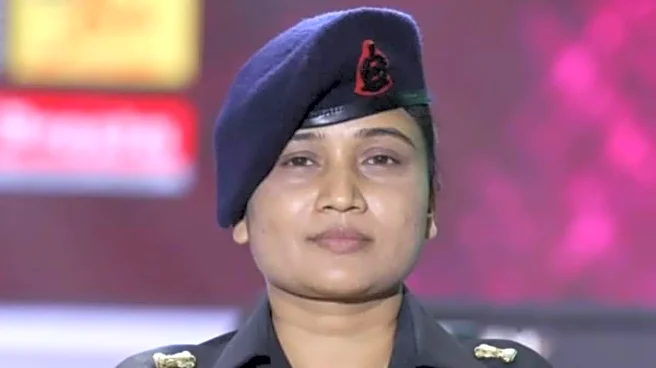
The Sikkim State Disaster Management Authority (SSDMA) and Lieutenant Colonel Seeta Ashok Shelke of the Indian Army have been chosen for the Subhash Chandra Bose Aapda Prabandhan Puraskar 2026 for their outstanding contribution to disaster management.
The award, instituted by the Government of India, is given every year to honour individuals and organisations for exceptional and selfless service in disaster preparedness, response and mitigation. It is announced annually on January 23, the birth anniversary of Netaji Subhash Chandra Bose.
Officials said India’s disaster management systems have improved steadily in recent years, with better preparedness, faster response and stronger coordination helping to reduce loss of life during natural disasters.
For the 2026 awards, nominations were invited from May 1, 2025. The process received wide publicity across print, electronic and social media platforms. A total of 271 nominations were received from individuals and institutions across the country.
Lieutenant Colonel Seeta Ashok Shelke has been selected in the individual category for her leadership during major humanitarian assistance and disaster relief operations in Wayanad, Kerala, during the 2024 floods and landslides. She worked closely with civil authorities and local representatives to ensure quick evacuation, relief distribution and restoration of essential services.
Lieutenant Colonel Seeta Ashok Shelke (Individual Category) and the Sikkim State Disaster Management Authority (Institutional Category) have been selected for the Subhash Chandra Bose Aapda Prabandhan Puraskar 2026 for their excellent work in disaster management.… pic.twitter.com/dvYs3VIAOu
— Ministry of Information and Broadcasting (@MIB_India) January 23, 2026
She led several high-risk rescue missions in difficult weather conditions, saving hundreds of lives. One of her key achievements was supervising the rapid construction of a 190-foot Bailey Bridge at Chooralmala, which restored access to remote villages. She also oversaw innovative engineering solutions, including the use of heavy machinery as counterweights and the construction of an improvised footbridge within four hours during the night.
Lieutenant Colonel Shelke mobilised nearly 150 tonnes of equipment for relief operations, benefiting thousands of people. She also trained more than 2,300 personnel in disaster response and humanitarian work. Through her role in the Corps of Engineers, she played a key part in building bridges, shelters and access routes in disaster-hit areas, highlighting practical leadership and the growing role of women in disaster risk reduction.
The Sikkim State Disaster Management Authority has been selected in the institutional category for strengthening disaster preparedness and response across the state. Established in 2005, SSDMA has built a strong community-based system by deploying 1,185 trained Aapda Mitras across villages, blocks and districts.
Disaster Management Assistants have been posted in all Gram Panchayats, supported by supervisors at the block level and coordinators at the district level. This structure has improved planning, training and local participation, helping communities become more resilient to disasters and climate-related risks in all six districts of Sikkim.
During major disasters such as the Mantam landslide in 2016 and the Teesta floods in 2023, SSDMA’s coordination and trained first responders helped rescue 2,563 people and significantly reduced loss of life and damage. Officials said the authority has developed a strong, community-centred disaster risk reduction model that focuses on early warning, preparedness and local capacity building.
The SSDMA model is seen as sustainable and replicable, especially for other Himalayan and North Eastern states facing similar disaster risks.
/images/ppid_59c68470-image-177104254494215325.webp)

/images/ppid_a911dc6a-image-177104210287325129.webp)

/images/ppid_a911dc6a-image-177104202793221357.webp)
/images/ppid_a911dc6a-image-177104206710214315.webp)
/images/ppid_a911dc6a-image-177104202907093694.webp)
/images/ppid_59c68470-image-177104014803952296.webp)
/images/ppid_59c68470-image-177104006389961167.webp)
/images/ppid_a911dc6a-image-177103853218557950.webp)