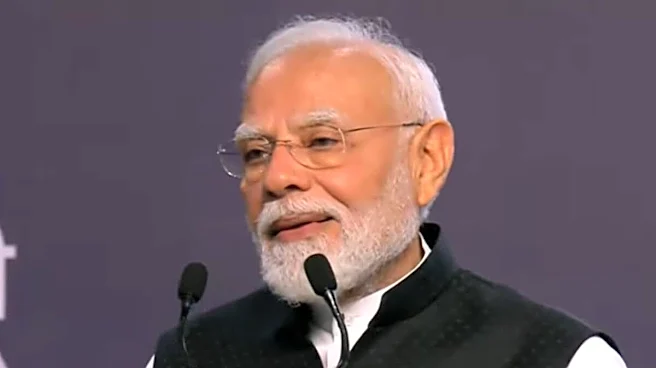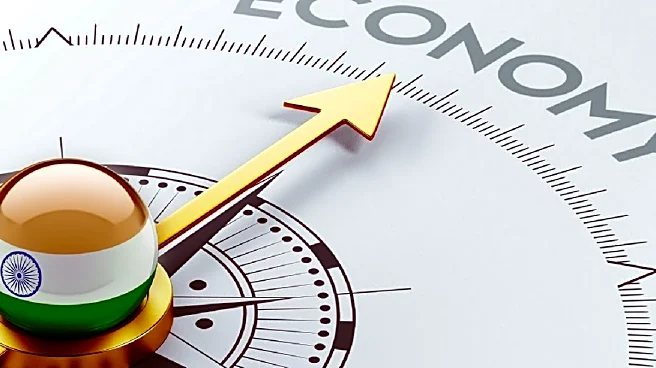



That the Indian economy is alive and kicking is the unmistakable signal from India’s 7.8% real GDP growth in the April–June quarter of 2026 (1QFY27). India remains the world’s fastest-growing major economy; China grew 4.3% and the USA 2.1% in the same quarter. The 7.8% number arrived against a backdrop of global oil-price spikes, supply-chain friction from the West Asia conflict and lingering trade uncertainty internationally. Prime Minister Narendra Modi called it a “herculean feat” and added that “doomsayers were doomed and India bloomed yet again.” Real GDP at constant 2022–23 prices rose to Rs 81.36 lakh crore from Rs 75.46 lakh crore a year earlier. Nominal GDP grew 10.3% to Rs 88.27 lakh crore. Real GVA, a measure of underlying activity,
expanded 8.2% and Nominal GVA by 11.5%. Don’t forget, the 7.8% print is not an isolated instance. It follows a 7.7% GDP growth witnessed in FY26, which itself was an acceleration from the 7.1% growth seen in FY25.
This 7.8% number is not a one-quarter fluke. It is the compounding result of a policy architecture built since 2014 based on greater formalisation, infrastructure-led crowding-in of private capital, targeted industrial policy and fiscal consolidation that protected investment even while shrinking the deficit. That enabling architecture is the essence of Modinomics. How is it that some beleaguered minds are saying that the 7.8% growth is actually “2.6% only”? Well, the “2.6%” figure comes from comparing Rs 88.3 lakh crore under the new GDP series with Rs 86.1 lakh crore from the earlier series. They belong to different series, so the comparison isn’t like-for-like. Only like for like makes sense and anyone (Subhash Garg) doing otherwise, is being fraudulent with the very concepts of basic arithmetic.
For an accurate comparison, numbers calculated using the same base and the same series must be compared. That means Rs 80.0 lakh crore should be compared versus Rs 88.3 lakh crore, which works out to 10.3% nominal GDP growth. Why did India’s GDP series undergo a revision? It wasn’t a sudden rewrite of the economy. India moved to a new GDP series, incorporating updated estimates and new data as it became available. From the old series to the revised data, the numbers evolved with better measurement. Revisions don’t automatically mean numbers are being lowered. SBI Research found that during the FY22–FY25 period, 25 quarterly revisions were upward compared with 12 downward, showing that revised estimates are a routine feature of economic measurement. So why the noise about revisions? Don’t forget, most developed economies routinely revise numbers upwards or downwards as the case may be and also routinely change the “Base Year”, every three to five years. In India’s case, the base year was changed at least seven times, since the first GDP series was released in 1956, based on 1948-49 as the “Base Year” and much of those revisions happened when Congress was in power. If revision of base year was right then, how can it be wrong now?
Coming back to the 7.8% number, in the June quarter, Manufacturing expanded 9.2%, the Services’ sector grew 10%, powered by financial, real estate, IT and professional services that surged by 12.1%, while Construction rose 7.7% and utilities by a solid 8.9%. On the demand side the GDP composition is equally revealing. Gross fixed capital formation (GFCF) saw a stellar 11.9% rise, while private final consumption expenditure (PFCE) grew 7.1%. Exports rose 12%. These are not the hallmarks of a stimulus-dependent or a consumption-only recovery. They point to capacity creation and formal-sector momentum. In effect, the Indian economy is firing on all cylinders. So on what grounds is Subhash Garg recklessly alleging that GDP growth is “2.6% only”? Garg cannot take the denominator from one GDP series and the numerator from another series, which is what he is doing. That the growth rate held at 7.8% and that manufacturing and investment accelerated, suggests buffers built over the previous 12 years, diversified sourcing, a larger formal tax base, public capital expenditure that kept projects moving and a Services sector less immediately exposed to energy shocks. The policy stack that produced this resilience is what Modinomics is all about. Formalisation is visible in GST data, e-way bills and the rise of organised retail and logistics. A larger formal base also gives the government more fiscal room when external shocks arrive. In September 2025 the GST structure was simplified into two principal slabs of 5% and 18% and that is bearing fruit. August 2026 saw GST revenue of Rs 2 lakh crore, up 15% YoY. How can an economy growing at “just 2.6%” as claimed fraudulently by Subhash Garg, see monthly GST collections of over Rs 1.7 lakh crore, month after month?
Also, the clean-up of the banking system deserves applause. The Insolvency and Bankruptcy Code of 2016, together with recapitalisation and recognition of non-performing assets, ended the earlier cycle of evergreening of bad loans. Recovery rates improved, credit discipline tightened and banks became willing to lend again. Bank credit growth has been running at multi-year highs. Healthy balance sheets matter when investment demand revives, as it did in Q1 FY27. Central capex has risen from about Rs 2 lakh crore in FY15 to a budgeted Rs 12.2 lakh crore in FY27. Effective capex, including grants to States for capital assets, is estimated at 4.4% of GDP in FY27. Roads, railways, ports, airports and logistics absorb the bulk. The National Infrastructure Pipeline, PM Gati Shakti and dedicated freight corridors were designed to lower logistics costs and crowd in private investment and the results are showing.
Production-linked incentive schemes covering 14 sectors have drawn more than Rs 2.40 lakh crore in investment, generated over 14 lakh jobs and supported exports of Rs 8.3 lakh crore or more. Electronics is the standout. India is now the world’s second-largest manufacturer by volume. Roughly 99% of the phones sold domestically are made in India. Beyond growth, fiscal consolidation without starving investment, has been the hallmark of Modinomics. Fiscal deficit has been brought down to 4.4% in FY26 and a targeted 4.3% in FY27. The revenue deficit has narrowed, freeing resources for capital spending rather than current outlays. Debt-to-GDP is on a sharply downward path. Tax-to-GDP has risen. This combination of lower deficit and higher quality of spending is rare in developing markets. It also explains why rating agencies like Japan’s JCR have upgraded India, even when global conditions have deteriorated.
More importantly, Labour codes have been notified. Corporate tax was cut in 2019. Digital public infrastructure (Aadhaar, UPI, account aggregators, ONDC) has lowered transaction costs and expanded the formal financial system at speed. Together they have changed the operating environment for firms and households. Twelve years after 2014, India has moved from the “fragile five” conversation to the “world’s fastest growth engine” conversation. Nominal GDP has roughly doubled. Extreme poverty has fallen sharply, with over 25 crore people lifted from multi-dimensional poverty under PM Modi. The tax base is wider. Banks are cleaner. Factories that did not exist a decade ago now export phones, pharmaceuticals and components. Public investment has been used as a growth instrument rather than a political afterthought. The 7.8% number is the latest data point in that sequence and no attempts by disgruntled former finance secretary, Subhash Garg, to discredit the 7.8% number, will work.
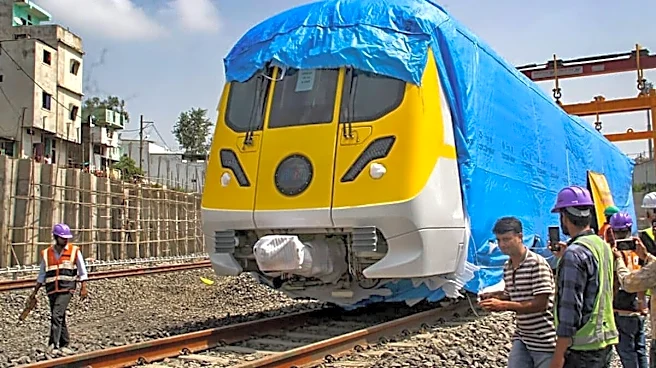
JCR’s upgrade is another reminder that while the usual chorus manufactures pessimism, institutions that actually assess sovereign risk are recognising and valuing India’s economic progress under Modi. Japan’s JCR upgrading India from BBB+ to A- is a significant development not only because ratings define fundamentals, but because they increasingly recognise them. Strong growth is becoming India’s strongest macroeconomic asset. Most importantly, the infra revolution under PM Modi has given a massive fillip to India’s growth momentum. By mid-2026, over 160 Vande Bharat services were operational across the country, connecting dozens of States and reducing travel times significantly on key routes. Plans include scaling to 800 trainsets by 2030 and around 4500 by 2047. Next-generation versions (Vande Bharat 4.0) target higher speeds up to 250 km/h initially, with ambitions for dedicated corridors supporting 320–350 km/h operations. Complementing Vande Bharat are Amrit Bharat trains (for long-distance comfort) and Namo Bharat Rapid Rail services. The upcoming Vande Bharat Sleeper trains promise luxury overnight travel at speeds up to 180 km/h. The Chenab Bridge in Jammu & Kashmir, the world’s highest railway arch bridge (359 m above the river), was inaugurated in 2025, completing the Udhampur-Srinagar-Baramulla Rail Link (USBRL), as a testament to PM Modi’s ability to marry grand vision with seamless execution. This engineering marvel, built with DRDO assistance and blast resistant design, connects the Kashmir Valley to the rest of India by rail for the very first time.
Coming back to Subhash Garg, the real GDP growth, calculated at constant prices is indeed 7.8% and Garg’s attempts to demean that figure down to “2.6%” is statistical gibberish, borne out of malice or ignorance or worse still, both. From Rs 75.46 lakh crore in 1QFY26 to Rs 81.36 lakh crore in 1QFY27 is a solid 7.8% growth and no amount of mathematical buffoonery by Garg or the likes of Raghuram can diminish India’s stature. As for base year shift, it involves using double deflation (recommended by UN) for manufacturing, (roughly 600 deflators instead of earlier only 180), proportional Denton benchmarking and new data sources like GST returns, e-Vahan registrations, ASUSE and PLFS surveys. MoSPI has increased the number of deflators from 180 to about 600 as part of this change.
Historical GDP numbers have consequently been recalculated. Rebasing and revision of GDP numbers is a routine exercise in most large, western economies, because data is never static. Data is always dynamic and evolving. That said, there is absolutely no grey or any confusion in the 7.8% number. It is as clear as day.
India’s GDP growth has, in fact, been 7% plus in 10 out of the last 13 quarters and this is amply supported by multiple high frequency indicators. For instance, India’s passenger vehicle registrations reached 47.05 million units in FY2026, marking a robust 13.0% increase over the previous fiscal year. Wholesale dispatches in H1CY2026 hit 2.59 million units, showing an 18.6% year-on-year growth. Domestic wholesale volumes for commercial vehicles surged between 20% and 43% across major manufacturers, driven by infrastructure spending and freight demand.
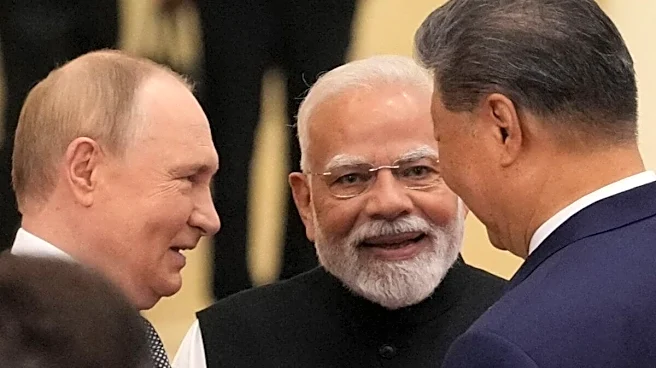
India’s top automaker Maruti Suzuki reported total sales of 219,220 units in August 2026, a 21.3% increase compared to the same month last year. Tata Motors emerged as one of the fastest-growing major players, posting a massive 56% to 59% year-on-year jump. Mahindra & Mahindra reported overall auto sales of 107,648 units, translating into a 42% year-on-year increase supported by high demand for utility vehicles. Beyond auto sales’ numbers, don’t forget that the last time India’s Manufacturing PMI fell below 50 to 48.1 was in June 2021 and the last time our Services’ PMI fell below 50 to a reading of 45.4 was in July 2021, during the peak second wave of Covid. Since 2021, in the last 5 years in any given month, India’s Manufacturing and Services’ PMI readings have always been 50 or more. Do note that any reading of 50 or more indicates expansion. That alone should silence doomsday naysayers like Subhash Garg who torture data to undermine India’s growth trajectory. That global ratings’ giant S&P upgraded India’s long term sovereign credit rating last year after a gap of 18 long years, the first upgrade ever since 2007, is a massive vote for the fact that Modinomics is alive and kicking and compounding and how.
Sanju Verma is an economist, national spokesperson of the BJP and the bestselling author of ‘The Modi Gambit’. Views expressed in the above piece are personal and solely those of the writer. They do not necessarily reflect News18’s views.