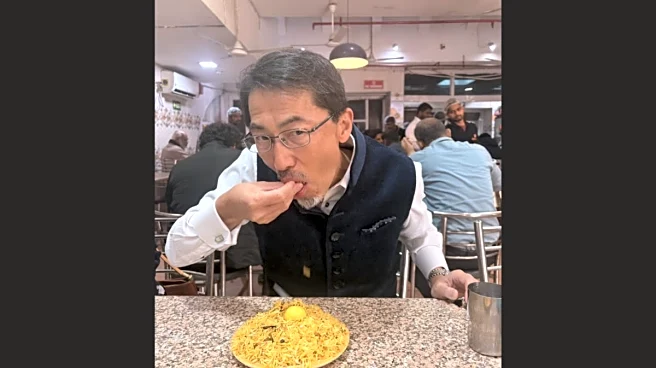



Japan’s ambassador to India ONO Keiichi struck a chord on social media after sharing a light-hearted post about trying to eat biryani by hand, prompting a wave of positive reactions and cross-cultural appreciation online. In a post on X (formerly Twitter), Ono Keiichi said he had followed the example of his Indian friends while eating the dish, adding that- much like sushi- biryani “tastes even better when eaten by hand.”
“Tried eating biryani by hand- following my Indian friends. Like sushi, it tastes even better when eaten by hand. I feel I’ve come a little closer to my friends!” he wrote, signing off with the Telugu phrase “చాలా బాగుంది,” meaning “very good,” accompanied by a smiling emoji.
Tried eating biryani by hand — following my Indian
friends😊 Like sushi🍣, it tastes even better when eaten by hand. I feel I’ve come a little closer to my friends!
చాలా బాగుంది😋 pic.twitter.com/H55Bf9COuE
— ONO Keiichi, Ambassador of Japan (@JapanAmbIndia) January 20, 2026
The post quickly gained traction, with users praising the ambassador’s gesture as a symbol of cultural openness and warmth. Many highlighted the comparison with sushi, traditionally eaten by hand in Japan, as an example of shared food cultures bridging national differences.
In everyday life, Japanese people generally eat with chopsticks, not with their hands. Rice bowls, noodles, vegetables and most cooked meals are designed for chopstick use. However, there are notable and widely accepted exceptions. Sushi- especially nigiri- is traditionally finger food and eating it by hand is considered proper etiquette, particularly in traditional sushi settings. Onigiri (rice balls) and some street foods are also meant to be eaten by hand.
/images/ppid_59c68470-image-177071752768381969.webp)




/images/ppid_a911dc6a-image-177073762995729463.webp)





/images/ppid_59c68470-image-177061752983951184.webp)