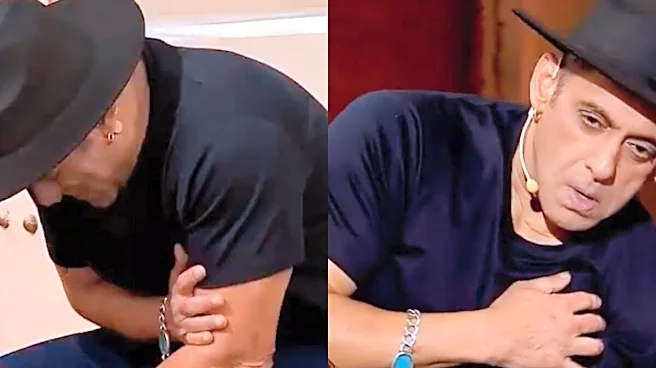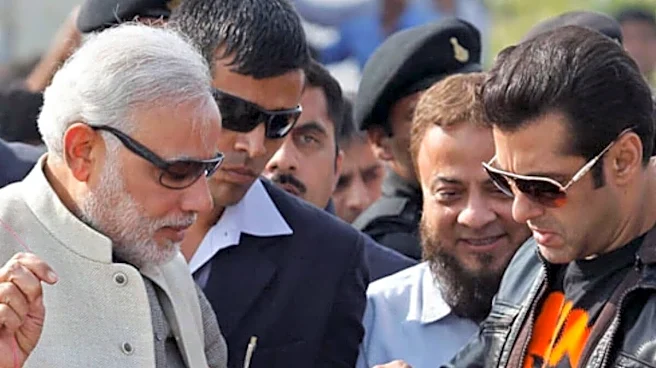




Bigg Boss 20 Weekend Ka Vaar: Salman Khan’s recent comments on Bigg Boss 20 have brought the issue of online trolling back into focus. During the latest Weekend Ka Vaar episode, the actor spoke about the abuse faced by celebrities on social media and recalled an incident from several years ago involving a person who, according to him, repeatedly posted offensive content about him.
Salman said that the person was traced with the help of a cyber cell and that he and others eventually reached the person’s home.
According to reports about the episode, Salman recalled confronting the individual and questioning him about the posts he had been making from what he described as a “faceless account.”
Read More: Bigg Boss 20: Salman Khan Loses Cool Over ‘Bhai
Mota Ho Gaya’ Trolls, Throws Hat And Removes Coat | VIDEO
The anecdote raises a much bigger question for everyone using social media:
Does hiding behind a username really mean nobody can find you?
The short answer is that online anonymity and legal anonymity are not necessarily the same thing.
A Username Does Not Automatically Make You Invisible
On Instagram, X, Facebook, YouTube and other platforms, users may see only a display name, username or profile picture.
But social-media platforms can maintain information associated with accounts. Internet service providers and telecom networks may also maintain records, subject to applicable laws and lawful investigative procedures.
That does not mean that authorities can instantly identify anyone who posts an offensive comment.
Nor does every rude or unpleasant comment amount to a criminal offence.
However, assuming that an anonymous-looking account automatically guarantees immunity from investigation can be misleading.
Depending on the nature of the complaint, investigators may examine digital evidence and seek information through legally prescribed processes.
Read More: Salman Khan Slams Trolls After They Body-Shamed Brother Sohail Khan: ‘Apne Maa Baap Ko Dekh Lo Pehle’
Trolling, Criticism And Abuse Are Not The Same
This distinction is important.
Disagreeing with a celebrity is not automatically trolling.
Calling a movie disappointing, criticising an actor’s performance or disagreeing with something a public figure said can be legitimate criticism.
Social media is built around public discussion, disagreement and debate.
The issue becomes much more serious when online behaviour crosses into threats, targeted harassment, stalking, impersonation, publication of private information, sexual harassment or other potentially unlawful conduct.
So the lesson from Salman’s anecdote should not be:
“Do not criticise celebrities.”
It should be:
Do not assume that abusive or threatening behaviour becomes consequence-free simply because it happens behind a screen name.
Read More: ‘Pregnant Hone Ke Baad…’: Salman Khan Indirectly Addresses Katrina’s Trolling Over Postpartum Weight Gain
Why Online Trolling Can Feel Different
Social media creates a degree of distance between people.
A person sitting alone with a smartphone may type something they would never say directly to another person.
A celebrity’s photograph appears on the screen.
A comment box is immediately available.
A few taps later, an insult has been posted.
The physical distance can create the impression that there is no real-world consequence.
But there is another person on the other side of that screen.
And depending on what has been posted, there may also be digital evidence of the interaction.
Read More: ‘Ghoom Ke Chamat Maaro’: Angry Salman Khan Slams Paparazzi For Taking ‘Back Shots’
Can A Cyber Cell Trace An Online Account?
There is no universal rule that every social-media account can immediately be traced to a person.
The process depends on the circumstances, the platform, the information available and the nature of the complaint.
In a serious case, investigators may examine information such as:
- Screenshots
- Account usernames
- Profile URLs
- Messages
- Posts and comments
- Dates and times
- Digital devices
- Other relevant electronic evidence
Authorities may also seek information from platforms or service providers through applicable legal procedures.
Therefore, it is more accurate to say that an anonymous username does not necessarily guarantee permanent anonymity than to suggest that every online user can automatically be identified.
What If Someone Is Harassing You Online?
If you are being repeatedly targeted online, reacting with another threat or attempting to publicly expose the person’s personal information can make the situation worse.
- Instead, preserve evidence.
- Save screenshots.
- Record the account username.
- Keep the profile URL if possible.
- Save relevant messages, emails, photographs or videos.
- Report the account through the platform’s reporting system.
For serious threats or other potentially criminal conduct, consider approaching the appropriate law-enforcement authority.
India’s Cybercrime Reporting System
India has a National Cyber Crime Reporting Portal through which citizens can report certain categories of cybercrime.
The government also operates the cybercrime helpline 1930, particularly for reporting cyber financial fraud.
The appropriate route depends on the nature of the complaint.
Importantly, people should preserve relevant evidence before deleting messages or blocking an account when there is a possibility that the material may be needed for a complaint.
“It Was Just A Joke” Is Not Always The End Of The Conversation
Another common response after an offensive post is:
“It was only a joke.”
Context matters.
A joke, satire, criticism and harassment are not automatically the same thing.
The legal position depends on what was communicated, the circumstances, the people involved and the applicable law.
That is why users should think before posting something threatening, sexually abusive or deliberately targeted at another person.
Do Not Turn A Troll War Into A Bigger Problem
If someone posts something offensive about you, the temptation can be to respond immediately.
But an online argument can quickly escalate.
A person may create another account.
Friends may join the argument.
Screenshots may circulate.
Threats may be exchanged.
What began as one offensive comment can become a much larger dispute.
A safer approach in serious cases is straightforward:
Document. Report. Block where appropriate. Seek help if necessary.
The Bigger Lesson From Salman Khan’s Story
Salman Khan’s comments were made in the context of his own experiences with online trolling. Reports on the Weekend Ka Vaar episode said he also addressed comments about celebrities’ appearances and trolling directed at public figures.
His story, however, has relevance far beyond Bollywood.
The internet can make people feel anonymous.
But an online identity is not necessarily the same thing as being beyond identification.
That does not mean every criticism will trigger an investigation.
It does not mean every troll will be tracked down.
And it certainly does not mean people should be afraid to express legitimate opinions online.
It simply means users should understand the difference between free expression, criticism and potentially unlawful online conduct.
Before posting a threat, repeatedly targeting an individual, sharing someone’s private information or sending abusive messages, there is one simple question worth asking:
Would you be comfortable saying the same thing if your username were not visible?
The safest rule for social media is simple:
Your screen may separate you from another person, but it does not necessarily erase responsibility for what you post.