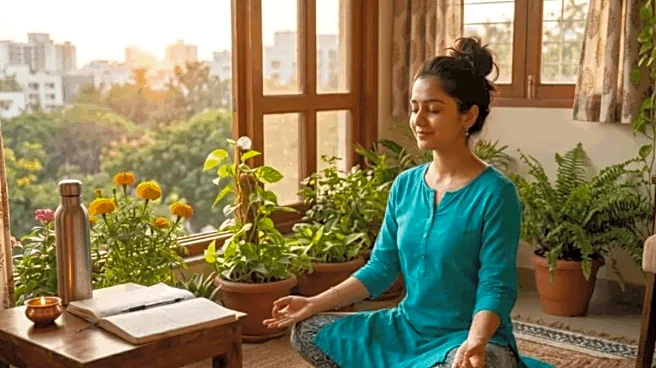




There was a time when the blueprint for healthy living in India was refreshingly simple: eat nourishing home-cooked meals, stay physically active and perhaps begin the day with a yoga session. While those rituals remain foundational, they are no longer enough to define wellness in a world where emotional resilience has become just as vital as physical fitness.
Why Emotional Health Can No Longer Be an Afterthought
Today, wellbeing is being reimagined through a more holistic lens, one that recognises that the mind and body are not separate systems but deeply interconnected. Sleep quality, immunity, digestion, focus and even recovery from illness are profoundly influenced by our emotional state. Modern science continues to reinforce what many have
intuitively known: chronic stress and unresolved emotional struggles quietly shape long-term health outcomes just as much as diet or exercise.
The New Definition of Healthy Living
“For a generation, healthy living in India meant three things: eat homemade food, go for a walk and do some yoga. That definition is now incomplete,” says Dinakara Nagalla, Founder and CEO of Menthra. “The missing piece, and increasingly the central one, is emotional wellbeing.”
While conversations around mental health have become significantly more mainstream in recent years, access to meaningful support continues to lag behind awareness. India has made undeniable progress in reducing stigma, but barriers such as affordability, geography and uncertainty around finding trustworthy care still prevent many people from seeking timely help.
Nagalla believes this gap deserves urgent attention. “We talk about stress now. We share the posts. But between knowing something is off and sitting with someone who can help, there is still a canyon,” he says, pointing to the country’s limited mental healthcare infrastructure. “Awareness moved. Access did not.”
That evolving understanding is also reshaping the very definition of wellness. Mental health is no longer viewed simply as the absence of illness but as the presence of emotional strength, self-awareness and the ability to navigate life’s inevitable challenges with resilience.
Lalit Taneja, Anxiety & Confidence Coach and Founder, Happy Mind, believes this marks an important cultural shift. “Mental health has moved from being a personal issue to a public health priority,” he says. “People are increasingly recognising that success without inner stability often leads to stress. Mental wellness isn’t only about treating anxiety or stress, it is about building emotional strength, self-awareness and healthier relationships.”
His perspective reflects a broader global reality. The World Health Organization estimates that nearly one in eight people worldwide lives with a mental health condition, reinforcing why emotional wellbeing can no longer remain a secondary conversation in healthcare or everyday life.
Experts also agree that caring for mental health begins long before a crisis emerges. Sometimes it starts with something deceptively simple: identifying what you’re feeling, having one honest conversation or asking for support before emotional strain becomes overwhelming.
“Closing that gap does not begin with grand gestures,” explains Nagalla. “It begins with naming what you feel instead of carrying it unnamed. One honest conversation instead of a hundred rehearsed ones.”
Technology, too, is quietly changing the landscape. Digital mental health platforms are making emotional support more immediate, personalised and accessible, particularly for those who may hesitate to seek conventional care. Yet experts caution that technology should complement, rather than replace, human expertise.
“Support can be there at 2 AM, in your own language, holding your story instead of resetting it every time,” says Nagalla. “It can hand you to a real, verified professional when you are ready. It is a bridge to human care. It does not stand in for it.”
Ultimately, the future of healthy living may depend less on adding another wellness trend and more on recognising that emotional fitness deserves the same consistency and preventive care as physical health. Annual health check-ups have become routine; emotional check-ins deserve to become just as normal.
As Taneja puts it, “True wellbeing begins when we give our minds the same importance as our physical health.”
Perhaps that is the next evolution of wellness, not striving for perfection, but creating space for emotional honesty alongside physical vitality. Because the healthiest lives are no longer measured solely by what we eat or how often we exercise, but also by how well we care for the inner life that shapes everything else.


/images/ppid_59c68470-image-178551752788412153.webp)



/images/ppid_59c68470-image-178551756099236368.webp)