
/images/ppid_59c68470-image-178057257550825293.webp)
In the dry interior of southern Tamil Nadu lies a town that lights up much of India every Diwali.
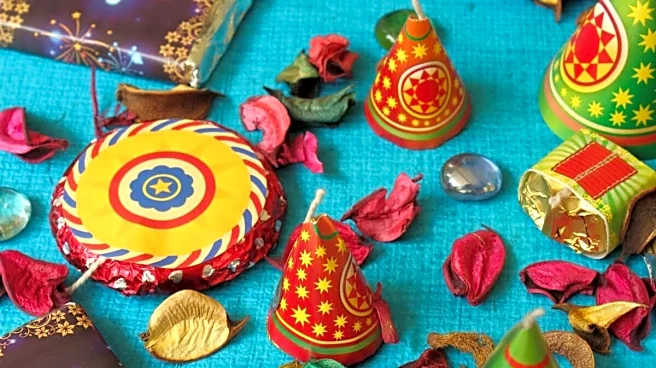
Sivakasi, a relatively small town in Virudhunagar district, produces an estimated 80 to 90 percent of the country’s fireworks, making it one of the most unusual industrial success stories in India. Despite its dusty roads, harsh climate and remote location, the town grew into the centre of a multi-crore fireworks industry that supplies crackers to nearly every major Indian city during the festive season.
The rise of Sivakasi began nearly a century ago.
In the 1920s, two enterprising brothers, Ayya Nadar and Shanmuga Nadar, travelled to Kolkata and learned match manufacturing techniques before returning home to Tamil Nadu. They initially started with
match factories, but eventually moved into fireworks production after realising the region’s climate offered a major advantage.
Sivakasi’s weather turned out to be perfect for handling explosive materials.
The town receives relatively low rainfall and experiences long dry periods through much of the year. Moisture is one of the biggest risks in fireworks manufacturing because damp chemicals can become unstable or unusable. Sivakasi’s arid conditions therefore helped factories operate more consistently and safely compared to wetter parts of India.
Over time, an entire ecosystem formed around the industry.
Thousands of small- and medium-sized factories emerged, many run by family businesses that passed specialised knowledge through generations. Local workers developed expertise in chemical mixing, paper rolling, fuse preparation and assembly techniques that became highly difficult for competitors elsewhere to replicate at scale.
The industry expanded rapidly after independence as fireworks became deeply associated with Diwali celebrations across India.
Today, Sivakasi’s fireworks economy supports lakhs of direct and indirect jobs, including factory workers, transporters, packaging suppliers, printers and traders. The town also became a major hub for printing and matchbox manufacturing, creating an unusual industrial cluster built around highly specialised small-scale production.
But Sivakasi’s dominance has also come with controversy.
The fireworks industry has faced repeated criticism over worker safety, pollution and child labour concerns. Factory explosions over the years have killed and injured workers, bringing national attention to poor safety compliance in some units. Authorities have periodically tightened regulations, while the Supreme Court has also imposed restrictions around firecracker sales and pollution levels in recent years.
The town’s manufacturers have increasingly shifted toward “green crackers” and regulated production methods in response to environmental and legal pressure. Still, the industry continues to face uncertainty as air pollution concerns grow in major Indian cities.
Yet despite those challenges, Sivakasi remains remarkably dominant.
Few places in the world are so strongly associated with a single seasonal product. For millions of Indians, the lights and explosions that define Diwali celebrations still begin in one hot, dry town hundreds of kilometres away from the country’s biggest cities.