
/images/ppid_59c68470-image-178822761892148249.webp)

/images/ppid_59c68470-image-178809006510813621.webp)
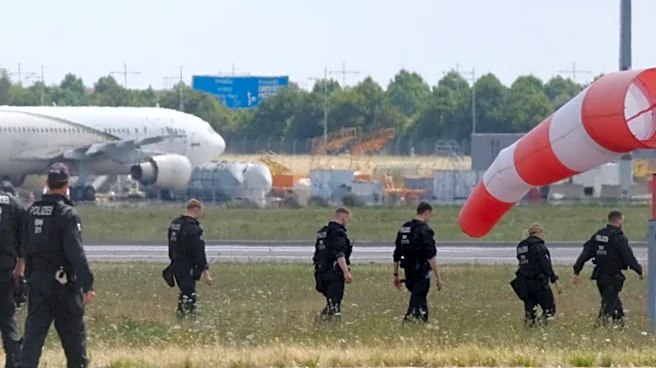
Germany has accused Russia of carrying out a “hybrid attack” involving a drone carrying explosives that targeted a strategically important airport last month, announcing a series of retaliatory diplomatic steps.
The European Union voiced “full solidarity” with Germany, while NATO said it remained committed to protecting its member states.
Foreign Minister Johann Wadephul said Germany would shut Russia’s consulate in Bonn later this month and terminate the lease of the Russian House, a cultural centre in Berlin, AFP reported.
Berlin To Tighten Restrictions On Russian Nationals
Berlin will also tighten restrictions on Russian nationals entering the country and seek additional EU sanctions against individuals allegedly linked to Russian activities.
“We are tightening entry controls for Russian nationals” and Germany would propose the listings of more Russian individuals for European Union sanctions, he added.
Wadephul further announced measures targeting Russia’s so-called shadow fleet, a network of ageing vessels with unclear ownership that Moscow allegedly uses to to get around Western sanctions.
“We are increasing pressure on the Russian shadow fleet” the German Foreign Minister said, signalling a broader effort by Berlin to disrupt channels that Russia uses to evade international restrictions.
Interior Minister Alexander Dobrindt said an assessment of the drone technology involved, along with other intelligence inputs, led Berlin to conclude that Moscow was behind the incident in Leipzig on August 4. “The government concludes that Russia is responsible for the hybrid attack in Leipzig on August 4”, Dobrindt said.
He warned that the incident should not be considered a standalone event and pointed to a broader pattern of alleged Russian activity against Germany. “We do not view the Leipzig incident in isolation, but rather see it in the context of other hybrid actions,” he said. “We assume that Germany is the target of further hybrid attacks by Russia.”
The European Union and NATO backed Germany following Berlin’s accusation. EU chief Ursula von der Leyen said the bloc stood in “full solidarity” with Germany. NATO Secretary General Mark Rutte also expressed the alliance’s “full solidarity” with Berlin, while stressing that NATO would continue strengthening its defensive capabilities. The alliance “will continue to strengthen our ability to deter and defend all Allies against any threat,” Rutte said.
Germany, a NATO member and supporter of Ukraine in its war with Russia, has repeatedly accused Moscow of conducting hybrid operations on German territory. Berlin has linked Russia to alleged espionage and sabotage activities, accusations that Moscow has rejected.
/images/ppid_59c68470-image-178828752427694443.webp)

/images/ppid_59c68470-image-178828003003598200.webp)