
/images/ppid_a911dc6a-image-17710700586131340.webp)
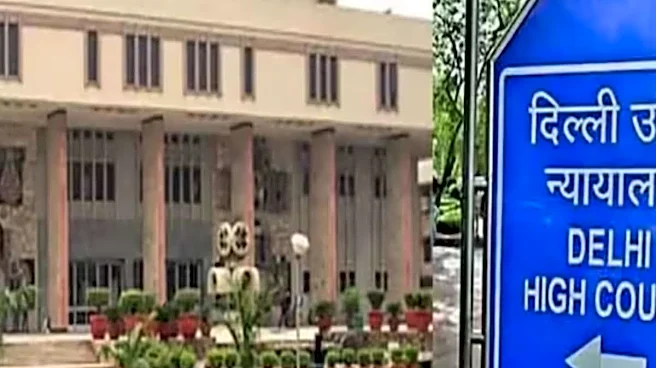
The Delhi High Court on Friday questioned the Directorate General of Civil Aviation (DGCA) over the “indefinite” relaxation granted to airlines on new norms for weekly rest and leave for pilots.
Hearing a public interest litigation (PIL), a bench of Chief Justice DK Upadhyaya and Justice Tejas Karia asked the aviation regulator to explain the “rationale” behind its decision to immediately withdraw the rule stating that “no leave shall be substituted by weekly rest.”
The court directed the DGCA and IndiGo to file their responses within two weeks.
The issue stems from a December 5, 2025, DGCA exemption to Flight Duty Time Limitations (FDTL), aimed at allowing IndiGo to deploy more pilots to reduce operational disruptions. Earlier in December, IndiGo had
cancelled hundreds of flights after being unprepared for the new flight-duty norms.
On Friday’s proceedings, DGCA counsel told the court that the regulator had been monitoring the situation since the FDTL came into effect on November 1, 2025.
The withdrawal decision was taken after audits and representations from airlines, which highlighted that pilots were combining weekly rest and leaves. She clarified that weekly rest remained mandatory under CAR regulations, while leaves were contractual between pilots and airlines.
The court questioned why the non-substitution norm was withdrawn indefinitely, while a temporary relaxation on night duty norms was limited to February 10.
“If you are issuing two letters on the same day – one is till February 10 but first one is indefinite. This letter is forever. So if your response on the first letter was with regard to disruption and the second letter also was (due to) disruption but you have limited the time up to February 10 (for night duty). Why not for the other one?” the bench asked.
The PIL, filed by Sabari Roy Lenka, Aman Monga, and Kiran Singh, alleges that the DGCA granted the relaxation only to IndiGo and that it was prima facie malafide. The petitioners argued that the regulator failed to enforce pilot fatigue rules uniformly, as mandated by the International Civil Aviation Organisation.
(With inputs from PTI)
/images/ppid_a911dc6a-image-177107322672112787.webp)

/images/ppid_a911dc6a-image-177107283185623053.webp)