
The Delhi government has unveiled three major governance initiatives spanning student mental health, clean public transport, and cultural preservation—launching the ‘Ehsaas 2026’ Mental Health and Well-Being Policy across schools and colleges, flagging off 100 new electric buses alongside an interstate Anand Vihar–Hapur route, and completing the reconstitution of five language academies with 101 nominated members.
Together, the announcements underscore Chief Minister Rekha Gupta’s push to address youth emotional resilience, ease cross-border commuter congestion across the National Capital Region (NCR), and revive linguistic heritage in the capital.
‘Ehsaas 2026’ Brings 1:500 Counsellor Ratio and Six-Tier Crisis Support
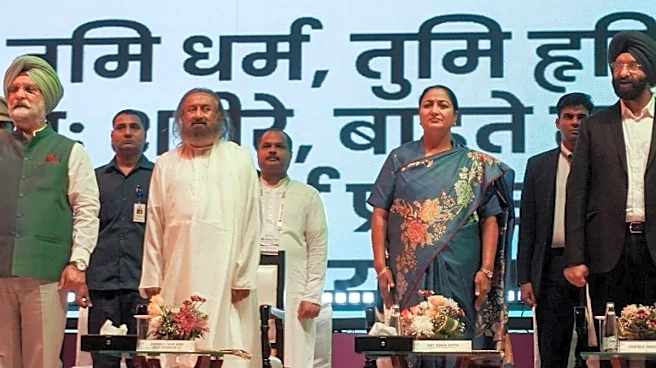
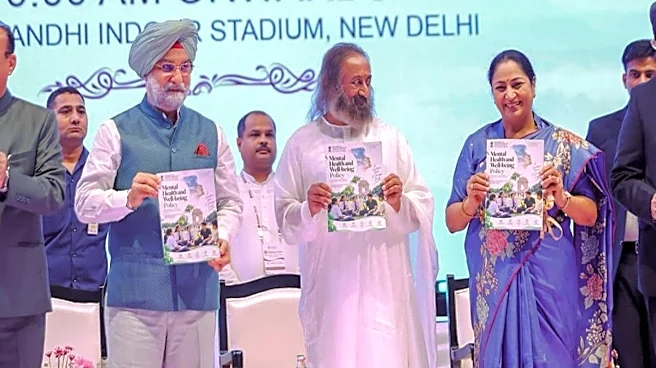
Launched at the Indira Gandhi Indoor Stadium by Lieutenant Governor Taranjit Singh Sandhu, Chief
Minister Rekha Gupta, and spiritual leader Sri Sri Ravi Shankar—in the presence of Education Minister Ashish Sood and Environment Minister Manjinder Singh Sirsa—‘Ehsaas 2026’ embeds mental health care across government, government-aided, recognised private schools, and higher educational institutions.
The policy mandates one counsellor for every 500 students, building on Delhi’s existing base of 540 Educational and Vocational Guidance Counsellors and over 500 teacher-counsellors. To handle severe distress, self-harm, and suicide risks, it establishes a six-tier escalation mechanism linking class teachers, counsellors, school wellness teams, new District Well-Being Centres, emergency hospital services, and statutory agencies.
Targeting exam pressure, anxiety, bullying, and cyberbullying, the framework mandates confidential reporting channels and training for teachers, parents, and support staff, including drivers and attendants. Accountability will be tracked via a privacy-focused digital portal and quarterly School Wellness Services Index self-assessments, though effective ground-level execution remains the decisive test.
100 New Electric Buses and Anand Vihar–Hapur Interstate Link Flagged Off
On Friday, Chief Minister Rekha Gupta flagged off 100 low-floor, air-conditioned electric buses—50 nine-metre and 50 twelve-metre vehicles equipped with CCTV, panic buttons, real-time tracking, and accessibility features—pushing Delhi’s total bus fleet to 7,088, comprising 5,338 electric and 1,750 CNG buses.
Alongside the fleet expansion, Gupta launched an interstate electric bus service connecting Anand Vihar ISBT with Hapur in Uttar Pradesh via Ghaziabad, Dasna, Masuri, and Pilkhuwa. Operating 12 buses in both directions at 20-minute intervals for a flat fare of Rs 124, the corridor joins recent electric links to Panipat and Karnal. Transport Minister Dr Pankaj Kumar Singh noted that Delhi holds India’s largest electric bus fleet and aims to reach roughly 14,000 buses by 2028–29 to curb private vehicle dependence and air pollution.
Five Language Academies Reconstituted With 101 Members
Completing a long-pending cultural exercise at the Delhi Secretariat, Gupta also welcomed 101 newly nominated members to the governing councils of the Hindi (20 members), Sanskrit (18), Garhwali-Kumaoni-Jaunsari (17), Maithili-Bhojpuri (22), and Punjabi (24) academies for a two-year tenure.
Chaired by Art, Culture and Language Minister Kapil Mishra, the councils were urged to transform Delhi into a vibrant cultural destination rather than a transit hub. Echoing Prime Minister Narendra Modi’s vision of ‘Development as well as Heritage’, Gupta called for festivals and literary programmes that nurture young talent, while Mishra urged members to steer clear of literary politics and promote national pride and linguistic roots.