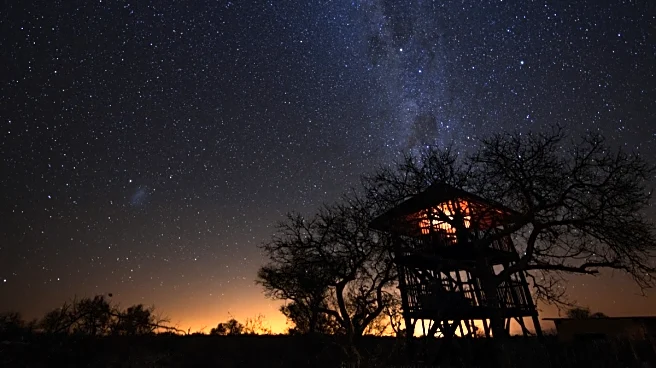




India has varied landscapes, from long coastlines and deep woods to vast deserts and tall mountains. However, beneath all of these locations is a starry sky just waiting to be viewed. For most of the tourists and stargazers, the month of February is when India’s night sky is most spectacular.
The best Indian sky is found in February, when the sky is between the summer haze and the winter frost. The winter rain had settled the dust, and the monsoon rain had stopped a long time ago, resulting in extremely dry and clean air this month. Stars twinkle better because the atmosphere is drier, containing fewer particles and humidity. The air is stable, which is convenient for amateur stargazers and photographers.
Stargazing is the hobby of observing stars,
planets, constellations, and celestial bodies in the night sky, typically with the naked eye, binoculars, or telescopes, away from city light pollution. This popular astronomy hobby fosters wonder, relaxation, and learning about the universe’s vastness.
February makes stargazing a spectacular experience, whether you are camping in Ladakh, next to a wildlife reserve, or just exploring the forest reserves in the Pench and Satpura region.
High Places with Better Views
Hanle, Ladakh
Hanle, one of the highest locations in the world for astronomical observation, is located in the high deserts of Ladakh at an elevation of more than 4,500 meters above sea level. There is hardly any artificial light to impair the stars, and the air is very dry here. Clear skies in February highlight the radiance of planets, stars, and even the faint Milky Way band.
Rann of Kutch, Gujarat
The vast white salt plains offer a perfect setting for stargazing in the Rann of Kutch. The skyline, which extends 360° around, looks bigger than life. There are no hills or trees to get in the way either. February is the perfect time when the chill of winter has gone and the humidity too, and when the nights are quiet and peaceful after the Rann Utsav.
Spiti, Himachal Pradesh
Another chilly desert with minimal light pollution is the Spiti Valley, which is located deep within the Himalayas. The night sky appears clear and full with constellations like Orion, Taurus, and Gemini because of its high altitude and distant position. The constellations appear sharp because of the lack of humidity. Patient stargazers are rewarded by the frigid February sky here.
Forests and Hill Regions under the Stars
Western Ghats (interior Karnataka and Maharashtra)
In February, the hills and plateaus of Karnataka and Maharashtra, located in the interior of the Western Ghats, provide a fantastic black sky with distinct constellations set against peaceful nights. Night skies are very clear in areas like Coorg, the fringes of Agumbe, and parts of Sahyadris due to forested plateaus, coffee farms, and eco-lodges.
Pench and Satpura region, Madhya Pradesh
Pench and Satpura forests in central India, away from deserts and high mountains, have a gloomy sky due to conservation regulations that limit the use of artificial lights. Travellers who want a combination of nighttime sky watching and wildlife adventures without the extremes of cold or elevation will love this location.
/images/ppid_59c68470-image-177091269493773726.webp)



/images/ppid_59c68470-image-177091265334011693.webp)

/images/ppid_59c68470-image-177091253465415201.webp)
/images/ppid_a911dc6a-image-177091256742377219.webp)