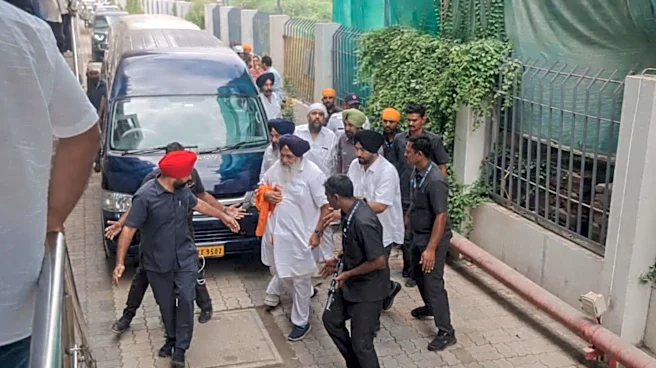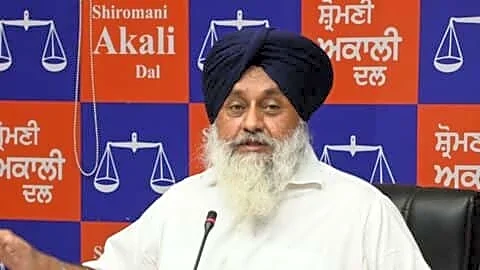




The attack on Shiromani Akali Dal chief and former Punjab Deputy Chief Minister Sukhbir Singh Badal near Takht Hazur Sahib in Maharashtra’s Nanded is being examined by intelligence agencies in a broader political and security context, according to top intelligence sources.
A Nihang named Jaspal Singh is being reported to have attacked the former Punjab Deputy Chief Minister. Sources say the incident, involving Nihang elements, “cannot be seen in isolation” and is being assessed as part of a possible pattern in which fringe religious groups may be used for political mobilisation. The focus of the investigation is not only the attack itself, but also the timing and the wider developments surrounding Sikh politics.
Read More: Former Punjab Deputy
CM Sukhbir Singh Badal Attacked In Nanded, Rushed To Hospital
The incident came soon after Badal’s recent engagement with senior BJP leaders. Intelligence sources noted that his visit to Takht Hazur Sahib, one of Sikhism’s five supreme temporal seats, carried significant political symbolism amid discussions about possible changes in political alignments in Punjab.
Agencies are also looking at the appearance of Nihang groups in other recent protests. Sources pointed to the presence of Nihangs during demonstrations linked to the Centre for Justice and Peace (CJP) at Delhi’s Jantar Mantar. They also referred to an earlier controversy in Uttarakhand’s Udham Singh Nagar, where a Nihang-linked group was accused of taking control of a gurdwara in a BJP-ruled state.
According to the intelligence inputs, investigators are studying whether these episodes are connected through a broader attempt to create anti-establishment momentum. Sources claimed that Aam Aadmi Party and organisations such as CJP are aligned “in many ways” and may be seeking to leverage radical groups for political mobilisation. No evidence supporting this allegation has been made public, and neither AAP nor CJP has responded to these specific claims in the context of the Nanded attack.
Officials believe the attack near Takht Hazur Sahib may also have been intended to influence sentiment within sections of the Sikh community and counter any political realignment that could emerge from Badal’s recent outreach to the BJP leadership.
Adding another dimension to the assessment, intelligence agencies are analysing the significance of pro-Khalistan separatist Gurpatwant Singh Pannun addressing Sikhs in Lahore from Washington, DC, a day before the Nanded incident. While agencies have not established a direct operational link between Pannun’s speech and the attack, the sequence of events is being closely examined.
The investigation into the Nanded attack is continuing, but intelligence officials say they are looking beyond the immediate assault to determine whether a larger network of radical mobilisation, political agitation and separatist messaging is influencing the current Sikh political landscape.