
/images/ppid_a911dc6a-image-177531126601720811.webp)
The United Kingdom on Thursday invited India for discussions on the reopening of the Strait of Hormuz amid the heightened tensions in the region due to the West Asia conflict.
The Ministry of External Affairs (MEA) confirmed the development that India’s Foreign Secretary will be attending the meeting.
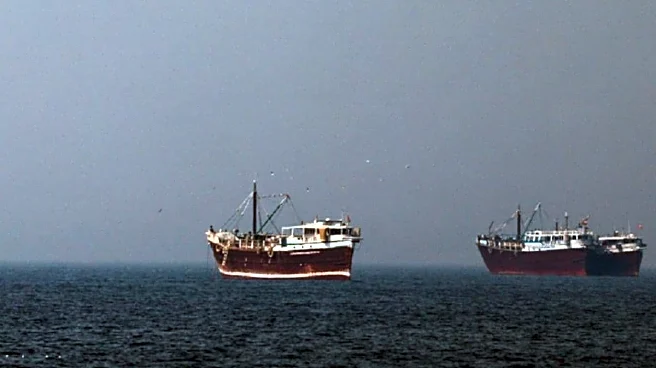
India imports nearly 88 per cent of its crude oil needs, with over half sourced from the West Asia, most of which passes through the Strait of Hormuz.
An estimated 40-50 per cent India’s crude oil imports transit through the strait, making it a key vulnerability for the country’s energy security.
The dependence is even sharper in the case of cooking fuel. India imports about 60 per cent of its LPG consumption, and nearly 90 per cent of these supplies
move through the Strait of Hormuz.
Amid the ongoing conflict, Indian LPG and crude oil shipments have faced disruptions, with vessels navigating the region under tight monitoring and, in some cases, naval escort.
Meanwhile, the meeting hosted by the United Kingdom will bring together representatives from around 35 countries. It will be chaired by British Foreign Secretary Yvette Cooper. Countries such as France, Germany, Italy, Canada and the United Arab Emirates are set to participate. Notably, the United States will not be part of the discussions.
The meeting comes only a day after the US President Donald Trump stated that ensuring access to the Strait was a responsibility for nations that depend on it. In his address on Wednesday, Trump said the passage could reopen “naturally” and urged other countries to take action.
Iran has blocked the Strait in response to U.S.-Israeli strikes that began in late February. The disruption has had a major impact, as the route handles nearly 20 per cent of global oil supply.
With energy prices rising sharply, governments across the world are under pressure to restore normal shipping activity.
British Prime Minister Keir Starmer said the discussions would focus on “all viable diplomatic and political measures” to ensure safe navigation once a ceasefire is in place. He acknowledged that reopening the route would be difficult and would require both military coordination and diplomatic efforts.



/images/ppid_a911dc6a-image-177531206031065766.webp)

/images/ppid_a911dc6a-image-177531203010583502.webp)
/images/ppid_a911dc6a-image-177531210847782775.webp)