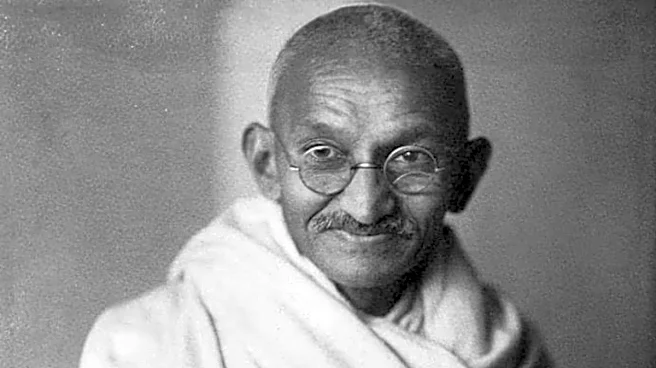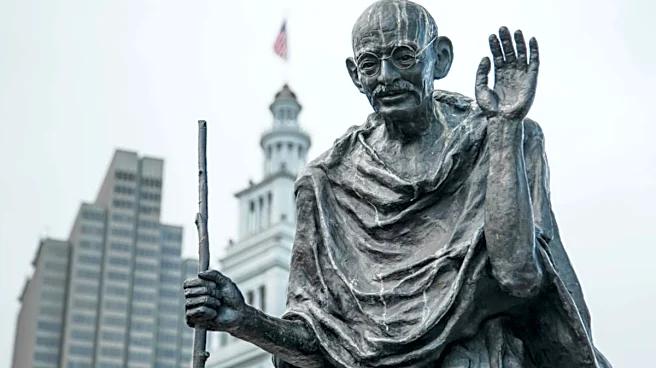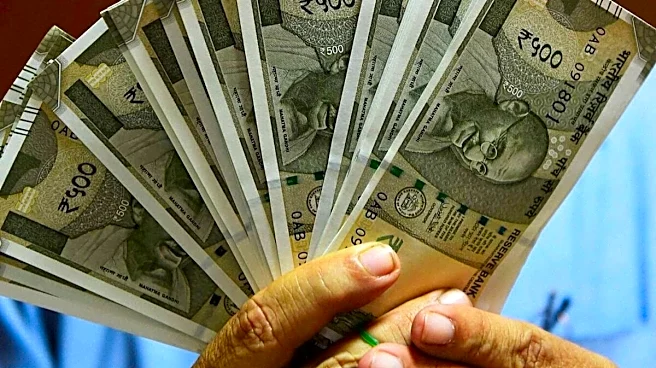



Every day, over a billion people handle Indian currency notes featuring the smiling portrait of Mahatma Gandhi. Yet, despite its presence in almost every wallet across the nation, few know the origins of this iconic image.
Contrary to common belief, the portrait is neither an artistic drawing nor an official state portrait. It is a cropped, mirrored section of an authentic photograph taken during a pivotal political meeting in Delhi in 1946.
The 1946 Snapshot at Rashtrapati Bhavan
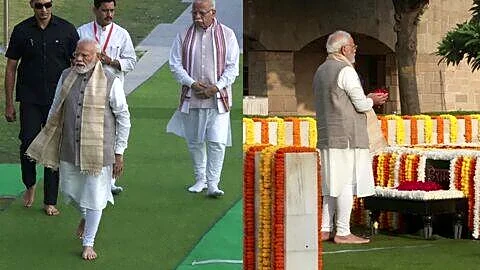
The original photograph was captured outside Viceregal House, now known as Rashtrapati Bhavan, in Delhi. Mahatma Gandhi was attending crucial political negotiations regarding the transfer of power alongside British diplomat Lord Frederick William Pethick-Lawrence.
In the original full-length frame, Gandhi is
seen standing next to Lord Pethick-Lawrence, sharing a candid, warm smile. The identity of the photographer remains disputed among historical archivists, though many attribute the historic shot to an unknown press photographer working for the British colonial administration.
From Candid Photograph to Mirrored Emblem
When the Reserve Bank of India (RBI) selected the image for currency design, security designers executed a subtle transformation. Designers cropped Lord Pethick-Lawrence out of the frame entirely, isolating Gandhi’s face and shoulders.
Furthermore, the original image was flipped horizontally to create a mirror image. In the original 1946 photograph, Gandhi was facing toward his right side, looking directly at Pethick-Lawrence. On modern banknotes, his face is mirrored so that he looks toward his left, creating the familiar alignment seen across all denominations today.
Why the RBI Made Gandhi Permanent in 1996
Before 1996, Indian banknotes featured a variety of national symbols, including the Lion Capital of Ashoka, agricultural machinery, and industrial dams. However, as advanced colour copiers and digital printing technology emerged in the mid-1990s, the RBI faced a rising threat of high-quality counterfeiting.
An internal RBI committee concluded that human faces are far harder to forge accurately than inanimate objects or architectural monuments. Humans naturally recognise minute flaws in facial proportions, expression, and micro-engraving.
The central bank chose Mahatma Gandhi because his visage carried unmatched national consensus across every region and state. In 1996, the RBI formally introduced the “Mahatma Gandhi Series”, replacing older note designs and making the 1946 portrait a permanent feature of Indian paper currency.