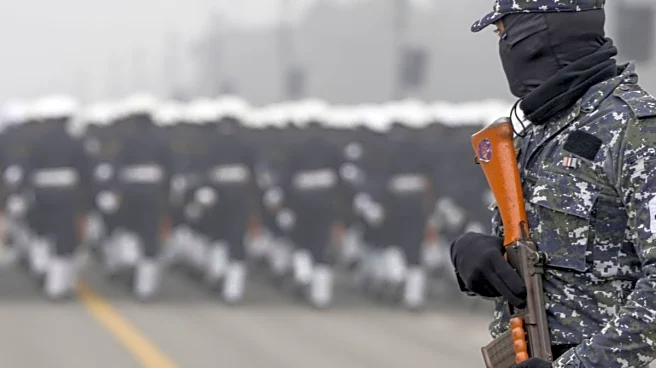

India’s Republic Day Parade in 2026 is set to move away from a primarily ceremonial display towards what sources have described as a controlled demonstration of modern battlefield dominance. Sources indicate
that this year’s parade has been re-engineered as a “battle order demonstration” — a carefully sequenced presentation designed to communicate how India would enter, escalate, and dominate a contemporary conflict. The emphasis, they say, will be on operational realism rather than pageantry.
At the heart of the redesigned narrative is a reflection on operational lessons drawn from Operation Sindoor, which has significantly shaped India’s evolving military doctrine. While the parade will stop short of explicitly naming the operation, sources say the linkage will remain deliberately subtle yet unmistakable for strategic observers.
Unlike traditional Republic Day parades that open with ceremonial units and marching contingents, the 2026 edition is assessed to begin with battlefield awareness and intelligence-led elements, reflecting modern war doctrine where intelligence, surveillance, and target acquisition precede kinetic action. This departure from tradition is intended to establish a combat tone from the outset.
According to sources, intelligence dominance and rapid force deployment will form the core thematic pillars of the parade. Heavy weapons, light weapon systems, and artillery platforms are expected to be showcased early in the sequence — well before infantry and standard contingents — mirroring actual battlefield sequencing where firepower shapes the battlespace ahead of manoeuvre forces.
“This is firepower first, manoeuvre later — exactly how modern conflicts are fought,” sources said.
Infantry units and conventional contingents are expected to appear later in the parade, projecting the image of territory occupation, consolidation, and domination after initial strikes. The sequencing is designed to communicate not just capability, but readiness — that India’s armed forces are structured, trained, and equipped for immediate deployment rather than symbolic display.
Sources also point to noticeable changes in uniforms, formations, and choreography, which are expected to be less ornamental and more operational in appearance. Precision, discipline, and battlefield realism will take precedence over aesthetic symmetry, reinforcing the message that the parade is an extension of combat preparedness rather than a standalone spectacle.
Overall, the parade’s structure is assessed to convey three strategic messages: readiness, deterrence, and psychological dominance. Officials involved in the planning believe that the visual language of the parade will serve both domestic reassurance and external signalling, particularly in an era where perception management is a critical component of deterrence.
“This will not be a ceremonial procession alone,” sources said. “The optics, symbols, and sequencing are meant to show real combat deployment logic.”
Sources note that Republic Day Parade 2026 would mark a significant shift in how India publicly communicates its military doctrine — aligning national symbolism with contemporary warfighting realities, while quietly reinforcing lessons learned from recent operations.


/images/ppid_a911dc6a-image-177092774715746114.webp)

/images/ppid_a911dc6a-image-177092767520012684.webp)
/images/ppid_a911dc6a-image-177092763347449403.webp)
/images/ppid_a911dc6a-image-177092652580356823.webp)



/images/ppid_a911dc6a-image-177092306157991736.webp)