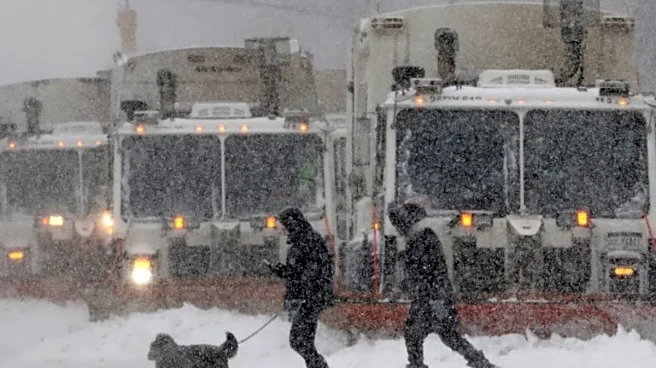




A powerful winter storm sweeping across the United States has killed at least 11 people, prompted widespread power outages, grounded thousands of flights and forced authorities to warn residents to stay off the roads.
The storm, which began over the weekend, brought heavy snow, sleet and freezing rain across a vast stretch of the country, from Texas to New England, with temperatures expected to fall to dangerously low levels this week.
New York City Mayor Zohran Mamdani said five people were found dead outdoors over the weekend, describing it as “no more powerful reminder of the danger of extreme cold.”
In Texas, three people died, including a 16-year-old girl killed in a sledding accident. Louisiana reported two deaths from hypothermia, while
a winter weather-related crash in southeast Iowa left one dead and two others injured.
The storm has caused major power disruptions, particularly in the southern states. PowerOutage.com reported more than 8,20,000 customers without electricity as of Monday.
Tennessee alone had over 2,50,000 outages, while Louisiana and Mississippi each had more than 1,00,000. Officials warned that the cold combined with power losses posed severe risks.
Authorities from Texas to North Carolina and New York urged residents to stay home. “Stay off the roads unless absolutely necessary,” the Texas Emergency Management Division posted on X.
The storm also grounded flights across major airports. Flightaware.com reported that more than 19,000 flights into and out of the US had been cancelled since Saturday. Federal offices in affected areas were closed preemptively, and at least 20 states, along with Washington, DC, declared states of emergency.
Experts said the storm is linked to a stretched polar vortex, which has allowed Arctic air to spill across North America.
The National Weather Service warned of long-lasting power outages, tree damage, and life-threatening conditions. Wind chills in the Northern Plains and Upper Midwest are expected to drop below -50F (-45C), where frostbite can occur within minutes.
The storm is moving into the US northeast and southeast Canada, with some regions in Toronto already seeing record snowfall.
(With inputs from AFP)



/images/ppid_59c68470-image-177102753183257032.webp)


/images/ppid_a911dc6a-image-17710264327998831.webp)

/images/ppid_a911dc6a-image-177102646607765106.webp)