
/images/ppid_a911dc6a-image-17847908557466455.webp)
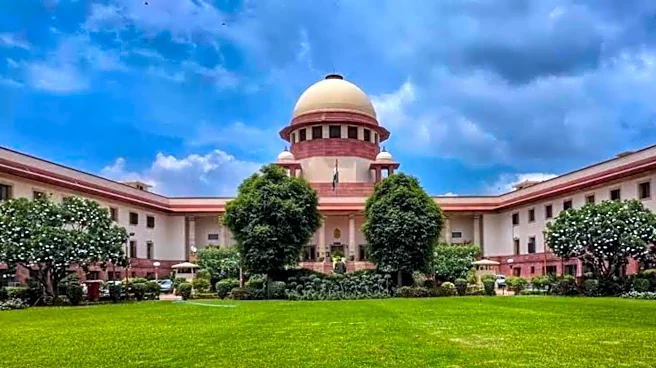
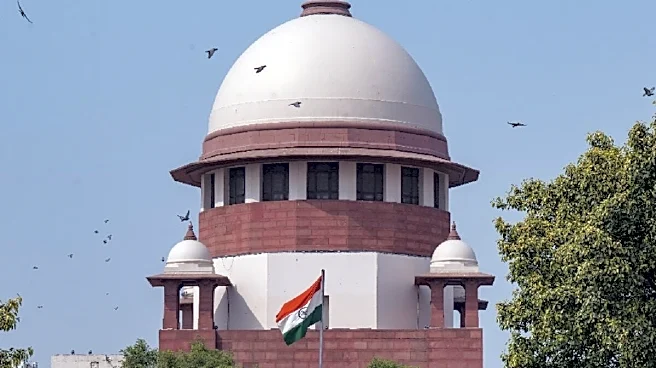
The Supreme Court of India banned the uploading, editing, and sharing of audio-video recordings of court hearings without prior permission to prevent the selective distortion of judicial proceedings, stop commercial exploitation of courtroom footage, and safeguard the dignity of the judiciary.
Decoding the ruling.
On July 24, 2026, a three-judge bench led by Chief Justice of India Surya Kant, along with Justices Joymalya Bagchi and V. Mohana, issued this interim order while hearing a Public Interest Litigation (PIL) filed by journalist Harshita Grover.
THE KEY REASONS
The court’s primary reasons for implementing the restriction include:
1. Misuse and Decontextualised Clips
Sensationalism: Highly edited, short video clips (such as social media “reels”) are frequently extracted from official livestreams
and shared with misleading captions or background music to grab views. Distorted Narratives: The bench noted that oral remarks made by judges during hearings are often tentative and meant to test legal arguments, but these selective clips manipulate public perception by taking comments entirely out of context.
2. Commercial Exploitation
Monetisation: Unauthorised social media channels and digital platforms have been extracting court content to generate ad revenue, paid memberships, and digital subscriptions.
3. Trivialising the Administration of Justice
Entertainment vs. Law: Justice Joymalya Bagchi explicitly remarked that courts “cannot be a 24/7 entertainment channel,” warning that viral content was turning serious judicial proceedings into a public joke and eroding public trust.
Safety & Trolling: Unrestricted clipping has led to online trolling, character assassination, and professional harm to both judges and advocates.
4. Threats from AI and Deepfakes
Voice and Lip Manipulation: Solicitor General Tushar Mehta highlighted the severe risk posed by advancing Artificial Intelligence tools, which can alter a judge’s or lawyer’s exact words within a video while maintaining their precise lip movements and voices.
SCOPE OF THE BAN
The Restriction: No person can extract, modify, disseminate, post, repost, upload, or monetise audio-video recordings of judicial proceedings without the express permission of the Secretary General of the Supreme Court or the Registrar General of the jurisdictional High Court.
Crucial Exception: The Supreme Court explicitly clarified that this order does not affect fair and accurate news reporting by journalists, ensuring that the media’s right to report on court updates remains unrestricted.
With agency inputs
/images/ppid_a911dc6a-image-178490002289174575.webp)

/images/ppid_a911dc6a-image-178492862054424556.webp)
/images/ppid_a911dc6a-image-178488441903037576.webp)