

West Bengal Chief Minister Suvendu Adhikari on Monday said cow slaughter would not be allowed in the state under any circumstances, asserting that existing laws and court orders would be enforced strictly. He also announced an annual grant of Rs 1 lakh for gaushalas to support the care and upkeep of adult cows.
Addressing the issue, Adhikari said the government would ensure that cows were not slaughtered in the state, while referring to the legal provisions governing animal slaughter in West Bengal.
“I am looking into the law. Listen carefully to what I am saying — I will not allow cows to be slaughtered. I am looking into the law, and I will not allow cow slaughter in this state. The state government has approved a scheme today under which gaushalas
(cow shelters) will receive up to Rs 1 lakh to care for cows,” the Chief Minister said.
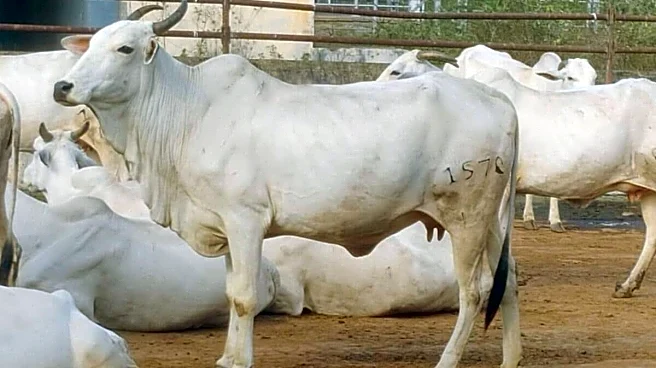
Rs 1 lakh grant for gaushalas
The state government has approved a scheme under which gaushalas will receive an annual grant of up to Rs 1 lakh for the maintenance and care of adult cows. Adhikari also said cow slaughter restrictions would be enforced in line with the West Bengal Animal Slaughter Control Act, 1950, and applicable court orders.
How cow slaughter laws work in India
India does not have a single national law prohibiting cow slaughter. Instead, individual states frame their own laws on cattle slaughter, resulting in differences in restrictions and the animals covered by these provisions.
The Constitution places animal preservation and the prevention of cattle slaughter within the legislative domain of states. While most states prohibit cow slaughter, several also regulate the slaughter of bulls, bullocks, calves and buffalo calves, often requiring certification or veterinary approval.
In certain states, slaughter may be permitted under limited circumstances, including when an animal is terminally ill, permanently incapacitated or certified fit for slaughter by a competent authority.
Laws across states
States have adopted different legal frameworks to regulate cattle slaughter. Uttar Pradesh’s 1955 law prohibits the slaughter of cows, bulls and bullocks, while Punjab’s 1955 legislation prohibits cow slaughter. Goa’s 1978 law also prohibits cow slaughter, with limited exceptions requiring prior veterinary permission.
Himachal Pradesh’s 1979 law prohibits cow slaughter and the export of cows for slaughter. Telangana’s 1977 law prohibits the slaughter of cows and buffalo calves, while slaughter of other animals requires a fit-for-slaughter certificate. Assam’s 2021 law prohibits the slaughter of cows, heifers and calves, while other cattle can be slaughtered under specified conditions involving age or incapacity certification.
Indian courts have generally upheld cattle-slaughter restrictions as constitutionally permissible when they are linked to public order, morality, health and animal preservation.