
/images/ppid_a911dc6a-image-178516816020523422.webp)


In large parts of rural India, economic progress still depends on a single, fragile variable: water. Erratic rainfall, depleting groundwater and limited irrigation continue to shape what is possible for millions of farmers. As a result, the idea of Rising Bharat is increasingly being defined not by short-term relief, but by the strength of systems that can sustain growth over time.
It is within this context that corporate social responsibility is also being redefined. As conversations around corporate water conservation in India gain greater importance, organisations are increasingly recognising that long-term business sustainability is closely linked to community resilience. For DS Group (Dharampal Satyapal Group), its development approach is guided
by three clear principles: Community Stewardship, Strengthening Local Economy, and Environmental Sustainability. Together, these pillars shape how the group engages with grassroots development and how it interprets Rising Bharat, not as a singular growth story, but as one built on resilience, inclusion and long-term community capacity. At the centre of this approach is water security, the first building block of economic resilience in rural India.
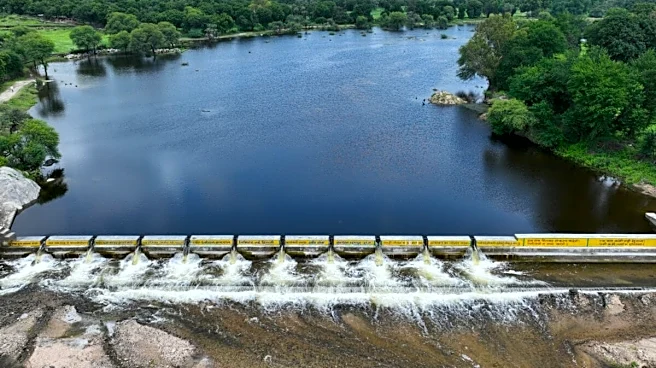
As of FY2026, DS Group’s Water Economic Zone (WEZ) initiative has emerged as one of the company’s most significant community development interventions, focused on strengthening water availability and improving livelihood resilience across water-stressed regions. Through its Water Economic Zone (WEZ) model, implemented across Rajasthan and Madhya Pradesh, DS Group has focused on restoring water availability as the foundation of local prosperity. More than 1,200 water harvesting structures have been built or revived, creating a recharge potential of nearly 1 crore kilolitres, improving groundwater levels by 5 to 10 feet, and bringing over 5,000 hectares under irrigation. Over 50,000 farmers have benefited from training and livelihood support, including crop diversification, agroforestry and dairy development, with nearly 29,000 women farmers supported and 10 Farmer-Producer Organisations enabled. In this model, water is not treated as a standalone intervention, but as the starting point for stronger incomes, greater resilience and more stable rural economies, making it central to the idea of Rising Bharat at the grassroots.
Alongside economic resilience, Rising Bharat also depends on social transformation that can endure across generations. This is where Project Saamya has emerged as a long-term transformation lever and a notable example of corporate gender equity programme in India, focused on shaping attitudes around gender equity among young boys. Since its inception, the programme has grown from an initial group of 250 boys to over 2,000 participants across Delhi, Uttar Pradesh, Haryana and Rajasthan, supported by standardised tools and processes that have enabled greater scale and consistency.
What began as a pilot across three locations in Noida has expanded to seven locations through the Saamya School Intervention Programme. The initiative has engaged over 600 parents and 200 community leaders and members, helping build a wider support system for behavioural change. Through partnerships with educational institutions, Saamya has reached more than 700 boys across 20 schools in Delhi, Noida, Karnal, Kurukshetra and Jaipur. Workshops with school principals, teachers and coordinators have helped deepen adoption within school systems, while partnerships with resident welfare associations and training for young development professionals have further expanded the programme’s reach.
Its growth reflects a steady evolution, from ideation and conceptualisation in 2016, to its pilot phase in 2020, and its expansion in 2023 into seven locations, including deeper integration into schools across middle-income communities. In doing so, Saamya has widened the social foundation of Rising Bharat by investing in more equitable and inclusive communities.
That same idea of long-term inclusion also shapes DS Group’s livelihood and community development interventions. Across education, healthcare, nutrition, sanitation and clean energy, its work now spans 13 states and reaches over 200,000 individuals. These efforts include improving access to education for 9,000 children, enabling more than 3,700 cataract surgeries, and supporting 1,500 off-grid solar installations.
Beyond service delivery, these interventions strengthen the conditions for economic participation, improving health, access, mobility and everyday productivity in ways that allow underserved communities to participate more fully in growth. This is where Rising Bharat becomes tangible, not only in infrastructure created, but in human capacity strengthened.
Environmental responsibility forms the final pillar of this approach, ensuring that growth remains viable over the long term. Across its interventions, the focus on water conservation, sustainable agriculture, renewable energy adoption and responsible sourcing reflects a broader commitment to resource resilience. This commitment is also reflected in DS Group’s operational sustainability agenda, including a pioneering Double Materiality Assessment aligned with global ESG priorities, a Water Positivity Index of 1.80 across 30 operational locations certified by GRIHA, and LEED Platinum as well as LEED Zero Carbon certifications for its headquarters from the US Green Building Council (USGBC). The DS Group headquarters also holds the world’s highest LEED Platinum score under the USGBC existing building O&M v4.0 framework, further strengthening its position as a sustainability benchmark.
Together, these efforts reinforce the belief that sustainability is not separate from development, but what enables development to endure.
Taken together, these efforts reflect a more grounded view of rising Bharat, one where progress is measured not only by growth figures, but by the resilience of the systems that support it. As water security improves, social attitudes evolve, livelihoods strengthen and natural resources are better protected, communities are not just adapting to change, they are building the conditions to lead it.
Disclaimer: This article has been produced on behalf of DS Group and is intended for informational purposes only. The News18 editorial team was not involved in the creation of this content. Any claims, opinions, or representations made herein are solely those of the brand.


/images/ppid_59c68470-image-178517002841278936.webp)

/images/ppid_59c68470-image-178517014008774036.webp)
/images/ppid_59c68470-image-178517002694526784.webp)
/images/ppid_59c68470-image-178517010932775452.webp)
/images/ppid_59c68470-image-178517006854660838.webp)