

Today, August 15, 2026, marks 80th Independence Day in India. So here’s a little trivia for you. When we talk about the early years of Indian cinema, names like Dadasaheb Phalke usually come up first. But behind some of the industry’s earliest milestones were women whose stories have largely been forgotten.
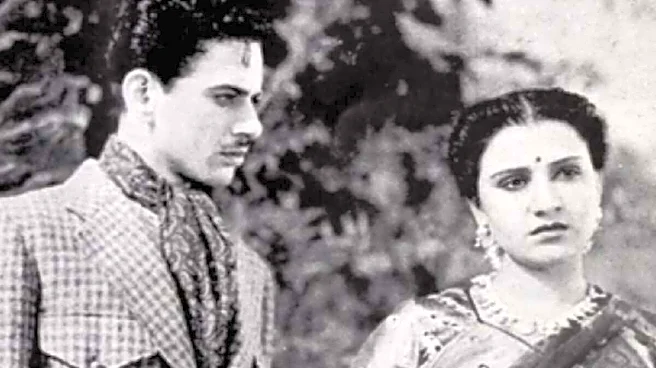
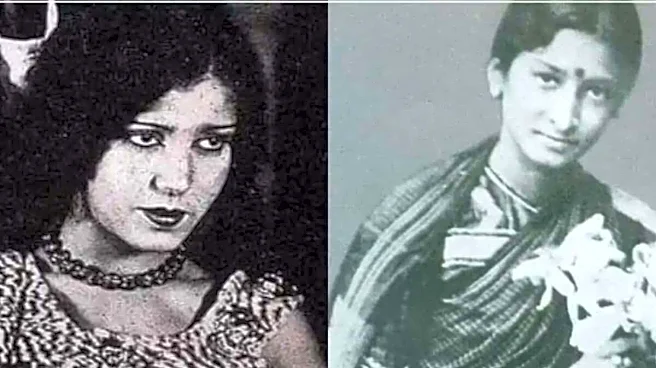
One of them was Durgabai Kamat. During those days, it was considered unacceptable for Indian women to act in front of the camera. But Durgabai broke that barrier bravely by walking away from a difficult marriage, raising her young daughter on her own and facing opposition from men who feared women entering theatre would take away their jobs.
Today, she is known as the first female actor in Indian cinema. Let’s know more about Durgabai Kamat.
She was born in 1879 in Bombay into a conservative Gaud Saraswat Brahmin family. She was educated up to the seventh standard and grew up with an interest in the arts. She could sing, dance and play musical instruments, including the veena, tabla and sitar.
She later married Anand Nanoskar, a history teacher. The marriage, however, did not last as Nanoskar neglected his family and was very abusive towards her. The couple separated in 1903, leaving Durgabai to raise their young daughter, Kamlabai, on her own.
At the time, a woman choosing to live independently and earn her own money was already going against the expectations placed on her. Durgabai decided to work in theatre, taking her three-year-old daughter with her. Her family tried to stop her. When she refused to give up, they severed ties with her.
The person who stood by her was, surprisingly, her mother-in-law. According to accounts of Durgabai’s life, she gave her jewellery and a house that could be sold so Durgabai could start her new life as an independent single mother.
During those days, women performing publicly in theatre was considered taboo, and female characters were generally played by men. So when Durgabai tried to act in front of people, some male performers reportedly objected to her presence. Some even threatened to quit if Durgabai was hired.
But Durgabai never backed down. She eventually joined the travelling Chittakarshak Natak Company and performed leading female roles while her daughter also began performing as a child artist.
The mother and daughter travelled from place to place with the company, performing mythological stories and Marathi adaptations of Shakespeare’s plays. Since Kamlabai could not attend a regular school because of their constant travelling, Durgabai arranged for her to be educated at home.
Around this time, Dadasaheb Phalke was looking for women for his next film. His first full-length feature, Raja Harishchandra, had been released in 1913. But there was one problem: he couldn’t find a woman willing to play the female lead. So a man, Anna Salunke, played Taramati.
For his next film, Phalke wanted to change that. He approached the manager of Chittakarshak Natak Company and asked about casting its performers. Durgabai was chosen to play Parvati, while her daughter Kamlabai was cast as Mohini.
The film was Mohini Bhasmasur. And with that, mother and daughter made history.
Released in 1913, Mohini Bhasmasur is regarded as the first Indian film to feature a female actor in a proper role. Durgabai became the first female actor in Indian cinema, while Kamlabai became the first female child actor.