
/images/ppid_59c68470-image-177071508492094133.webp)
/images/ppid_59c68470-image-177071522121761927.webp)
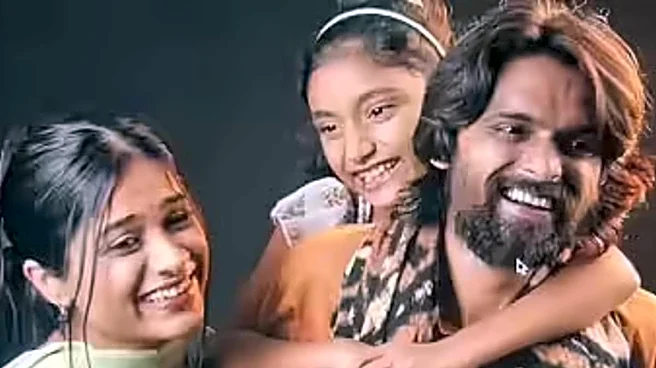
Sometimes, the biggest box-office stories begin quietly. Laalo – Krishna Sada Sahaayate did just that — and then went on to rewrite Gujarati cinema history. Against all odds, the film has crossed the ₹100 crore mark, becoming the first Gujarati movie to achieve the milestone and turning a modest, faith-driven project into a nationwide talking point.
Directed and written by Ankit Sakhiya, the film follows a rickshaw driver who finds himself trapped inside a farmhouse, forced to confront unresolved trauma from his past. Along the way, he experiences visions of Lord Krishna, who guides him through a deeply personal journey of healing, self-reflection and redemption. What began as a small, low-budget idea slowly evolved into a cultural phenomenon
driven almost entirely by word of mouth.
After its theatrical success in Gujarat, the makers decided to expand the film’s reach with a Hindi theatrical release on January 9. Presented by Manifest Films and produced by Ajay Padariya and Jay Vyas, the film stars Reeva Rachh, Shruhad Goswami and Karan Joshi.
Speaking to The Free Press Journal, Sakhiya reflected on how the project took shape. He explained, “This project started with the thought of making a film and how we could do so on a low budget. So, what do we need? One location, one actor, and whatever else we could find around us—things that wouldn’t cost me any money. So, I started with this thought and began writing the script.”
The director admitted the film’s success was far from immediate. “The film wasn’t a hit from the start. Initially, no one was watching it, but as word of mouth spread, people watched it, and they told other people, and that’s how it started and became a blockbuster,” he said.
According to Sakhiya, the film’s emotional and spiritual core played a key role in its extraordinary run. “I think it connected with everyone. The other main factor is the divine energy, which perhaps connected with people, and that’s why the film took off,” he added.
The decision to release the film in Hindi, he said, came from deeply personal audience responses. “Watching the film was healing people. People watching the film were crying and sharing their sorrows. Twenty-three people said that they were going to commit suicide, but they watched the film and were saved. So, we felt that we shouldn’t limit it to Gujarat; let’s show it to all of India. That’s why we decided to bring it out in Hindi.”
Among the many reactions he has received, one moment stands out for Sakhiya. Recalling an early theatre visit, he said, “I still remember when I went on a theatre visit in the initial days and a man came up to me. He said, ‘Keep these 5,000 rupees, I like you so much.’ He took out 5,000 rupees and gave them to me, saying, ‘My name is Vishnu.’ That’s something I can never forget. That’s a very big thing for me.”