
/images/ppid_a911dc6a-image-177091957870770440.webp)


A controversy has erupted over government authorities in some states issuing directives that push teachers into roles far outside the classroom. In parts of India, educators are being assigned duties ranging from monitoring stray dogs to guarding against venomous wildlife.
In Jammu and Kashmir, teachers across government and private schools have reportedly been formally designated as nodal officers for monitoring and reporting stray dog populations. Under a new order, educators must coordinate with municipal and animal husbandry authorities and display their contact information for rapid response. For many teachers, the mandate felt surreal: the people trained to teach mathematics and literature are suddenly responsible for tracking feral dogs.
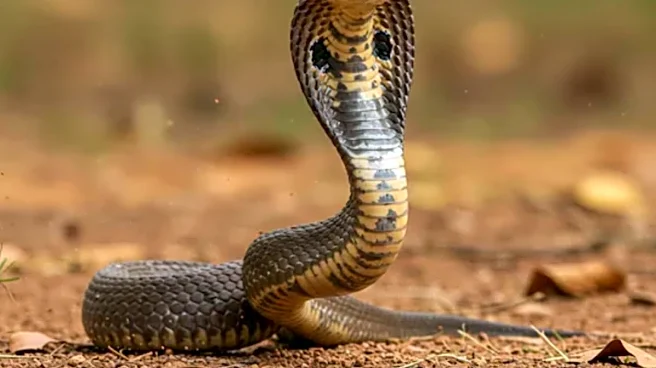
Then in Chhattisgarh, the state’s Directorate of Public Instruction (DPI) reportedly instructed teachers to actively prevent the entry of stray dogs—and even snakes, scorpions, and other venomous creatures—into school premises. Critics point out that after years of juggling mid-day meal logistics and census data, educators are now expected to perform duties typically reserved for trained wildlife or municipal personnel.
Also this month, following a Supreme Court directive on relocating strays from public spaces, Karnataka’s Department of School Education and Literacy (DSEL) ordered all schools—private, government, aided, and unaided—to count the number of stray dogs on their campuses and submit official reports. The directive has further inflamed teachers who already perceive a steady erosion of the respect and professional space required to teach effectively.
The Rationale vs The Reality
Officials behind these directives defend the measures as necessary for student safety and compliance with higher judicial or administrative mandates. The J&K government cites the Supreme Court’s push for stray-dog management. Chhattisgarh’s DPI asserts that schools must ensure a “safe, fear-free, and supportive environment”. Karnataka officials frame their order as a step towards fulfilling legal obligations.
But for many teachers, these reassurances fall flat.
Educators’ associations across states have slammed the responsibilities as “absurd”, “unworkable”, and even “dangerous”. They point out that municipalities and animal control agencies—not teachers—are trained and equipped to handle stray animals or venomous wildlife. Asking teachers to perform such tasks, they argue, trivialises their professional expertise and adds to the long list of non-academic burdens already consuming classroom hours.
A Long Pattern
Regardless of the government in power, teachers routinely find themselves diverted from teaching to perform a wide array of unrelated duties:
Election and Census Work: Teachers are regularly deployed as Booth Level Officers (even during the ongoing SIR exercise), conducting door-to-door electoral surveys and assisting with the national census—tasks that swallow significant instructional time.
Welfare Scheme Administration: For decades, they have managed the mid-day meal scheme, overseeing food quality, calculating expenses, and coordinating suppliers.
Government Surveys and Data Collection: Teachers handle UDISE data entry, vaccination drives, household mapping, and numerous clerical tasks.
Miscellaneous Administrative Demands: Across different states and political administrations, teachers have been tasked with cattle censuses, tax collection, distribution of welfare materials, and awareness campaigns that bear no connection to academic learning.
What distinguishes the more recent orders, say observers, is their level of risk and impracticality. Monitoring stray dogs is one thing; being held responsible for preventing snakes and scorpions from entering school grounds takes the trend into hazardous territory.







/images/ppid_59c68470-image-177092011588535423.webp)

![[WATCH] Jos Buttler breaks Guinness World Record for highest-ever cricket catch](https://glance-mob.glance-cdn.com/public/cardpress/binge-magazine-card-generation/spaces/IN/en/crictracker-spaces/images/ppid_49c02804-image-177092006205765253.webp)



/images/ppid_59c68470-image-177092006686738166.webp)