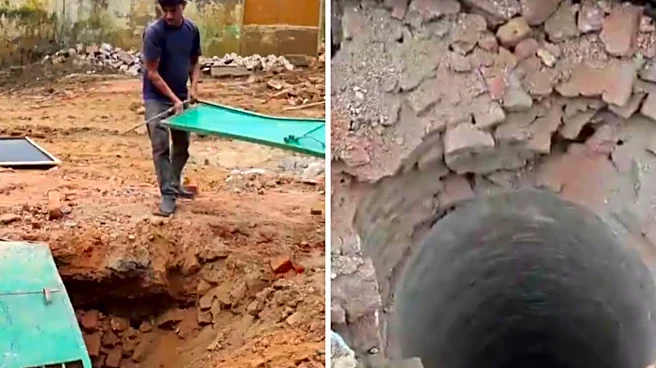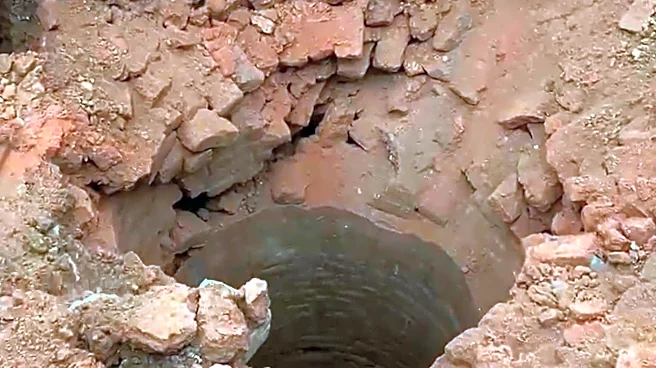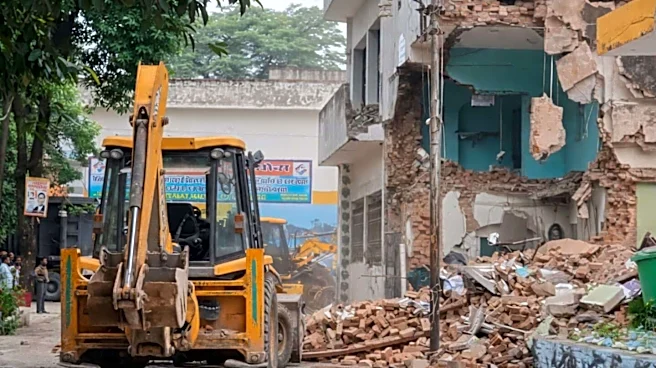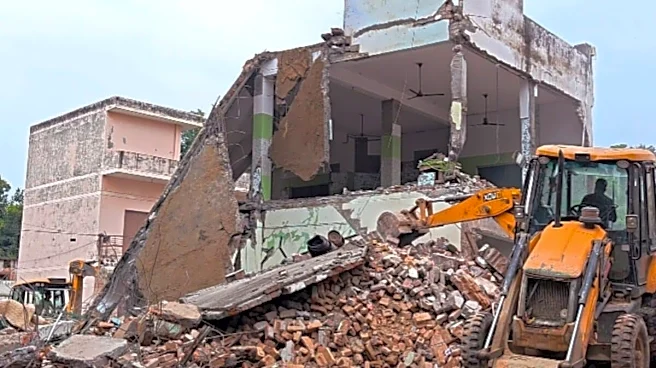




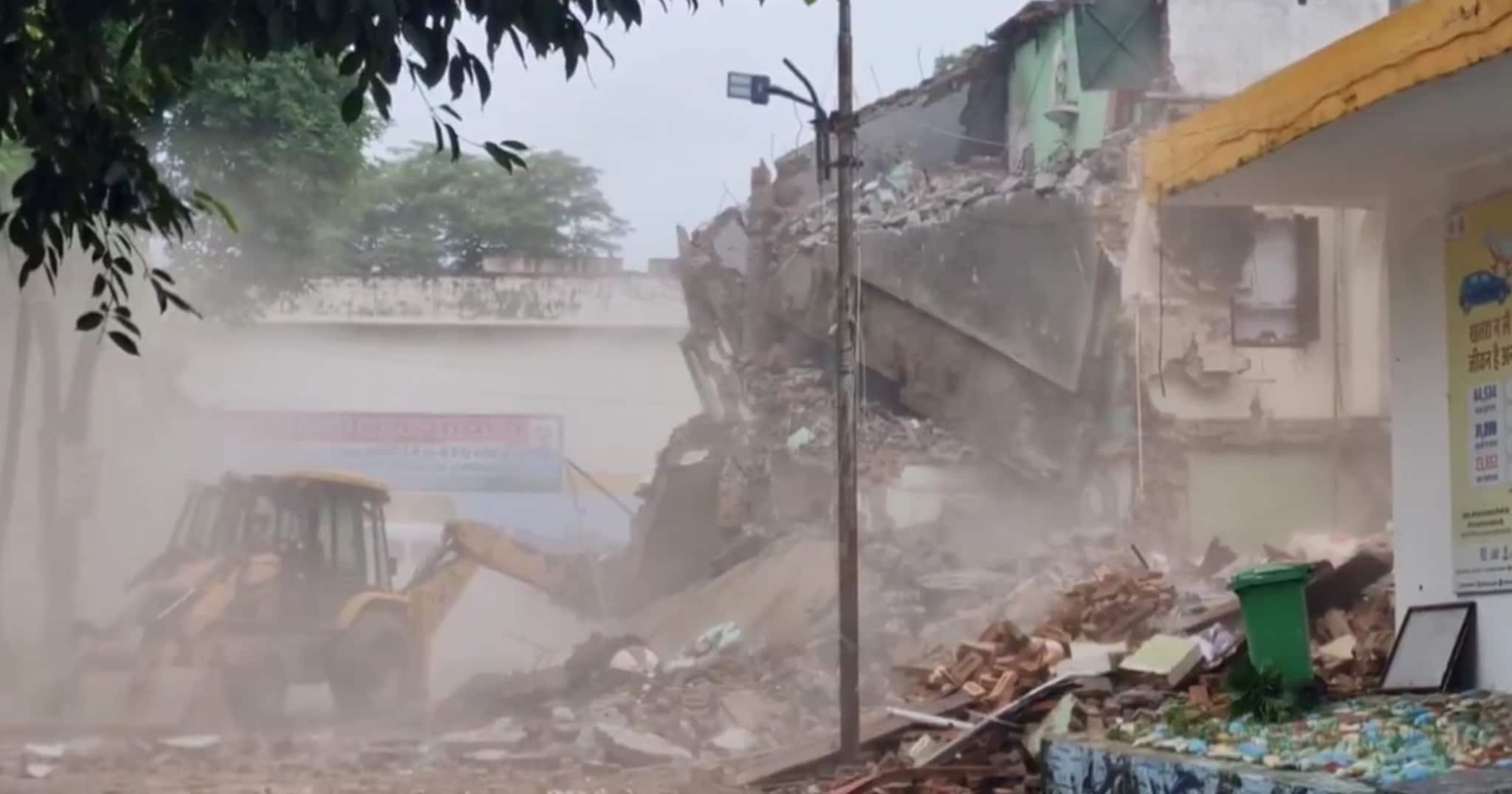
Before dawn broke over Saharanpur on Saturday, the Collectorate complex fell unusually quiet. Then, around 4 am, demolition teams moved in under the watch of nearly 200 security personnel to bring down a decades-old mosque that authorities said stood illegally on government land.
The operation was conducted amid tight security, with PAC and Rapid Response Force personnel deployed around the Collectorate and other sensitive locations to prevent gatherings or any law-and-order situation.
The demolition followed a district court order issued a day earlier, rejecting a challenge filed on behalf of the mosque and upholding the City Magistrate’s finding that the disputed land belonged to the government.
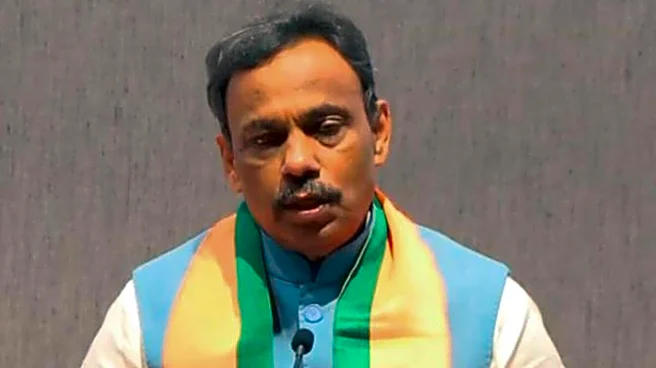
The case began with a complaint filed in 2025 by
Vikas Tyagi, former provincial coordinator of the Bajrang Dal. He alleged that the mosque had been built on government land within the Collectorate complex.
On July 16, City Magistrate Kuldeep Singh ruled that the structure occupied approximately 315 square metres of government property and ordered its removal within 30 days. The order also directed the recovery of around Rs 6.41 crore as compensation for the alleged unauthorised occupation and use of the land.
The mosque side argued that the structure predated Independence and had existed at the site since before 1947. The City Magistrate’s court, however, held that the claim was not backed by valid ownership documents.
The order was later challenged before the district court. After hearing both sides, District Judge Satendra Kumar’s court dismissed the challenge on Friday and upheld the City Magistrate’s findings, including the conclusion that the land was government property. Arguments before the court covered old revenue records, ownership claims and the mosque’s alleged Waqf status.
Iqra Hasan Placed Under House Arrest
The demolition quickly developed into a political confrontation. Samajwadi Party MP Iqra Hasan was placed under house arrest in Kairana while attempting to travel to Saharanpur.
A police contingent was stationed outside her residence to prevent her from reaching the Collectorate and meeting people amid the tension surrounding the demolition. Hasan criticised the administration and questioned the decision to stop an elected representative from visiting the affected area.
“I am an elected representative, and stopping me from visiting Saharanpur is completely unjustified. If the administration has nothing to hide, why am I being prevented from meeting the people and seeing the situation on the ground?” Hasan said.
Her house arrest comes at a politically sensitive moment in Uttar Pradesh, with the Saharanpur dispute likely to intensify tensions between the BJP-led government and Opposition parties ahead of the 2027 Assembly election.
Imran Masood To Pursue Legal Options
Congress MP from Saharanpur Imran Masood has opposed the demolition and rejected the administration’s claim that the mosque stood on government land.
Masood has argued that the property belonged to private individuals and that the mosque had stood at the location for several decades. He has also raised questions about the legal proceedings and indicated that he would challenge the matter before a higher court.
The Congress MP had earlier said that ownership could not be determined solely on the basis of a single revenue record. He cited older documents to support his contention that the land was privately held.
The administration, meanwhile, has maintained that the structure occupied government land inside a sensitive government office complex and that the demolition was carried out in compliance with the court’s order. Officials had also referred to security and confidentiality concerns linked to the mosque’s presence within the Collectorate premises.
Security Tightened After Demolition
Security remained heavy around the Collectorate after the demolition. Entry to sensitive areas was restricted, while additional forces were deployed to prevent protests and contain any possible escalation.
The focus now shifts to the next phase of the legal proceedings, with Masood indicating that he will approach a higher court.
The administration has described the action as the implementation of a judicial order concerning alleged encroachment on government land. Opposition leaders, however, have questioned the ownership findings, the legal process and the manner in which the demolition was conducted.
With further legal and political challenges expected, the Saharanpur Collectorate mosque dispute is likely to remain a major point of contention in western Uttar Pradesh.