



From perfectly steamed rice and soft khichdi to fast one-pot meals, both rice cookers and pressure cookers aim to make everyday cooking easier. But they are very different in how they work and what they are best at.
At first glance, both appliances seem to solve the same problem, saving time in the kitchen. They are compact, widely available in Indian homes, and designed to reduce effort during cooking.
But the similarity ends there.
A rice cooker is built for consistency and ease, especially for rice and simple grains. A pressure cooker is built for speed and versatility, handling everything from rice to dals, curries, and even complex one-pot meals.
So which one deserves your kitchen counter space? The answer depends on your cooking style, not
just convenience.
Verdict: Which one should you choose?
Choose a rice cooker if:
● You cook rice almost every day
● You prefer hands-free cooking
● You want consistent results with minimal effort
● You make simple meals like rice, porridge, or khichdi
● You want an easy, no-monitoring appliance
Choose a pressure cooker if:
● You cook a variety of Indian dishes
● You want faster cooking times overall
● You regularly prepare dals, curries, or legumes
● You prefer one appliance for multiple recipes
● You are comfortable managing cooking time and pressure
For most Indian households, a pressure cooker is still more versatile. However, a rice cooker is unmatched when it comes to ease and consistency.
Top picks
Panasonic SR-WA18-E | 1.8 Litre Capacity or 1KG Raw Rice Cooking | 660-Watts | Automatic Rice Cooker |Auto Switch Off
Bajaj Rcx Duo 1.8 Electric Rice Cooker
CUCKOO Multifunctional Electric Rice Cooker
Hawkins Contura Black XT Induction Compatible Pressure Cooker
Instant Pot Duo 7-in-1 Electric Pressure Cooker
Quick comparison
| Feature | Rice cooker | Pressure cooker |
|---|---|---|
| Cooking method | Automatic boiling + warm mode | High-pressure steam cooking |
| Best for | Rice, porridge, steamed food | Dal, curries, rice, legumes |
| Speed | Moderate | Very fast |
| Ease of use | Very easy | Moderate |
| Versatility | Limited | High |
| Monitoring needed | Very low | Medium |
| Risk of overcooking | Low | Medium |
What is a rice cooker?
A rice cooker is an electric appliance designed to cook rice automatically. You add rice and water, switch it on, and it handles the rest. Once the water is absorbed, it automatically switches to “keep warm” mode.
Modern rice cookers can also prepare oats, porridge, khichdi, quinoa, and steamed vegetables.
Its biggest strength is simplicity. There is no need to monitor flame, timing, or pressure. It delivers consistent results every time.
For people who eat rice daily, it becomes a reliable “set and forget” appliance.
What is a pressure cooker?
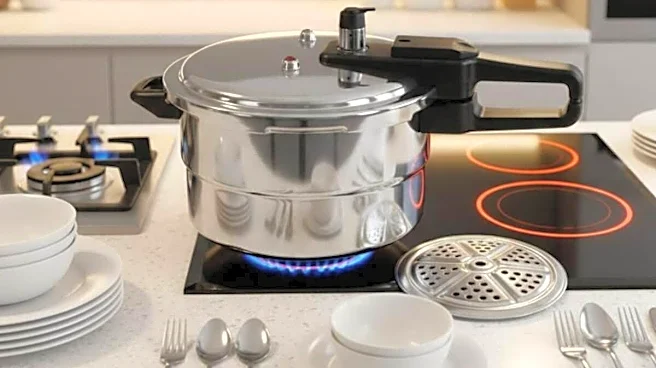
A pressure cooker cooks food using high-pressure steam trapped inside a sealed vessel. This increases the boiling point of water, allowing food to cook much faster than conventional methods.
It is one of the most widely used cooking tools in Indian kitchens because it supports a huge variety of dishes.
From dal and rajma to curries, rice, and meat dishes, a pressure cooker can handle almost anything that requires boiling or slow cooking.
Traditional stovetop models remain popular, though electric versions are also gaining traction.
Which is faster?
The pressure cooker cooks most foods faster due to high-pressure steam.
It significantly reduces cooking time by using steam pressure. Foods like dal, chickpeas, and rice cook in a fraction of the time compared to traditional boiling.
A rice cooker is slower but compensates with automation and convenience. You don’t need to supervise it at all.
Which is more versatile?
The pressure cooker is far more versatile.
It can prepare:
● Rice and pulao
● Dal and lentils
● Chickpeas and rajma
● Vegetable curries
● Meat dishes
● One-pot meals
A rice cooker is more limited but still useful for:
● Plain rice
● Khichdi
● Oats and porridge
● Steamed vegetables
● Light grains like quinoa
If your goal is variety, the pressure cooker is the clear winner.
Which is easier to use and clean?
Rice cookers are easier to use. Just add ingredients and switch it on. Many models automatically shift to a “keep warm” mode.
Cleaning is also simpler because food rarely sticks to the inner pot.
Pressure cookers require more attention. You need to manage whistles, timing, and safety release. Cleaning involves multiple components like gasket rings and valves.
Which is better for Indian homes?
Indian cooking styles strongly influence this choice.
Pressure cookers are deeply rooted in everyday Indian cooking because they are multi-purpose and efficient.
Rice cookers are becoming more popular in urban homes, especially among working professionals or small families who want hands-free cooking.
In many households, both are used together, pressure cookers for full meals and rice cookers for perfect rice.
Frequently Asked Questions
Which is better for daily cooking?
A pressure cooker is better for full meals, while a rice cooker is ideal for simple rice-based cooking.
Can a rice cooker replace a pressure cooker?
Not completely. A rice cooker is limited, while a pressure cooker handles a wide variety of dishes.
Is a rice cooker worth it in India?
Yes, especially if you eat rice regularly and want consistent, hands-free cooking.
Does a pressure cooker save time and energy?
Yes, it significantly reduces cooking time and is generally energy-efficient.
Which is safer to use?
Modern rice cookers are fully automated and very safe. Pressure cookers are also safe when used correctly.
Can I cook rice in a pressure cooker?
Yes, but it requires more attention compared to a rice cooker.
Should I buy a pressure cooker or a rice cooker?
If you are confused between a rice cooker and a pressure cooker, the right choice really depends on how you cook every day.
For most Indian households, the pressure cooker is the better overall choice because it is far more versatile. It can handle dal, rice, vegetables, curries, and even one-pot meals. If you want one appliance that does almost everything, this is the safest and most practical option.
However, if your cooking style is simple and repetitive, especially if you eat rice daily, a rice cooker is unbeatable for convenience. It removes all monitoring, avoids overcooking, and delivers consistent results with almost zero effort.