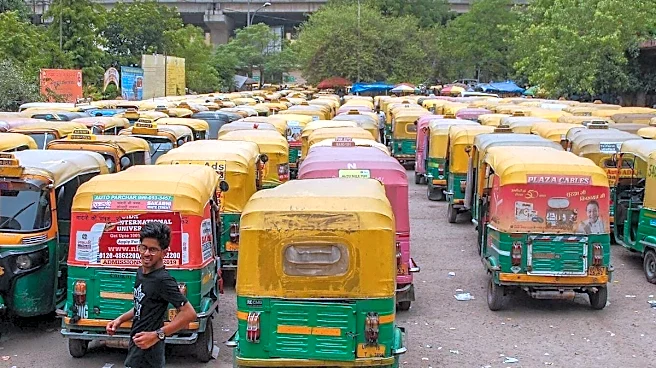




For decades across major Indian cities, public transport shared a single, uniform identity: a black lower body topped with a bright yellow roof. In New Delhi, however, the familiar black base vanished from three-wheelers, replaced by a vivid, uniform green. This makeover was not a city branding exercise or a cosmetic refresh. It was a strict regulatory mechanism mandated by the Supreme Court of India to enforce a historic transition toward cleaner fuels.
1. Air Quality Crisis Of 1998
By the late 1990s, New Delhi faced a severe public health emergency driven by toxic air quality. Tens of thousands of auto-rickshaws operating on dirty, oil-blended two-stroke petrol engines choked city intersections with dense smog and unburnt particulate matter.
As public pressure mounted, environmental activists brought the crisis to the nation’s highest court. In 1998, the Supreme Court issued a landmark directive aimed at curbing vehicular emissions: all commercial public transport vehicles operating in the National Capital Territory- including buses and auto-rickshaws- were legally required to phase out liquid fossil fuels and convert to Compressed Natural Gas (CNG).
2. Visual Tool For Traffic Enforcement
Transitioning tens of thousands of auto-rickshaw drivers to a completely new fuel system presented a massive enforcement headache for city authorities. In a sprawling metropolis, traffic police had no quick way to check under the hood of every passing three-wheeler to verify whether it was running on clean CNG or illegal petrol. To solve the enforcement bottleneck, the Delhi Transport Department introduced a strict visual coding rule:
Green for Clean Energy: Drivers who converted their vehicles or purchased new factory-built CNG models were required to paint the lower half of the auto-rickshaw bright green.
Black for Phased-Out Petrol: Vehicles still running on petrol retained their legacy black paint until their permits expired or their engines were converted.
The bright green livery allowed traffic officers to identify compliant vehicles at a glance, instantly isolating older petrol models attempting to operate illegally.
3. Lasting Symbol Of Urban Transformation
As conversion deadlines passed and older petrol engines were systematically retired, the traditional black-and-yellow auto-rickshaws disappeared entirely from the capital’s roads.
What began as an immediate traffic enforcement tool quickly evolved into an iconic visual hallmark of Delhi’s urban landscape. Over two decades later, the green-and-yellow color scheme remains a permanent reminder of one of the largest clean-fuel mandates in municipal transport history.