

/images/ppid_59c68470-image-179194255971871238.webp)
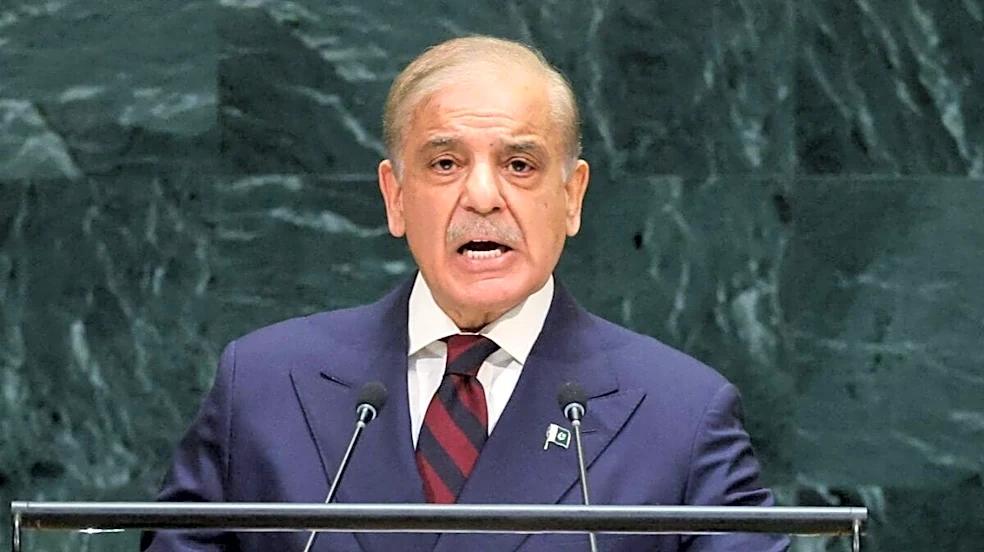
Pakistan is set to take over the chairmanship of the Boards of Governors of the International Monetary Fund (IMF) and the World Bank Group in 2027, even as it continues to rely on financial assistance from the global lenders to support its economy.
The appointment will give Islamabad a prominent role in discussions involving finance ministers and central bank governors from member countries. However, it will not give Pakistan control over the institutions’ lending decisions.
Pakistan’s Ministry of Economic Affairs announced the development on Friday, saying the country would hold the position for the first time since 1953. Economic Affairs Minister Ahad Khan Cheema, who serves as Pakistan’s governor to the World Bank, was named the incoming chair
during the World Bank-IMF Annual Meetings in Bangkok.
The ministry described the appointment as a “historic milestone”, saying it would enable Pakistan to contribute to global economic discussions and encourage dialogue among member countries.
The diplomatic recognition comes at a time when Pakistan is seeking further financial support from the IMF. The country is awaiting approval for another $1.2 billion under its existing loan programmes.
Pakistan’s Long History Of IMF Bailouts
Pakistan has entered into at least 25 IMF loan programmes since joining the institution in 1950. Its repeated reliance on the lender reflects long-standing economic challenges, including shortages of foreign currency, inflation and difficulties in meeting external payment obligations.
The country is currently supported by a $7 billion Extended Fund Facility (EFF), which aims to support economic reforms and meet external financing needs. It is also receiving assistance through a $1.4 billion Resilience and Sustainability Facility (RSF), designed to address climate-related risks.
A recent staff-level agreement with the IMF could unlock around $1 billion under the EFF and another $210 million under the RSF. If approved by the IMF Executive Board, the latest disbursements would take total payments under the two programmes to approximately $5.7 billion.
The agreement covers the fourth review of the EFF and the third review of the RSF. Discussions were led by IMF official Iva Petrova.
Despite these support measures, questions remain over whether Pakistan can build a stronger economy and reduce its dependence on repeated financial assistance.
IMF Sees Signs Of Economic Stability
Pakistan’s latest economic assessment has shown some improvement. The IMF said the country had maintained macroeconomic stability despite the conflict in West Asia, supported by policy measures and its ongoing loan programme.
Pakistan’s real gross domestic product (GDP) grew by 4% during the first three quarters of the 2025-26 financial year. However, higher energy prices and supply disruptions later slowed economic activity, with full-year growth estimated at 3.6%.
Inflation also eased to around 10.3% in September after reaching a peak in May. Remittances from overseas Pakistanis helped keep the current account broadly balanced during FY26, while the country’s gross foreign exchange reserves rose to approximately $21 billion by the end of September.
According to the IMF, upgrades to Pakistan’s sovereign credit ratings and renewed access to international markets indicate improved confidence in its economic policies.
However, the lender has cautioned that geopolitical tensions, fluctuations in energy prices, tighter global financing conditions and disruptions to trade continue to pose risks to the country’s recovery.
Pakistan’s Growth Model Faces Questions
The World Bank has raised concerns about Pakistan’s economic model, describing it as unsustainable because of high public consumption, low productivity and heavy borrowing.
While external loans have helped the country manage immediate financial pressures, the longer-term challenge is to use that support to generate sustainable economic growth.
Pakistan’s new role at the IMF and World Bank will give it a greater platform in international economic discussions. However, reducing its dependence on financial assistance from the same institutions remains a much bigger challenge.
/images/ppid_59c68470-image-1792167535082902.webp)

/images/ppid_59c68470-image-179213502119020398.webp)
/images/ppid_59c68470-image-179208759214559222.webp)

/images/ppid_59c68470-image-179196256839882557.webp)
/images/ppid_59c68470-image-179199509354211818.webp)
/images/ppid_59c68470-image-179191002674447660.webp)