
/images/ppid_59c68470-image-177005257282658788.webp)
/images/ppid_a911dc6a-image-176991882890717129.webp)
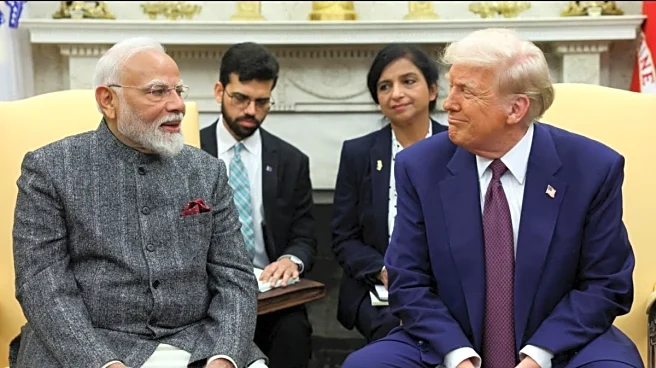
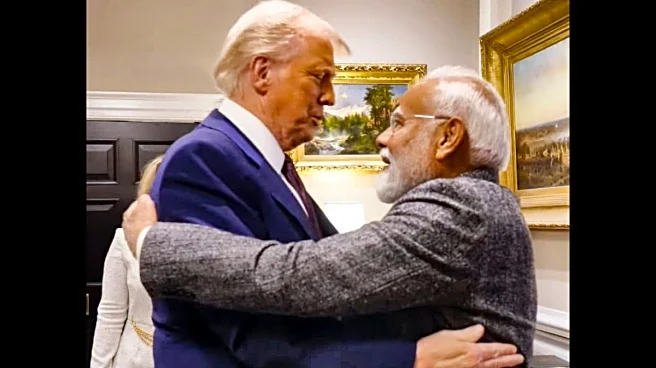
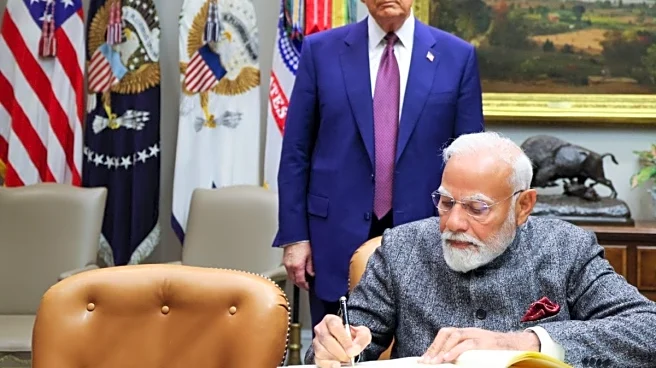
After many deliberations, alas, the trade deal with the United States seems to have been sealed. Following the tweet by President Donald Trump, Hon’ble PM Narendra Modi signified the same intent in his tweet, indicating a commonality of thoughts in this much-touted agreement. Several months of intense negotiations have resulted in this effort. I had written a column on dealing with the trade impasse for News18 last year, highlighting the strategies for us to leverage and get this over the winning line. Given this context, with the caveat on the few details that are present in the public domain, let’s assess how this has shaped up.
First, the reduction of tariff rates from the current 50 per cent to the estimated 18 per cent is a huge win for
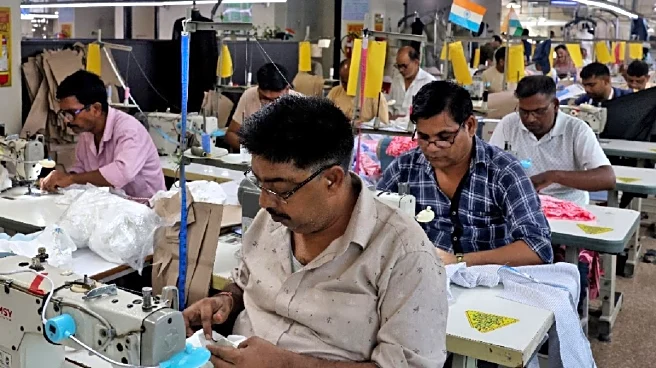
Bharat. This significantly reduces the pressures on exporters who are exporting to the US, which forms the single largest market for our traders. Several exporters had to re-route their trade obligations via other countries such as Sri Lanka and Vietnam in order to retain their US commercial interests. Many others also had to do significant job cuts to underscore the impact of these high tariffs. Traders from export hubs such as Tirupur had faced the brunt of this in the last year. If this had continued, some argue that over 150,000 jobs would have been at risk in Tirupur alone. For all of these stakeholders in the export-import trading system, this is a huge moment of relief and stability for them. This would ensure that there is more security for the jobs and also a boost in the exports to the US, therefore benefiting many of the trading hubs in the Southern and Western parts of the country.
Second, prima facie, we seemed to have gotten a relatively good deal compared to other similar countries. For instance, tariffs on exports to the US range between 30–37 per cent for China, depending on the product; approximately 35 per cent for Canada; 50 per cent for Brazil; and around 15 per cent for the European Union. Among our direct export competitors, Bangladesh and Vietnam face tariffs of about 20 per cent, while other low-cost economies such as Myanmar face rates as high as 40 per cent. It is important to note that EU countries benefit from collective bargaining as a bloc. Even after accounting for this, most countries face higher tariff barriers than Bharat – a positive signal. Coupled with our status as the world’s fastest-growing major economy, this tariff advantage significantly enhances our trade competitiveness.
Third, as I had articulated in my earlier column, this was a golden opportunity for Bharat to reduce its non-trade barriers as much as possible. For decades, despite attempts by several governments, we have struggled to reduce both tariffs and non-tariff barriers for several domestic reasons. Politics of the time also played a role in the status quo position, which severely hindered our trade competitiveness at the international levels. If, as per the US president’s tweet, Bharat were to reduce their non-trade barriers as much as possible, then that’s a significant boost to more trade with the largest single market in the world. This would ensure that ease of business among the local trade and supply chains would significantly be enhanced due to ease of trade and commerce. Of course, unfettered trade has its own disadvantages, but this is a calculated risk to expand the economies of scale, especially in a rapidly growing country such as Bharat.
Fourth, if we take a step back and see the big picture, the scenario for Bharat looks very impressive. In the last one year, we have signed FTAs with several countries, including the ‘mother of all deals’ with the EU, which was signed recently. Other significant agreements include the FTA with the United Kingdom; the India–Oman Comprehensive Economic Partnership Agreement (CEPA); the India–New Zealand Free Trade Agreement; and the India–EFTA (European Free Trade Association) Trade and Economic Partnership Agreement—covering Switzerland, Norway, Iceland, and Liechtenstein—which was operationalised late last year. During this period, Bharat has also navigated the complex challenges arising from the Russia–Ukraine conflict through deft diplomacy, ensuring that national interests are safeguarded amid profound geopolitical upheaval.
Finally, these skilful negotiations—dare one say, global Chanakya neeti—combined with Bharat’s ability to remain composed and restrained despite immense pressure from major trade players, have produced largely win-win outcomes. They have led to a more diversified trade portfolio, ensuring that no single country is indispensable, while preserving strong partnerships with key allies such as the United States and the European Union. This stands as a testament to the approach adopted by Prime Minister Narendra Modi in managing complex global scenarios with razor-sharp focus on protecting Bharat’s interests.
Overall, the finer details of the trade deal would determine how successful it becomes in the years ahead. Yet, if all of the pointers discussed thus far hold true and the negotiations between the parties are retained in good faith, this is a monumental moment for Bharat-US relations and also a significant step for a diversified yet powerful trade agenda that will serve Bharat’s interest as it pursues Viksit Bharat in the years ahead.
Sriram Balasubramanian is an economist and best-selling author of Dharmanomics. Views expressed in the above piece are personal and solely those of the author. They do not necessarily reflect News18’s views.
/images/ppid_a911dc6a-image-177010087576765026.webp)

/images/ppid_59c68470-image-17700601190757984.webp)

/images/ppid_a911dc6a-image-177005669234060994.webp)
/images/ppid_59c68470-image-177005757532136821.webp)
/images/ppid_a911dc6a-image-177008523402140777.webp)