

/images/ppid_a911dc6a-image-178022956089312216.webp)

Some of cinema’s most unforgettable moments happen behind the scenes, shaped quietly in the editing room. One of the creative minds responsible for helping bring a galaxy far, far away to life has now passed away, leaving behind a legacy that continues to influence generations of filmmakers.
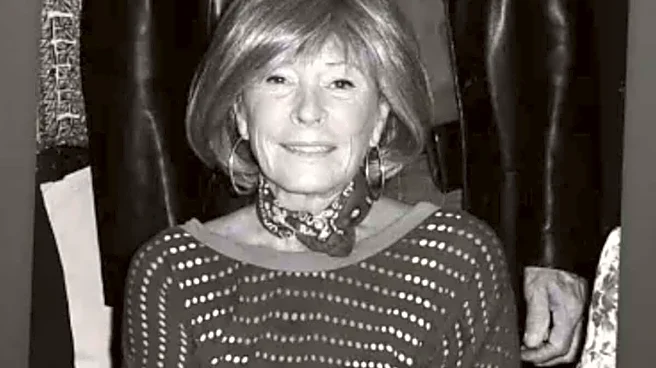
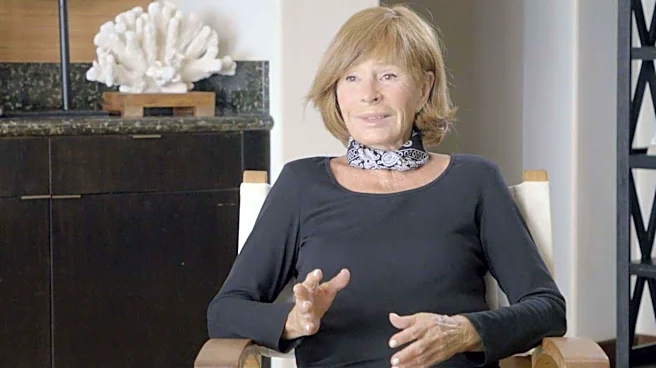
Marcia Lucas, the Academy Award-winning editor best known for her work on Star Wars, has died at the age of 80. According to reports, she passed away on Wednesday in Rancho Mirage, California, following a battle with cancer.
In a heartfelt statement, her family remembered not only her achievements in film but also the person she was away from the spotlight.
“Marcia will be remembered as a brilliant storyteller, a trailblazer for women in film, a loving mother
and grandmother, a generous host and a loyal friend whose humor and sparkle filled every room she entered. Her influence on film is indelible, but those who knew her best will remember the way she made life feel more vivid, more beautiful, more fun and more full of love,” her family said in a statement.
A California native born Marcia Griffin, she began her career through the Motion Picture Editors Guild apprenticeship program. Her early years in Hollywood saw her working under acclaimed editor Verna Fields, whose credits included Jaws and Paper Moon. It was during this period that she met George Lucas, then a film student at the University of Southern California who was also assisting Fields.
After marrying George Lucas in 1969, Marcia became involved in some of his earliest projects. She served as an assistant editor on his first feature film, THX 1138, before taking on a larger role in American Graffiti.
Working alongside Verna Fields on the coming-of-age classic, Marcia earned her first Academy Award nomination for Best Film Editing in 1974. Although she did not win that year, losing to William Reynolds for The Sting, her defining Oscar moment was still ahead.
That breakthrough arrived with Star Wars. Marcia shared the Academy Award for Best Film Editing with Paul Hirsch and Richard Chew, collecting the trophy from actors Farrah Fawcett and Marcello Mastroianni. The landmark sci-fi film went on to win six Oscars in total, including honours for art direction, sound, score, costume design and visual effects.
Her contribution to the film was widely acknowledged. A 1977 review by The Hollywood Reporter praised Star Wars for being “perfectly paced,” while author Dale Pollock, in his George Lucas biography Skywalking: The Life And Films Of George Lucas, described Marcia as the director’s “secret weapon.”
George Lucas himself frequently highlighted the enormous role she played in shaping the movie. Speaking to Rolling Stone in 1977, he discussed the challenges of assembling the now-iconic final battle sequence.
“My wife, Marcia, can normally cut a whole reel — all ten minutes of the film — in one week. I think it took her eight weeks to cut that battle. It was extremely complex and we had 40,000 feet of dialogue footage of pilots saying this and that. And she had to cull through all that, and put in all the fighting as well. Nobody really has ever tried to interweave an actual plot story into a dogfight.”
Marcia also influenced one of the franchise’s most significant story decisions. George Lucas revealed that she had suggested Darth Vader should kill Obi-Wan Kenobi, played by Alec Guinness.
“The more I thought about Ben getting killed the more I liked the idea,” the filmmaker told Rolling Stone. “It made the threat of Vader greater and that tied in with The Force and the fact that he could use the dark side.”
While her work on Star Wars remains her most celebrated achievement, Marcia Lucas built an impressive career beyond the franchise. During the mid-1970s, she collaborated with acclaimed filmmaker Martin Scorsese, editing Alice Doesn’t Live Here Anymore and supervising the editing process on Taxi Driver and New York, New York.
She later returned to the Star Wars universe for Return of the Jedi, released in 1983. Interestingly, it was also the year she and George Lucas ended their marriage. Speaking about their creative partnership on the film, George once remarked that Marcia was responsible for the “dying and crying” — the movie’s emotional moments. Return of the Jedi would become the final project on which she received an editing credit.
Despite her remarkable accomplishments, Marcia always spoke simply about her craft. In a 1983 interview with Time magazine, she said, “I love film editing. I have an innate ability to take good material and make it better, and to take bad material and make it fair.”
Marcia Lucas is survived by her daughters, Amanda Lucas and Amy Soper, along with her grandchildren. Her work helped define some of Hollywood’s most beloved films, ensuring that her influence will continue to be felt long after her passing.

/images/ppid_a911dc6a-image-178029251880960031.webp)

/images/ppid_59c68470-image-178014002732589782.webp)


/images/ppid_a911dc6a-image-178012109177751530.webp)
/images/ppid_a911dc6a-image-178011052603829378.webp)