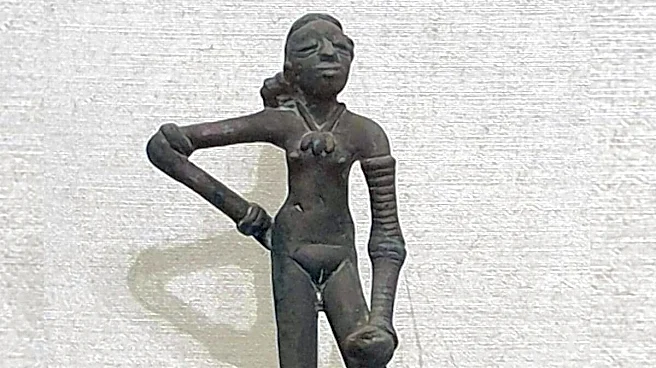




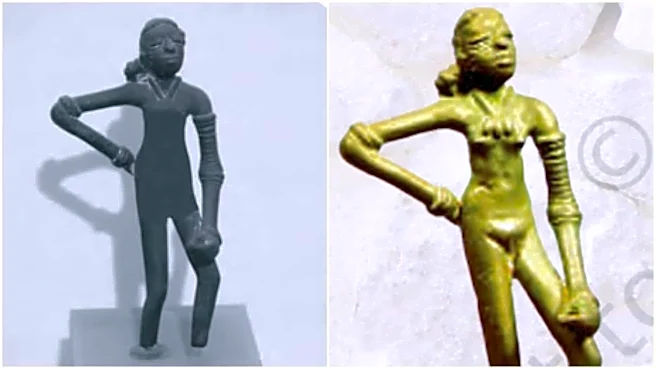
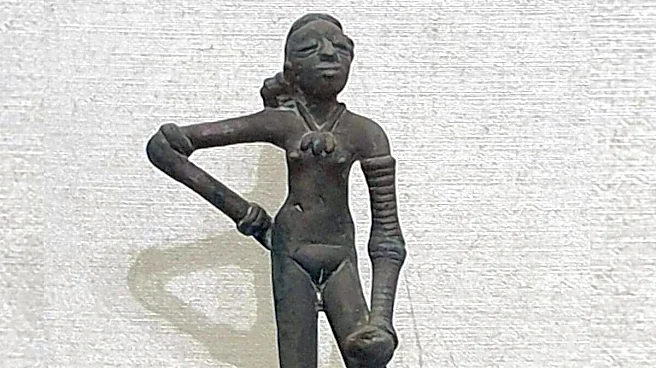
The picture of a page in an NCERT textbook of the nude iconic “Dancing Girl of Harappa”, with her lady bits covered up to protect her modesty, looked fake at first glance. Surely, it had to be AI-generated. Part of a well-planned digital hit job to trick the world into believing that under the so-called “Hindu nationalist” BJP, India had become a prudish redoubt.
A redoubt governed by a confederacy of “uncles” that can’t handle even the petrified, evolved and timeless aesthetic of pioneering ancients. But alas, it was all too true. The photo wasn’t fake. The NCERT had indeed made the statue wear a bashful sleeve. Apparently, some genius in the NCERT scheme of things got it into their head that Grade 9 students couldn’t possibly be exposed to the coquettish
but gamine allure of this creation from another age. But then what exactly are fourteen- to fifteen-year-olds being shielded from?
For those who may not know, the “Dancing Girl of Mohenjo-daro” is a playful, and certainly not sexual, 4,500-year-old prehistoric bronze statuette from the Indus Valley Civilization.
This iconic 10.5 cm figurine showcases the highly advanced metallurgical and artistic skills of Indus Valley artisans. Instead of honouring their craft in all its glory, it’s a travesty that the rulers of India today have paid them back with a modern-day sartorial rebuke.
Singed by the backlash, the NCERT will perhaps review its lurch towards prudery. The “Dancing Girl of Mohenjo-daro” represents a form that became the aesthetic standard for sculptors down the ages.
The statue established an early aesthetic prototype for bronze sculpting, particularly the dynamic, poised tribhanga and hip-accentuating postures later popularised in classical and Chola dynasty bronze art.
But the lesson from this ill-conceived moralising is disturbing at several levels. First, it is visual confirmation that in India there are still some who believe that the female form is a corrupting influence. It needs to be veiled, to be hidden, to prevent males from succumbing to their sexual urges.
In other words, it reveals a mindset that places blame squarely at the female door for the lascivious male gaze. Will women now be asked to cover up in public next?
Second, government educators of the day believe that censorship is the best way to deal with any issue. That educators are using this blunt instrument ought to worry all those who are concerned with pedagogy that spurs intellectual curiosity.
Where does this censorship stop? Will the entire temple complex at Khajuraho, which celebrates sexuality, now be shrouded from the public gaze? Will books and ideas that challenge the status quo also be scrubbed clean?
But beyond these concerns is a larger institutional one. Is the veiling of the “Dancing Girl of Mohenjo-daro” an admission by the Centre that it has arrogated to itself the role of the gatekeeper of morality?



/images/ppid_a911dc6a-image-178150965870995365.webp)


/images/ppid_a911dc6a-image-178149142052120173.webp)