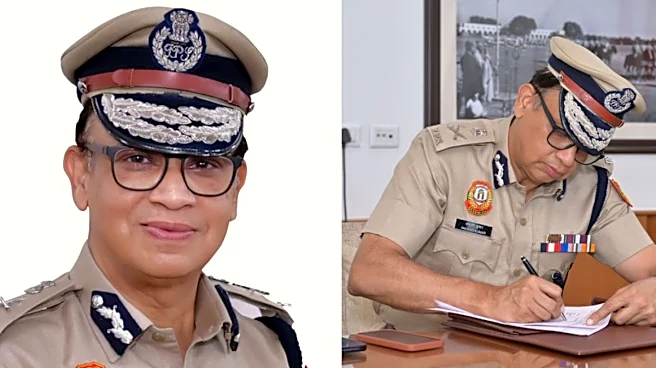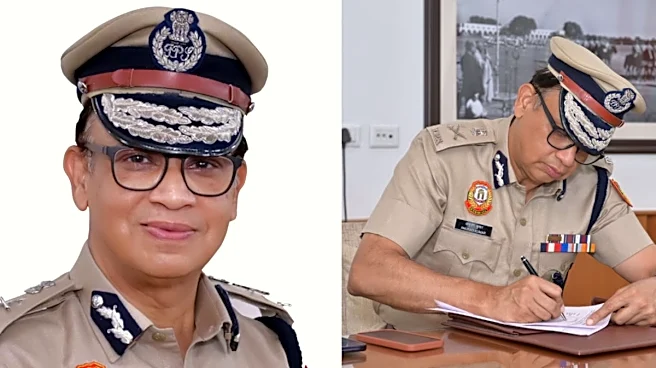



Newly appointed Delhi Police Commissioner, Anurag Kumar, has strongly conveyed to the force that, while the crackdown on organised crime and the money trail behind narcotics should be in focus, better traffic management and community building should be prioritised for a holistic approach.
Kumar has also pressed for a “time-bound professional investigation” with focus on the “big players”.
Kumar, who was serving as a special director in the Intelligence Bureau (IB) before assuming the new charge, said organised crime, including extortion and its wider links, is in focus along with efforts to bring the overall crime rate further down.
According to the new CP, in parallel, the cops’ focus is on the last end of narcotics. They are also focused on cracking
down on the big players, identifying active hotspots and tracking the financial trail behind narcotics. Other than crime and law and order, the top cop is focused on community building.
Public grievances shall be prioritised with focus on criminal elements, he said, adding that the investigations must be time-bound and professional. The CP focused on the need to strengthen community building with active beat policing and upwards.
Other than these priorities, the Delhi traffic police have also been told that, along with feasibility studies to decongest arterial roads, efforts be made to come up with awareness campaigns on traffic rules and regulations. Traffic police, with the help of civic departments and resident or market welfare associations, must also work on decongestion and removing encroachment to ensure better traffic flow.
Since taking charge, the new CP has held a series of meetings on both policing and the security front, as the upcoming BRICS summit is also a high-priority task at hand for the Delhi Police.
All About New Delhi CP
Kumar, a 1994-batch IPS officer, took charge as the new commissioner of Delhi Police on July 17, 2026. Kumar replaced Satish Golcha, who has been transferred as DG Home Guards.
In its first major action, just hours after Kumar assumed charge, Delhi police picked up Sonam Wangchuk, who had been on an indefinite hunger strike for 21 days at Jantar Mantar and shifted him to Safdarjung Hospital after his health deteriorated on July 18.
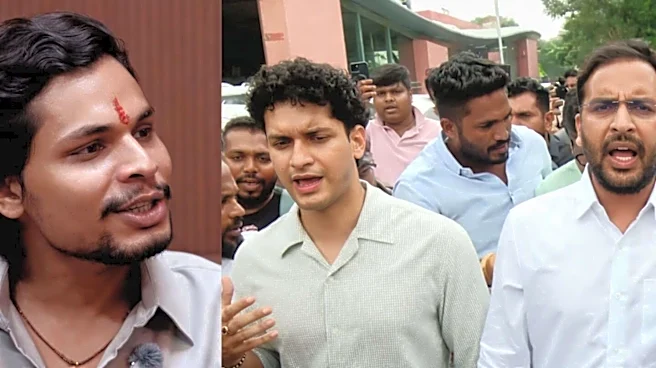
A few days later, violence broke out during a protest by the Cockroach Janata Party (CJP) and incidents of rioting were reported. During the protest, while the police were also attacked by the mob, the force resorted to lathicharge and fired tear-gas guns to prevent the protestors from reaching parliament. A pellet gun was also fired, causing injuries to at least two individuals. Earlier, police had filed several cases in connection with these violent incidents but were later dropped.