
/images/ppid_a911dc6a-image-17772825259875927.webp)


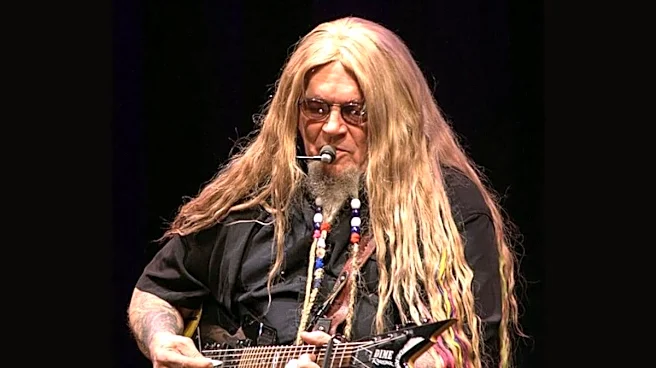
David Allan Coe, one of the most recognisable figures of the outlaw country movement, has died at the age of 86. He passed away in an intensive care unit at around 5 pm on Wednesday, his representative confirmed, though the exact cause of death has not yet been made public.
Often described as a “musical treasure,” Coe remained deeply connected to his fans even in his later years, despite facing a long period of declining health, Pagesix.com reported.
His wife, Kimberly Hastings Coe, spoke about him in deeply personal terms, remembering him not just as a legendary musician but as her partner and closest companion. She said she never wanted the world to forget him, a sentiment that reflects how strongly he was loved, both at home and by fans.
Coe’s
life never followed a straight path, and that’s part of what made his music feel so real. Born in Akron, Ohio, in 1939, he spent much of his early life moving through reformatories and prisons before eventually finding his way into music. Those years stayed with him, shaping the kind of songs he would later write: raw, direct, and drawn from lived experience rather than polish.
When he got out in the late 1960s, he headed to Nashville with little more than determination. He would perform outside the Ryman Auditorium, trying to get noticed by anyone who would listen. It wasn’t easy, but he stuck with it. Slowly, things began to change. By the early 1970s, he was making a name for himself, first as a songwriter, then as a performer. Songs like “You Never Even Called Me by My Name” and “The Ride” helped define his voice, while his writing for Tanya Tucker, including “Would You Lay With Me (In a Field of Stone),” showed just how far his reach extended.
Over nearly six decades, Coe released 42 studio albums and became one of the most recognisable figures of outlaw country — a movement that deliberately pushed back against the cleaner, more commercial Nashville sound. His songs connected with people who saw themselves in that defiance. Even beyond his own music, his influence was felt through tracks like “Take This Job and Shove It,” recorded by Johnny Paycheck, which became a kind of working-class anthem.
Life off stage was never quiet either. He survived a serious car crash in 2013 and later spent weeks in hospital after contracting COVID-19 in 2021. Through it all, that larger-than-life image never really faded.
He is survived by his wife Kimberly and his children. For many, his passing feels like the end of a certain kind of country music — one that was rough, honest, and didn’t try to smooth out the edges.




/images/ppid_a911dc6a-image-177735605662336803.webp)