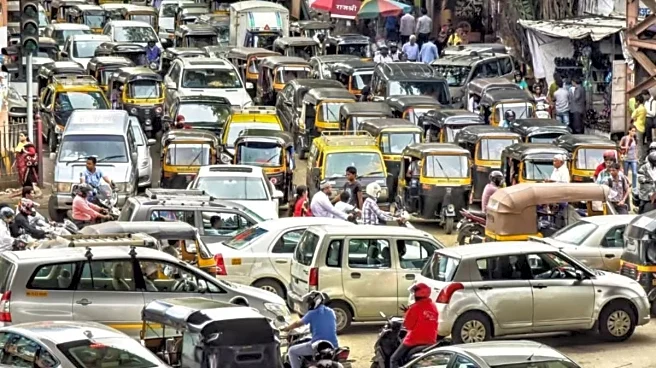

Bengaluru’s roads are more crowded than ever. Routes that used to be smooth and quick now feel like a daily battle. With new cars hitting the streets almost every day, even short trips to work or the shop
can take much longer than expected. Once celebrated as India’s Silicon Valley, the city is increasingly becoming known for its traffic jams, leaving residents frustrated, exhausted, and wondering if Bengaluru’s roads will ever catch up with the growing number of vehicles.
Commuters are facing yet another headache as the city grapples with worsening traffic congestion. With private vehicle ownership rising sharply, the average commute has become increasingly time-consuming and stressful. Residents report that journeys which once took 30–40 minutes are now regularly stretching to over an hour, particularly during peak hours.
How Private Vehicles Are Increasing Traffic in Bengaluru?
Recent statistics paint a concerning picture with numbers confirming that currently over 1.5 crore vehicles are navigating Bengaluru’s roads daily. This includes approximately 1.22 crore registered within the city and a significant influx of vehicles from neighbouring states and non-permanent registrations. Considering all these factors, the city is handling more than 1.5 crore vehicles at any given time far beyond the capacity of its main roads, which were designed to accommodate only around 40,000 vehicles. The result is frequent, prolonged traffic snarls that have become part of daily life.
The growth in private vehicle ownership is a major contributor to the gridlock. Over the past seven months alone, Bengaluru has seen more than 3.9 lakh new private vehicles registered, alongside approximately 57,000 transport vehicles entering the city every day, 15% of which originate from neighbouring states. An additional 5% of traffic comes from other districts of Karnataka, adding to the pressure on the city’s already strained road network.
This surge in vehicles is particularly concerning given the city’s role as India’s IT hub. As IT companies and start-ups increasingly move operations to other states to escape congestion, residents face the daily frustration of traffic jams that now average an hour in duration, with peak-hour delays extending to 90 minutes. Ordinary citizens, IT employees, and students alike report feeling trapped in the city’s traffic, turning what should be short commutes into exhausting ordeals.
Experts warn that if transport policies and infrastructure development do not keep pace with the rising number of vehicles, Bengaluru risks transforming from the ‘Silicon City’ into a ‘Traffic City’. The continuous influx of new cars and limited expansion of road capacity makes the situation precarious. While 1.9 crore private vehicles are registered statewide, commercial vehicles amounting to over 13 lakh also add to the congestion on key routes.
City planners highlight that without urgent intervention, traffic woes will only intensify. Measures such as expanding public transport options, improving road infrastructure, and stricter regulation of vehicle registration may be necessary to prevent the city’s streets from descending further into chaos.
For Bengaluru residents, the reality is already clear with daily commutes becoming a test of patience, with life at the signals consuming valuable time. The city’s growth, both in population and in economic activity, now faces a critical bottleneck in the form of traffic congestion one that requires immediate attention if Bengaluru is to retain its reputation as a thriving, modern metropolis rather than a city bogged down by its own vehicles.
(Reporting by Sharanu Hampi, News18 Kannada, Bengaluru)