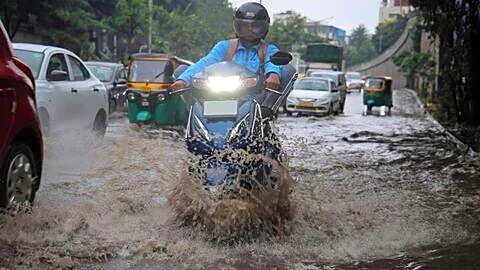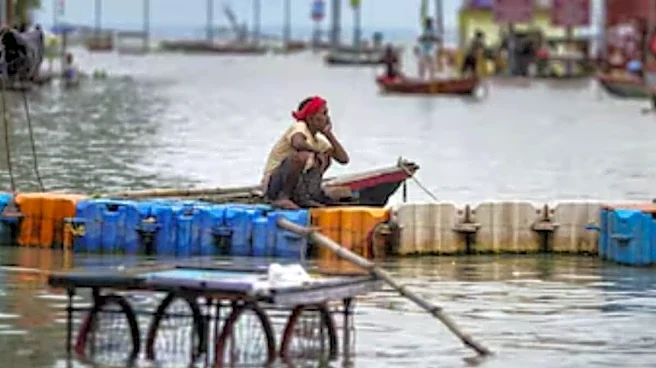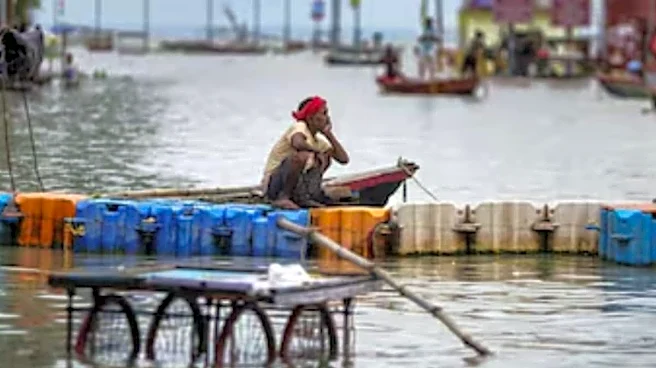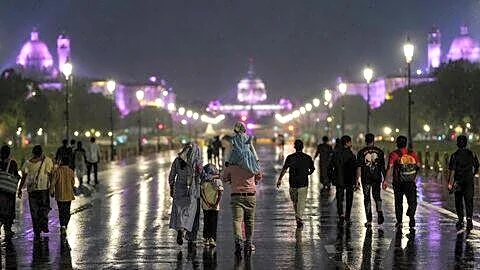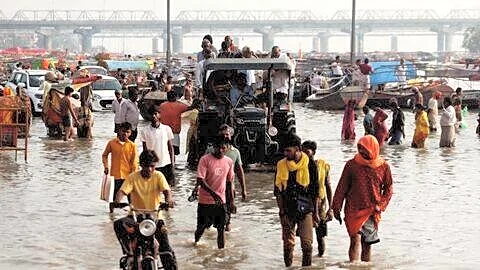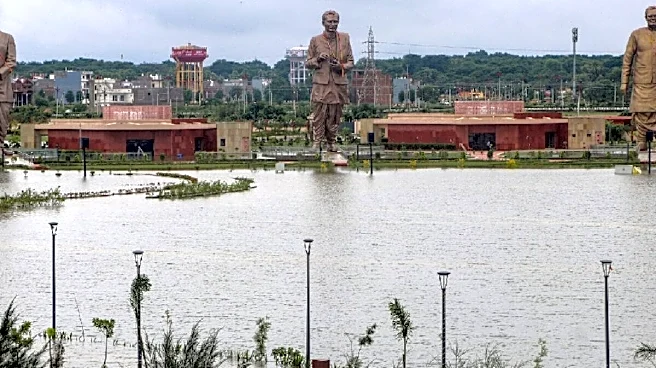


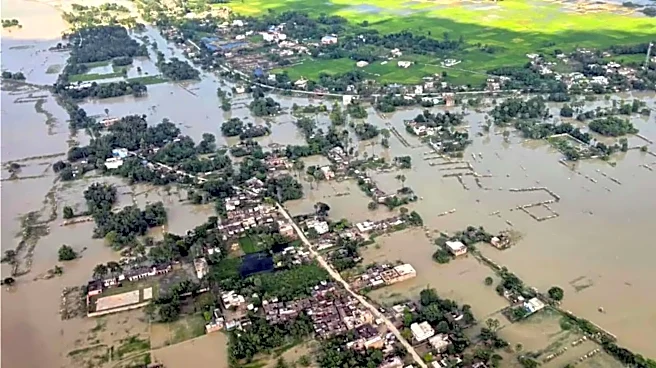

Uttar Pradesh has recorded 56 deaths and damage to 1,021 houses after rainfall was 775% above normal over three days. The immediate emergency is rescue and relief. The larger test is whether the state’s response can match the scale of the disaster.
According to the Relief Commissioner’s office, the state received 66.5 mm of rain between September 25 and the morning of September 27, against the normal 7.6 mm for the period. As many as 56 of Uttar Pradesh’s 75 districts recorded excessive rainfall.
UP Rain: 56 Dead In 3 Days
The official toll stands at 56 dead and 46 injured. Authorities have also reported the deaths of 107 animals and damage to 1,021 houses. The most extreme rainfall deviations were recorded in Farrukhabad, at 7,385% above normal, followed by Kannauj at 5,664%,
Shahjahanpur at 4,408%, Hamirpur at 4,240% and Mahoba at 4,100%.
Sitapur reported the highest number of deaths, at seven. Lakhimpur Kheri, Bahraich and Balrampur recorded five each, while Ayodhya and Gorakhpur reported four fatalities each.
House damage was concentrated in several districts. Hardoi reported 272 damaged houses, followed by Sitapur with 108, Chandauli with 75, Auraiya with 60, Gonda with 54, Hamirpur with 51, Shahjahanpur with 47 and Bahraich with 44.
Livestock losses were highest in Hardoi, with 28 animal deaths, followed by Sitapur with 16 and Kannauj with 14. Bahraich and Kanpur Dehat reported seven each, while Unnao reported six.
The India Meteorological Department (IMD) said the southwest monsoon is continuing to withdraw from parts of north India, while a depression over northeast Madhya Pradesh and adjoining north Chhattisgarh is driving heavy to very heavy rainfall over parts of Uttar Pradesh. The IMD had forecast heavy to very heavy rain in northern Uttar Pradesh on September 26 and isolated heavy to very heavy rainfall over west Uttar Pradesh on September 27, with the weather system also affecting Uttarakhand.
Relief Commissioner Dr Hrishikesh Bhaskar Yashod reviewed the situation with district magistrates and additional district magistrates on Sunday. Officials were directed to remain in direct contact with affected residents and monitor rescue and relief operations from the field.
District magistrates have been asked to meet affected families personally, assess their needs and ensure immediate assistance. The administration has also ordered officials to provide permissible aid in cases of death, injury and house damage, assess crop losses and arrange alternative accommodation for families whose homes are uninhabitable.
The government said rescue operations are continuing in waterlogged and flood-affected areas. Teams are evacuating stranded residents and moving them to safer locations. Residents have been advised to avoid unnecessary movement through waterlogged areas and near fast-flowing rivers, drains and other vulnerable sites.
The administration has activated the 1070 Relief Commissioner helpline for emergency assistance.
The official instructions establish what the government expects from district administrations. They do not yet show how quickly assistance has reached affected families.
Hardoi alone has reported 272 damaged houses, while Sitapur has reported 108. The key questions are how many homes have been formally assessed, how many families have received compensation and how many remain without shelter or immediate support.
The same uncertainty applies to farmers. Officials have been directed to conduct crop-loss surveys and begin compensation under applicable rules. However, the scale, timing and coverage of those payments remain unclear. In agriculture-dependent parts of central and eastern Uttar Pradesh, crop losses could extend the economic impact well beyond the immediate flooding.
The government has attributed the scale of the disaster to unprecedented rainfall and has instructed officials to act with “speed, sensitivity and coordination.” Elected representatives are to be briefed, relief material and financial assistance distributed on priority, and eligible families connected with housing schemes where necessary.
The weather event was exceptional. The aftermath will offer a more measurable test of governance.
The next important figures will not be rainfall totals or damage estimates alone. They will show how many affected families received relief, how quickly compensation was paid, whether displaced residents were housed and whether crop and property assessments were completed without delay.
“Relief and rescue operations must be carried out without negligence at any level, and the problems of affected families must be addressed promptly and sensitively. District magistrates should personally meet families affected by excessive rainfall, understand their problems and ensure that necessary assistance is provided immediately. In the present circumstances, relief and rescue operations must be conducted with speed, sensitivity and coordination, and every possible assistance should be provided to affected families in a timely manner,” Relief Commissioner Dr Hrishikesh Bhaskar Yashod said.