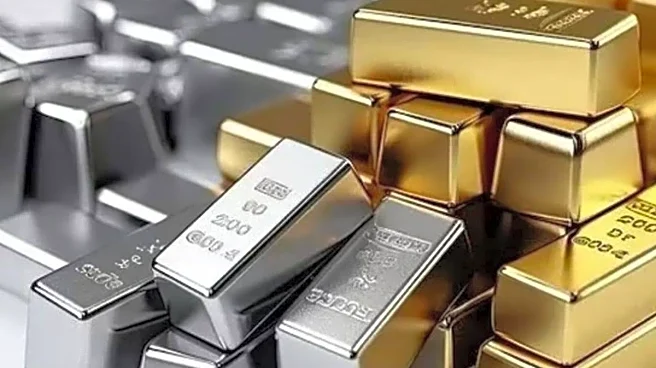




Gold’s rally is far from over, and prices could climb as high as $6,200 an ounce by mid-2026, analysts at UBS said, even as they expect some short-term consolidation in the yellow metal’s prices amid heightened volatility.
In a recent note, UBS said gold may trade in a narrow range in the coming days as leveraged positions unwind. “While we anticipate consolidation between $4,500 and 4,800/oz in the coming days due to volatility from margin calls, we believe gold will rise thereafter toward our mid-year forecast of $6,200 and continue to rate it as an attractive hedge,” the analysts wrote.
Currently, gold is trading at $4,872.60 an ounce on the New York-based COMEX, while the price of silver stands at $75.3 an ounce.
Silver, however, remains a different
story. UBS warned that the white metal is likely to stay volatile after its sharp rally in recent months and the steep correction that followed. On Thursday, silver prices fell more than 7 per cent to $77 an ounce in global markets. On the MCX, silver was trading near Rs 2.44 lakh per kilogram, down over 21 per cent in just a week.
“It is too early to build long-term exposure to silver. While we maintain our forecasts, we think investors should carefully consider the return required for an asset that has recently exhibited volatility. A further pullback is needed before turning constructive on the metal from a risk-reward perspective,” UBS said.
Gold itself has not been immune to sharp swings. On January 30, prices plunged nearly 12 per cent from record highs before paring losses to close down 8.5 per cent. UBS estimates this was the sharpest single-day fall in 13 years, a level of volatility typically seen around changes in Federal Reserve policy expectations.
UBS attributed the sell-off to a mix of profit-taking after strong gains, thinning liquidity in futures markets, and growing concerns over interest rates and the US dollar. Rate worries intensified after US President Donald Trump nominated Kevin Warsh as Federal Reserve chair, given Warsh’s known preference for tighter monetary policy, balance-sheet restraint and institutional reform at the Fed.
UBS also stressed that gold bull markets rarely end simply because prices rise sharply or fear subsides. Historically, they conclude only when central banks restore credibility and decisively move into a new policy regime.
“Since Warsh hasn’t demonstrated the same credibility as Volcker, we don’t believe this is the end of gold’s bull market,” UBS said.
According to the bank, gold is now in the mid-to-late phase of its current bull run, marked by fresh highs punctuated by intermittent pullbacks of 5-8 per cent.
“Importantly, the typical factors historically associated with the conclusion of gold’s bull market — sustained elevated real interest rates, a structurally stronger US dollar, improved geopolitical conditions, and fully re-established central bank credibility — have not yet materialized,” UBS said.
While Warsh’s nomination initially triggered a hawkish reaction — dragging gold and bitcoin lower and lending support to the dollar — UBS believes fears of an aggressive, Volcker-style tightening are misplaced.
“However, Warsh’s historical record and evolving policy perspectives suggest a more complex outlook. As such, we believe a significant shift away from accommodative monetary policy—such as a Volcker-style tightening — is unlikely,” the bank said.