

/images/ppid_a911dc6a-image-17710264327998831.webp)
/images/ppid_a911dc6a-image-177102646607765106.webp)
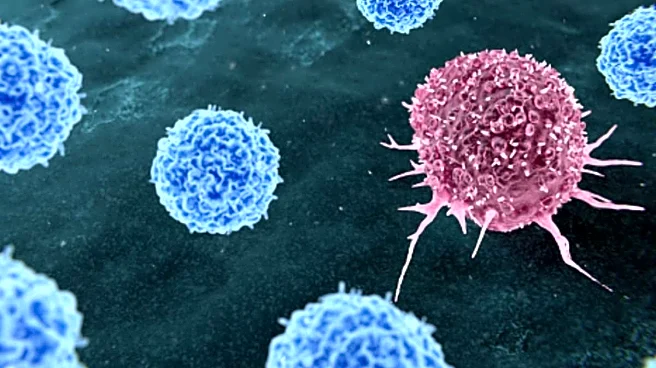
A saliva-based test that can detect oral cancer even before symptoms appear is set to be launched in India by April, potentially changing how the country screens for the disease.
The newly developed test by ErlySign, a biotech company from Nagpur, has been granted the US Food and Drug Administration (FDA) breakthrough device designation for its saliva-based oral cancer early detection kit.
The US Food and Drug Administration (FDA) “Breakthrough Device Designation” is a special fast-track status given to certain medical devices that show strong potential to significantly improve how serious or life-threatening diseases are diagnosed or treated.
The kit is designed to detect precancerous and early cancerous changes using a small saliva sample, avoiding
invasive procedures such as biopsies in the initial screening stage.
“We are planning a phased rollout, beginning with key diagnostic labs, clinics, and hospitals serving populations at high risk of oral cancer. This will be followed by expansion across India and eventually globally, ensuring smooth adoption and comprehensive training support for healthcare professionals,” Shubhendra Singh Thakur, CEO and founder, ErlySign, told News18. “The product will be highly affordable, at least 50% lower than the cost of a standard biopsy, making it accessible not only to a wide range of patients but also to government programmes for mass screening, so that this test can become a part of routine patient screening.”
Singh explained that the test received CDSCO approval for larger trials, which have now been completed. “We are in the process of document submission to CDSCO and preparing for a commercial launch of the product in India by April 2026.”
Could this test be a game-changer for Indian patients?
Oral cancer is the second most common malignancy in India, accounting for more than 1.4 lakh new cases and nearly 80,000 deaths every year. According to an article published in the medical journal Science Direct, oral cancer is the second most prevalent cancer in India, with 143,759 new cases and a mortality rate of 8.7%.
One of the major challenges in the prevention of oral cancer is the low participation in screening campaigns. Late diagnosis remains a major reason for high mortality, particularly among patients from underserved and high-risk groups, where access to routine screening is limited. The article said, “…with only 1.2% of men and 0.9% of women screened, varying widely across states.”
“Tobacco use is widespread, with 29% of adults consuming tobacco, often starting at a young age, and involuntary smokeless tobacco use remains prevalent due to its incorporation into dental care products. Studies show that mass or high-risk group screening, conducted every 10 years, can significantly reduce oral cancer mortality.”
According to Dr Deovrat Begde, chief scientific officer and co-founder, ErlySign, “From a scientific and clinical standpoint, the Breakthrough Device Designation validates the robustness of our biomarker-driven approach and the depth of our clinical evidence. Detecting precancerous changes in a simple saliva sample before visible symptoms appear has long been a challenge in oncology. This recognition reinforces our belief that precision biology combined with non-invasive diagnostics can fundamentally change how cancers are detected, monitored, and managed globally.”
How does the saliva-based oral cancer test work?
The oral cancer detection system in the test uses saliva instead of blood or tissue samples, making the test painless and non-invasive. About 2 ml of unstimulated saliva is collected in a tube containing a preservative buffer that protects key biological markers linked to cancer activity.
After collection, the sample undergoes a simple processing step, involving centrifugation for a few minutes. The processed saliva can be tested immediately, with results available within 10–15 minutes, or stored under controlled conditions for later analysis without loss of accuracy.
The test assesses the activity and levels of specific biomarkers in saliva, particularly enzymes known as gelatinases, which increase as oral cancer develops and progresses. These biomarkers are present even in very early stages, including pre-malignant conditions (Stage 0 and Stage I), when tumours or lesions may not yet be visible during a physical examination.
Based on biomarker activity, results are reported in three categories: low risk, moderate risk (suggesting early or precancerous changes), and high risk (associated with advanced disease).
What could it mean for patients and clinicians?
Doctors say the test could strengthen both screening and follow-up care for oral cancer patients. Public health experts note that if saliva-based screening can be integrated into routine check-ups or community programmes, it could improve early diagnosis rates and reduce deaths from a cancer where early detection significantly improves survival and lowers treatment costs.
For Dr Gaurav Dixit, associate director, haemato-oncology and bone marrow transplant at Paras Health Gurugram, “This is wonderful news.”
He believes “the device will help in the early detection of oral cancers, which are one of the most common cancers in our country. Only challenge would be to make it widely available, and of course, the cost. If both of these can be taken care of, this technique can become another useful test for cancer detection, like a PAP smear.”
Similarly, according to Dr Pragya Shukla, head of department, clinical oncology, Delhi State Cancer Institute, the saliva-based approach could be especially useful in routine clinical settings.
“This is going to help a lot in screening. Along with early detection, it can also be used during follow-ups for detecting recurrence,” she said, adding that because the test is non-invasive, it can be conducted on an outpatient (OPD) basis.
/images/ppid_59c68470-image-177104014803952296.webp)

/images/ppid_59c68470-image-177104006389961167.webp)
/images/ppid_a911dc6a-image-177103853218557950.webp)




/images/ppid_a911dc6a-image-17710364781122582.webp)
/images/ppid_a911dc6a-image-177103642565816962.webp)
/images/ppid_a911dc6a-image-177103504309993710.webp)
/images/ppid_a911dc6a-image-177103508492594205.webp)