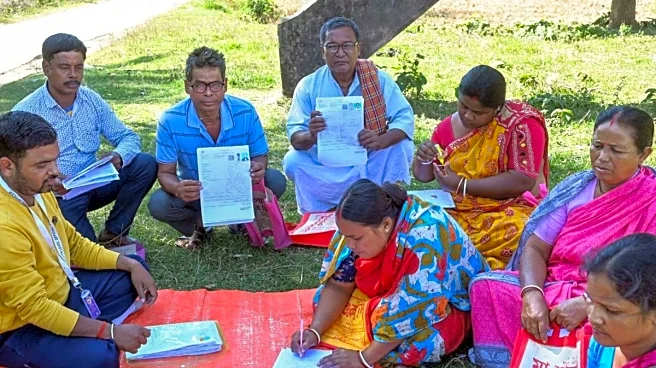

The Election Commission of India (ECI) has announced a revised schedule for the Special Intensive Revision (SIR) of electoral rolls in Uttar Pradesh, marking the third extension of this critical administrative
exercise. According to reports, the publication of the draft voter list, which was originally slated for December 31, 2025, will now take place on January 6, 2026.
Timeline and Key Dates
The revision process is being conducted with January 1, 2026, as the qualifying date, meaning any citizen reaching the age of 18 on or before this day is eligible for enrolment. Following the draft publication on January 6, the window for filing claims and objections will open immediately and remain active until February 6, 2026.
During the subsequent phase, running from February 6 to 27, election officials will carry out the disposal of claims, verify enumeration forms, and manage the “notice stage”. The culmination of this intensive exercise will be the publication of the final electoral roll on March 6.
A Massive Clean-up Operation
This SIR exercise, themed “Shuddh Nirvachak Namavali, Majboot Loktantra” (Clean Electoral Roll, Strong Democracy), represents a significant effort to sanitise the voter database of India’s most politically influential state. Preliminary data suggests a massive pruning of the rolls, with approximately 2.89 crore names—nearly 19% of the state’s current electorate—set to be deleted. These deletions primarily target deceased voters, those who have permanently shifted residences, or individuals with duplicate enrolments.
Urban centres such as Lucknow, Ghaziabad, and Kanpur are expected to see the highest volume of deletions. Furthermore, over one crore voters currently fall under the “unmapped” category, meaning their details do not align with historical records from 2003. These individuals must provide self-attested documentation during the objections period to retain their voting rights.
The Political and Administrative Context
The extension comes amid reports of immense pressure on Booth Level Officers (BLOs), who have been conducting door-to-door verification since November 4. While the ECI maintains the delay is necessary to ensure an error-free and inclusive list, the scale of deletions has sparked a political debate in Uttar Pradesh.
Opposition parties have raised concerns over the potential disenfranchisement of legitimate voters, a claim the poll watchdog has countered by emphasising the transparent nature of the “claims and objections” window.




/images/ppid_a911dc6a-image-177087824073342835.webp)

/images/ppid_a911dc6a-image-177087764837521863.webp)
/images/ppid_a911dc6a-image-177087757876223393.webp)
/images/ppid_a911dc6a-image-17708775426287391.webp)
/images/ppid_a911dc6a-image-177087761287071162.webp)
/images/ppid_59c68470-image-177087752852386037.webp)


/images/ppid_59c68470-image-177087759367465250.webp)