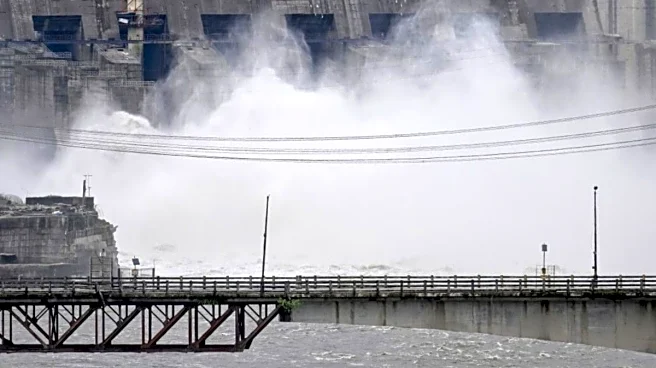




The Centre’s expert panel has recommended environmental clearance for the Kamala hydroelectric project, a 1,720-MW storage dam proposed in the forested districts of Arunachal Pradesh.
Three decades in the making, the dam project, however, comes with strong warnings over large-scale deforestation and the need for strict ecological safeguards as more than 23 lakh trees will have to be felled.
WHAT IS THE KAMALA DAM PROJECT?
The dam project – proposed by NHPC Ltd – involves the construction of a concrete gravity dam at a height of 216 metres on Kamala River, which is a tributary of the Subansiri and part of the Brahmaputra basin.
The dam and its reservoir will spread across 3,858 hectares in Kamle, Kra Daadi and Kurung Kumey districts, most of which are covered by dense forests.
WHAT DID THE EXPERT PANEL SAY?
After recently examining the proposal, the expert appraisal committee (EAC) noted that the dam project is in category ‘A’ of the Environmental Impact Assessment Notification, 2006 – this requires clearance at the central level.
While recommending approval, the EAC flagged what it called a serious environmental concern: the proposed felling of over 23 lakh trees.
“The project is located in a very dense forest area,” the committee observed, stressing that such large-scale deforestation will require carefully planned mitigation and ecosystem restoration measures.
It said a detailed action plan must be prepared in consultation with state forest and wildlife departments, ecological experts and local communities before forest clearance can be considered.
The social footprint is also significant. According to official documents, 126 villages across three districts will be affected with at least 30,000 people living in the impacted area.
The broader study area covers 377 villages across four districts. The NHPC, however, has argued that the project serves strategic and economic goals.
WHAT WILL THE PROJECT ACHIEVE?
Designed as a storage-based hydropower project, the Kamala dam is expected to provide daily peaking power and play a role in flood moderation in the downstream Brahmaputra basin. The design includes a 15-metre flood cushion above the full reservoir level to help manage monsoon floods.
The project has been in the pipeline for nearly three decades with initial investigations carried out by the Brahmaputra Board in 1996. This was followed by feasibility and detailed project reports by NHPC in 2004. Several alternative dam sites and designs were examined before the current alignment was finalised, with engineers citing better geology and safety as key reasons for the final choice.
The estimated cost of the Kamala hydroelectric project is Rs 23,764 crore. While the EAC’s recommendation clears a key regulatory hurdle, final forest clearance remains pending.
Environmental groups and local residents are expected to closely monitor the next steps, as the project moves from paper approvals to decisions that will reshape large swathes of Arunachal Pradesh’s forest landscape.