
/images/ppid_59c68470-image-177069012456821934.webp)

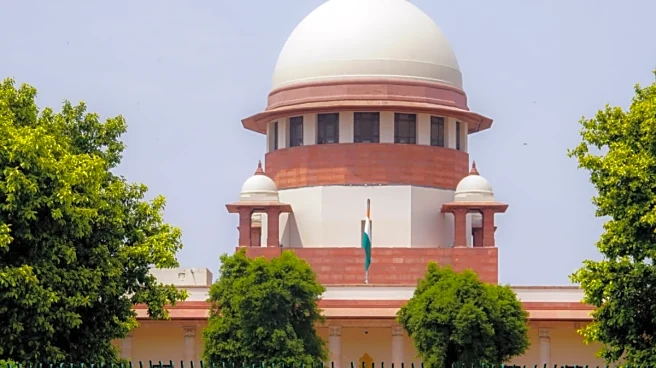
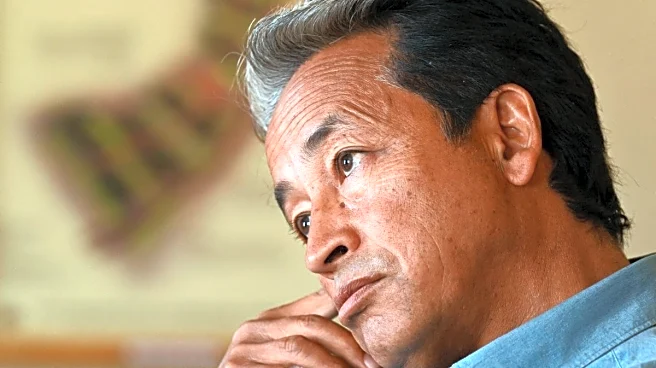
The Supreme Court was told on Thursday that renowned climate activist Sonam Wangchuk, a recipient of thirty prestigious awards for nation-building, is being unfairly portrayed as a criminal by the authorities. Senior Advocate Kapil Sibal, representing Wangchuk’s wife, Gitanjali J Angmo, argued before a bench of Justices Aravind Kumar and Prasanna B Varale that a crucial speech by the activist, in which he appealed for peace and condemned violence, was “illegally suppressed” and never placed before the detaining authority.
The legal challenge concerns the detention of the Magsaysay Award-winning activist under the stringent National Security Act (NSA) last year. Wangchuk was arrested on September 26, two days after violent protests in Leh demanding
statehood and Sixth Schedule status for Ladakh left four people dead and 90 injured. Authorities accused him of inciting the unrest.
During the marathon hearing, Sibal played a video of Wangchuk’s speech from September 24, 2025—the day he ended a prolonged hunger strike. In the footage, Wangchuk is heard explicitly stating that the movement for Ladakh’s constitutional safeguards must remain peaceful and not resort to “stones or arrows”. Sibal contended that by withholding this evidence, the administration misled the District Magistrate into believing that Wangchuk’s presence was a threat to public order, thereby vitiating the detention order on grounds of malice.
Drawing a parallel to Mahatma Gandhi’s decision to call off the Non-Cooperation Movement after the Chauri Chaura incident, Sibal emphasised that Wangchuk had similarly distanced himself from violence. He argued that it was “wholly preposterous” to label a man who has dedicated three decades to education reform and environmental conservation as a provocateur. The counsel highlighted that the activist’s “tapasya” for the fragile Himalayan ecosystem was being systematically maligned to silence a legitimate voice of dissent.
The defence also raised significant procedural objections, asserting a violation of Article 22(5) of the Constitution. Sibal noted that while the detention order relied on four specific videos, these were not provided to Wangchuk in a timely or accessible format, depriving him of his right to make an effective representation. He claimed that the authorities provided only broken links or screenshots, and a functional laptop to view the evidence was provided only after a flagrant delay.
The Ladakh administration has maintained that the detention was necessary to prevent further incitement in the region, which saw violent protests demanding statehood and Sixth Schedule status. However, the Supreme Court, having noted the gravity of the arguments regarding suppressed evidence and procedural lapses, has scheduled the matter for further hearing on Monday, January 12.
/images/ppid_59c68470-image-17708725466897211.webp)