


/images/ppid_a911dc6a-image-177726153478386085.webp)
WhatsApp has taken a stringent measure to stop the ‘digital arrest’ scam by deploying an artificial intelligence- based logo detection and media matching system. The technology will identify and remove accounts impersonating law enforcement agencies.
Over the past few years, Indian senior citizens have lost a substantial amount of money in the digital arrest scams. The threat of cyberattack has intensified, with scammers exploiting the vulnerabilities and weaknesses of innocents.
WhatsApp general R Venkataramani filed the status report on behalf of the Indian Cyber Crime Coordination Centre (14C), operating under the Ministry of Home Affairs.
The report stated that WhatsApp will continue strengthening AI/ML-based systems to detect impersonation
of law enforcement agencies, misuse of official logos.
The report added that WhatsApp informed that detection models and warning mechanisms have been introduced to identify impersonation patterns and alert users in suspicious interactions.
WhatsApp Bans 9,400 Accounts
The Union government has informed the Supreme Court that a wide ranging crackdown involving multiple agencies is underway to deal with rising cases of digital arrest scams across the country. The action also includes the removal of 9,400 WhatsApp accounts linked to such frauds since January.
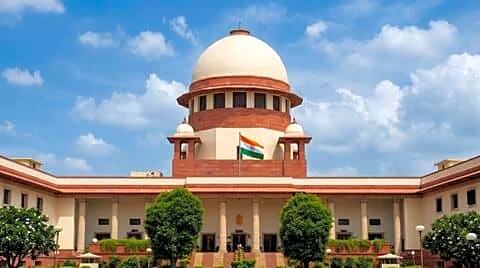
The update was placed before the court through a detailed status report filed by the Indian Cybercrime Coordination Centre (I4C) under the Ministry of Home Affairs. The report follows earlier directions issued by the Supreme Court on February 9, which had taken suo motu notice of online fraud cases, including digital arrests.
According to the report, WhatsApp carried out a special investigation starting in January 2026 after concerns were raised by I4C, the Ministry of Electronics and Information Technology and the Department of Telecommunications. The platform used a structured approach to track and remove scam networks operating in India. As a result, 9,400 accounts were blocked.
The report said WhatsApp is also introducing stronger safety tools. These include systems to detect and remove accounts that use police or government logos in profile images. It is also planning alerts for users when they receive calls from newly created accounts, which are often linked to scams. Another step under consideration is hiding profile photos of unknown callers to reduce misuse of identity.

/images/ppid_a911dc6a-image-177736305508559319.webp)


/images/ppid_a911dc6a-image-177736656814633755.webp)

/images/ppid_a911dc6a-image-177737360366449179.webp)
/images/ppid_a911dc6a-image-177743653845155885.webp)
/images/ppid_a911dc6a-image-177743658053987730.webp)
/images/ppid_a911dc6a-image-177728604061756186.webp)